Three months after SB 244 took effect in Kansas, transgender residents face continued confusion and fear as updated driver’s licenses and birth certificates were invalidated and sweeping bathroom restrictions introduced escalating penalties. The law requires agencies to amend records and charges a $20 fee for reissued birth certificates, while allowing private lawsuits and fines up to $1,000. The ACLU has filed suit; a temporary restraining order was denied and a temporary injunction is pending.
Three Months Into Kansas' Anti-Trans Law: Confusion, Fear and a Pending ACLU Lawsuit

A transgender flag sits on the grass during the "Trans Youth Prom" outside of the U.S. Capitol building on May 22, 2023 in Washington, DC. Anna Moneymaker/Getty Images
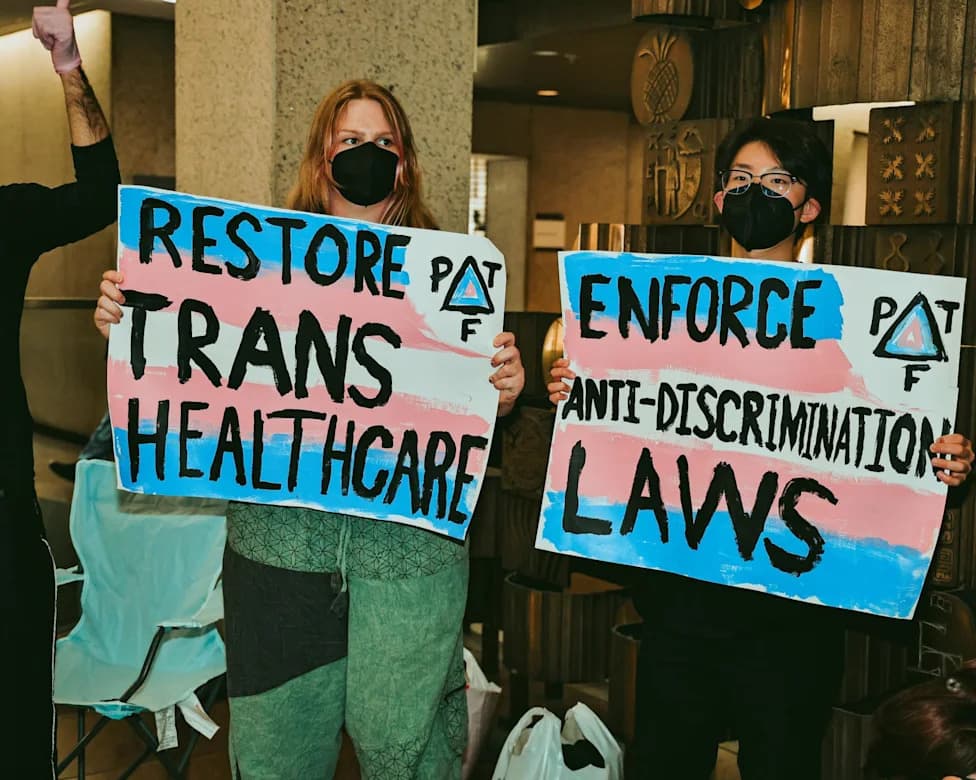
Three months after Kansas' latest anti-trans law took effect on February 26, transgender residents across the state continue to face confusion, fear and mounting legal uncertainty. The measure — Senate Bill 244 — immediately invalidated updated gender markers on many driver's licenses and birth certificates and imposed restrictive new rules for use of public restrooms.
What The Law Does
SB 244 redefines 'gender' in Kansas law as 'biological sex at birth.' The law directed state agencies to correct previously amended documents to match that definition, ordered affected Kansans to surrender now-invalid licenses, and instructed the Office of Vital Statistics to reissue amended birth certificates for a $20 fee. Officials have acknowledged they have no way to proactively notify everyone whose records were changed, creating an uneven and chaotic rollout.
Immediate Impacts
When the law went into effect, nearly 2,000 updated driver’s licenses were rendered invalid at once. Many transgender Kansans said they received no notice or received confusing messages from the DMV website, making it difficult or impossible for some to lawfully travel to correct their records. Democratic Governor Laura Kelly vetoed SB 244, but the Legislature overrode her veto.
Bathroom Restrictions And Penalties
The statute also bars people from using government-owned restrooms that do not match the sex they were assigned at birth. Enforcement is structured in three tiers: a warning for a first violation, a $1,000 fine for a second, and a class B misdemeanor for a third. The law additionally empowers private citizens to sue alleged violators and seek up to $1,000 in damages — a provision advocates describe as a 'bounty-hunter' mechanism that encourages surveillance and self-policing.
Voices From The Community
"In the community, there was so much confusion and fear," said Matthew Neumann, founder and executive director of the LGBTQ Foundation of Kansas. "There were people running to the DMV and changing it out before they got the letter — if they got the letter. There were people getting the letter, and they didn't even have a driver's license... We were checking our statuses on the website to see if we had a valid driver's license for over a month."
Harper Seldin, senior staff attorney at the ACLU's LGBTQ and HIV Project, warned: "If you cannot use the restroom at work, you cannot be employed. If you cannot use the restroom at school, you cannot go to school. If you cannot use your driver's license without fear of being outed as transgender... you really can't go about your life."
Human And Practical Consequences
Advocates report heightened threats, increased harassment and a wave of relocations by transgender Kansans seeking safer states. Community leaders say the law makes daily life — from using public facilities to proving identity for employment, banking and voting — more perilous. Several trans people have chosen to comply with new restroom rules to avoid severe penalties, while others are attempting to leave the state with organizational help.
Legal Challenge And What Comes Next
The national and state ACLU filed suit in Douglas County the same day SB 244 took effect, arguing the law violates Kansas constitutional protections for privacy, equal protection, due process, personal autonomy and free speech. A request for a temporary restraining order was denied in March, and a motion for a temporary injunction to pause enforcement while the case proceeds remains pending.
With enforcement guidance inconsistent and notices distributed unevenly, many transgender Kansans remain uncertain about their rights and legal status. The outcome of the pending litigation will determine whether SB 244 remains in effect as the case moves through the courts.
Help us improve.