Federal courts are now the decisive arbiter of many of President Trump's second-term priorities. More than 800 lawsuits challenge executive actions on issues ranging from a White House UFC event and limits on birthright citizenship to demolition of the East Wing, a $100,000 H‑1B fee and a $1 million "Gold Card" residency program. Key rulings at the district, appellate and Supreme Court levels will shape presidential authority, agency structure and election administration.
Federal Courts Will Decide How Deeply Trump Reshapes the Presidency
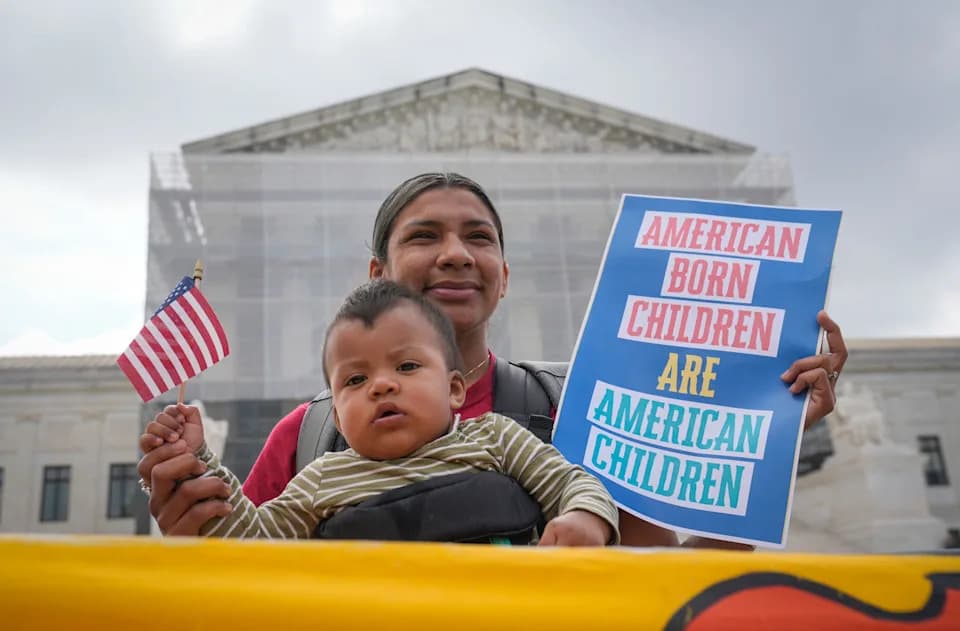
Olga Urbina and her child Ares Webster from Baltimore, MD, demonstrate outside the Supreme Court before justices hears oral arguments in Trump v. CASA, Inc. At issue in the case is if the Supreme Court should stay the district courts' nationwide preliminary injunctions on the Trump administration’s executive order ending birthright citizenship.(Jack Gruber, USA TODAY)
President Donald Trump has pursued an expansive second-term agenda through aggressive executive actions. Many of those initiatives now face hundreds of legal challenges, and the federal courts — including the Supreme Court — will be decisive in determining which policies survive and which are blocked.
Why The Courts Matter
Legal advocates say the administration's broad use of executive power — from criminal prosecutions of political rivals to agency overhauls and changes to election administration — could permanently alter presidential authority if courts allow it to stand. "Donald Trump has attempted to flood the zone with illegality," Norm Eisen, a former Obama White House ethics lawyer and co-founder of the Democracy Defenders Fund, told USA TODAY.
A litigation tracker compiled by Just Security at NYU Law reports more than 800 lawsuits challenging second-term Trump executive actions. Those cases follow a torrent of directives from the White House dating to the administration's first days, many of which test contested legal boundaries on issues such as birthright citizenship, federal-worker protections and voting administration.
Key Legal Battles Underway
UFC Event on the South Lawn
Plaintiffs in Washington, D.C., sued to stop a planned "UFC Freedom 250" combat-sports event scheduled for June 14 — President Trump's birthday — on the White House South Lawn, with weigh-ins at the Lincoln Memorial. The suit alleges the event violates National Park Service rules because it is a private, profit-driven promotion rather than a genuine celebration of the nation's 250th anniversary. Plaintiffs pointed to Trump trust stock purchases in the UFC's parent company and licensed "Trump Coins" being sold. U.S. District Judge Amit P. Mehta allowed the event to proceed after ruling the plaintiffs lacked standing on the claims they presented.
Birthright Citizenship
On his first day back in office, Trump issued an order denying automatic citizenship to children born in the U.S. whose parents are not authorized to be here or have only temporary status. Multiple lawsuits followed, and the Supreme Court is now considering whether the Constitution's phrase "and subject to the jurisdiction thereof" includes those children. A decision is expected in the near term and would have sweeping consequences for immigration law and constitutional interpretation.
East Wing Demolition and New Ballroom
The administration demolished the historic East Wing to build a 90,000-square-foot ballroom funded by roughly $400 million in private donations. The National Trust for Historic Preservation sued, alleging violations of federal law that assign Congress oversight of federal property and require environmental review and consultation. A trial judge paused above-ground construction, but a D.C. appeals court later allowed work to continue while it considers the appeal.
Kennedy Center Renaming and Closure
A Trump-appointed board renamed the John F. Kennedy Center the "Trump-Kennedy Center," installed the new name on the building and later voted to close the venue for renovations after ticket sales dropped. U.S. District Judge Christopher R. Cooper ordered the board to remove the new name and halted the planned shutdown, finding the board likely exceeded its authority. The name was removed after the board was granted additional time to comply with the order.
Mail-In Ballots, Voter Rolls and USPS Orders
On March 31, the president directed the U.S. Postal Service to develop "uniform standards" designed to prevent transmission of mail-in ballots from people not "enrolled" to vote and to provide each state with a list of enrolled voters. Multiple lawsuits argue the order unlawfully intrudes on state authority over elections and on powers reserved to Congress. Courts are weighing whether to block the policy before upcoming elections.
Federal Workforce Reductions and USAID Dismantling
The administration has pursued large-scale layoffs across the federal workforce and moved to dismantle agencies such as the U.S. Agency for International Development (USAID). Labor unions, nonprofits and displaced employees have filed dozens of suits. In consolidated cases, U.S. District Judge Carl J. Nichols, a Trump appointee, allowed mass dismissals to proceed, finding personnel claims should go through administrative channels in many instances.
The Supreme Court is also considering whether the president had authority to remove a Federal Reserve governor — a case that could affect the Fed's independence. Separate suits by former Justice Department employees allege retaliation or illegal firings tied to Jan. 6 investigations.
H‑1B Fee and Visa Changes
The administration imposed a $100,000 fee on employers filing H‑1B petitions for high-skilled workers. Courts have split: D.C. Judge Beryl A. Howell deferred to the government and left the fee in place pending appeal, while Massachusetts Judge Leo T. Sorokin ruled the fee exceeded Congress's taxing power and violated notice-and-comment rules. The DOJ has appealed adverse rulings, and additional challenges remain pending.
"Gold Card" Residency Program
A $1 million "Gold Card" program promises permanent residency and a path to citizenship for foreign nationals who pay. The American Association of University Professors sued, arguing it will slow processing for nonpaying applicants and that the administration lacked authority to create the program without Congress. The DOJ has asked the court to dismiss the suit for lack of demonstrated injury.
Nutrition Funding Conditions (SNAP)
The administration tied billions in federal nutrition funding to state certifications of compliance with federal anti-discrimination policies, a move the government links to penalties on race-based affirmative action. A D.C. federal judge preliminarily blocked those conditions, finding state attorneys general were likely to succeed on the merits. The DOJ argues the dispute is not ripe until the government applies the conditions to agreements.
What This Means For Trump's Legacy
Across cultural institutions, immigration policy, labor rules and voting administration, the federal court system will determine how many of President Trump's second-term priorities survive. Some high-profile actions have already been curtailed — such as the tariff program struck down by the Supreme Court — while other policies have advanced temporarily through emergency relief. With more than 800 suits pending, the judiciary will play a central role in shaping the long-term scope of presidential power.
Justice Department Statement: The DOJ highlighted its record prosecuting criminal activity and noted the Supreme Court has intervened favorably for the administration on emergency matters roughly two dozen times.
As litigation progresses, the outcomes of several pending Supreme Court and appellate decisions will be closely watched for their lasting impact on the presidency, federal agencies and election oversight.
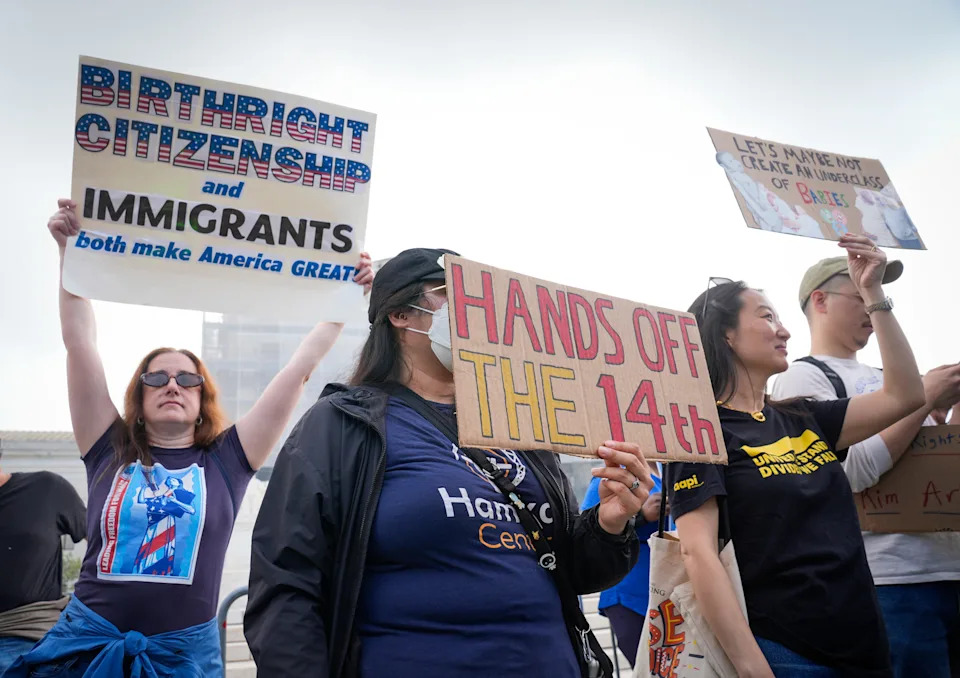
People demonstrate outside the Supreme Court before justices hears oral arguments in Trump v. CASA, Inc. At issue in the case is if the Supreme Court should stay the district courts' nationwide preliminary injunctions on the Trump administration’s executive order ending birthright citizenship.(Jack Gruber, USA TODAY)
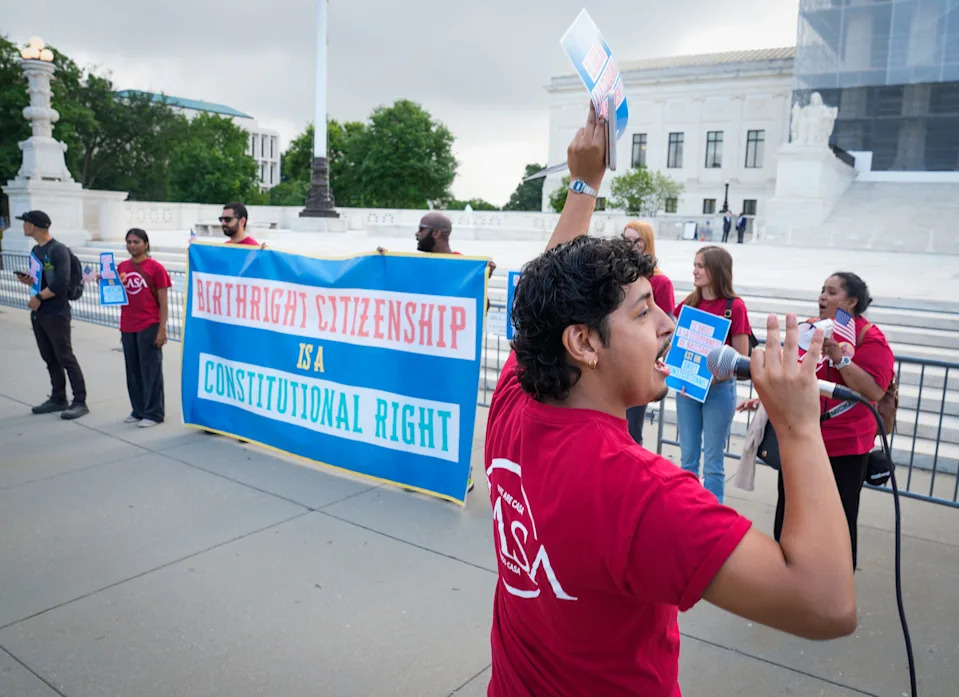
People demonstrate outside the Supreme Court before justices hears oral arguments in Trump v. CASA, Inc. At issue in the case is if the Supreme Court should stay the district courts' nationwide preliminary injunctions on the Trump administration’s executive order ending birthright citizenship.(Jack Gruber, USA TODAY)
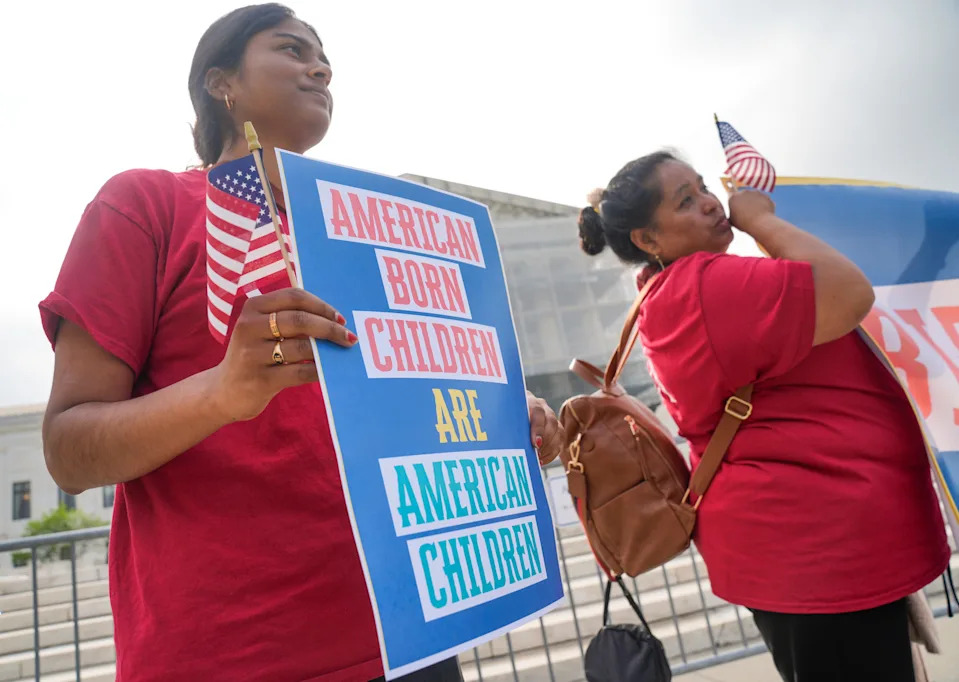
People demonstrate outside the Supreme Court before justices hears oral arguments in Trump v. CASA, Inc. At issue in the case is if the Supreme Court should stay the district courts' nationwide preliminary injunctions on the Trump administration’s executive order ending birthright citizenship.(Jack Gruber, USA TODAY)
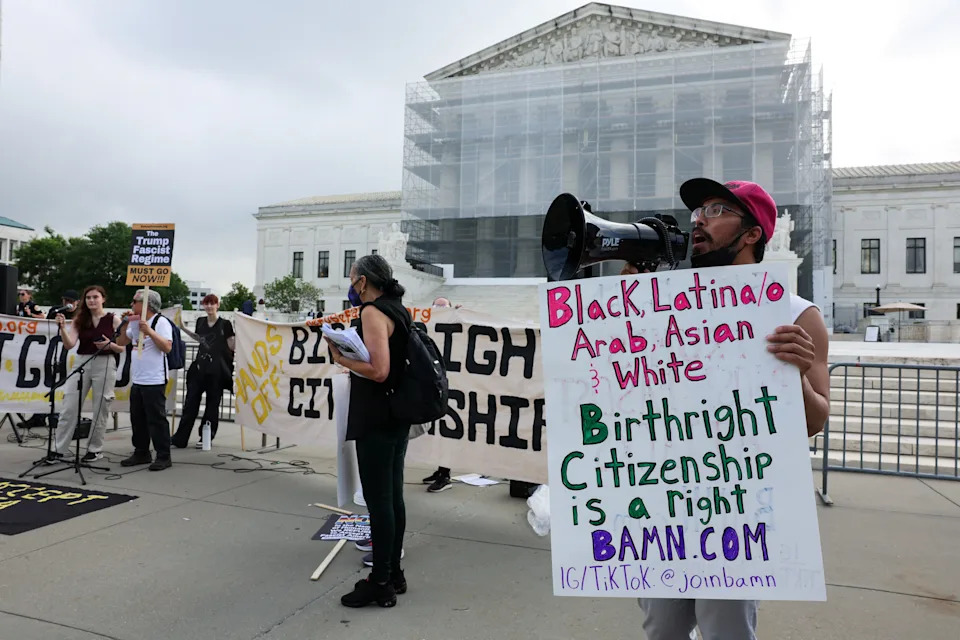
People protest outside the Supreme Court on May 15, 2025, as justices hear oral arguments over President Donald Trump's bid to broadly enforce his executive order to restrict automatic birthright citizenship.(Leah Millis/Reuters)
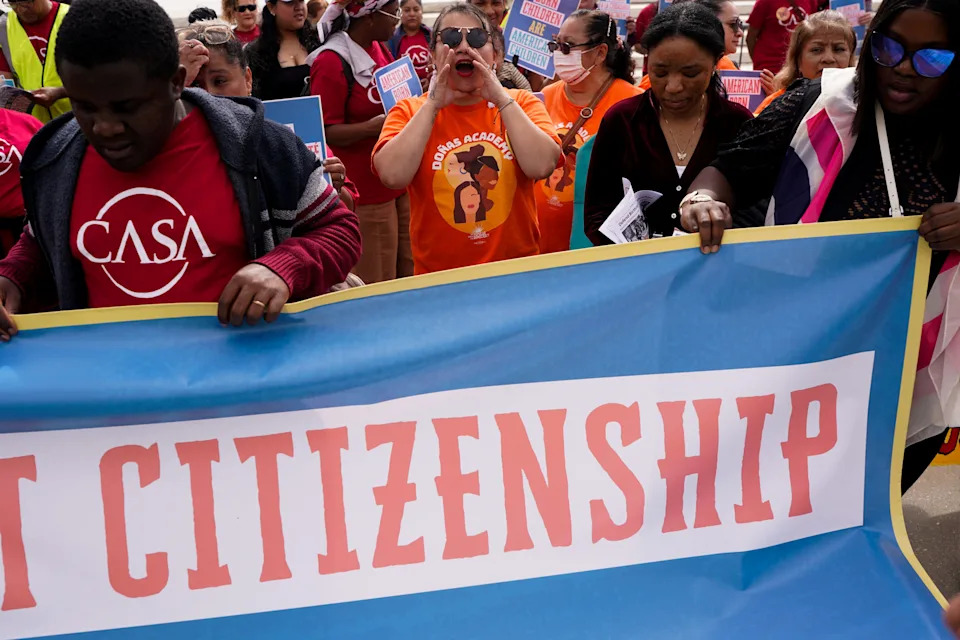
Demonstrators rally on the day the Supreme Court justices hear oral arguments over President Donald Trump's bid to broadly enforce his executive order to restrict automatic birthright citizenship, during a protest outside the Supreme Court in Washington, D.C., May 15, 2025.(Nathan Howard, Reuters)
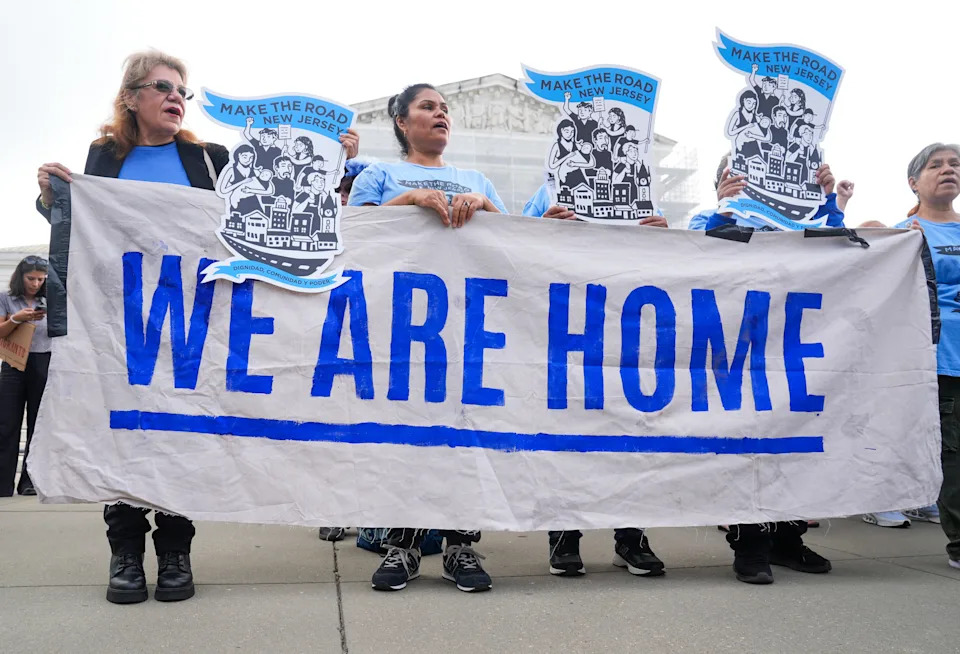
People outside the Supreme Court before justices hears oral arguments in Trump v. CASA, Inc. At issue in the case is if the Supreme Court should stay the district courts' nationwide preliminary injunctions on the Trump administration’s executive order ending birthright citizenship.(Jack Gruber, USA TODAY)
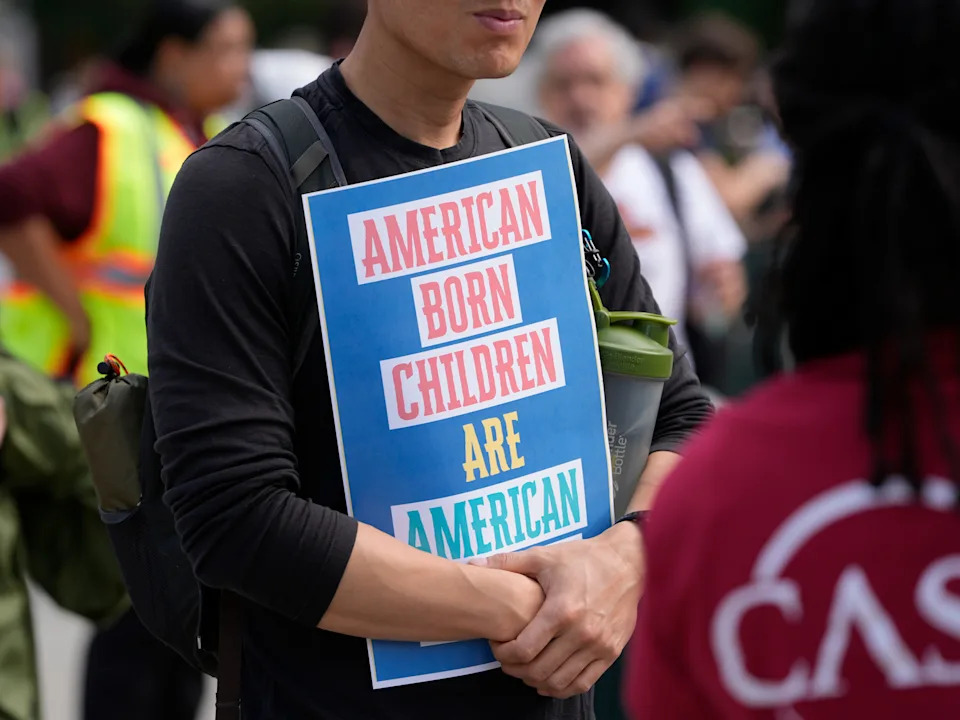
People demonstrate outside the Supreme Court before justices hears oral arguments in Trump v. CASA, Inc. At issue in the case is if the Supreme Court should stay the district courts' nationwide preliminary injunctions on the Trump administration’s executive order ending birthright citizenship.(Jack Gruber, USA TODAY)
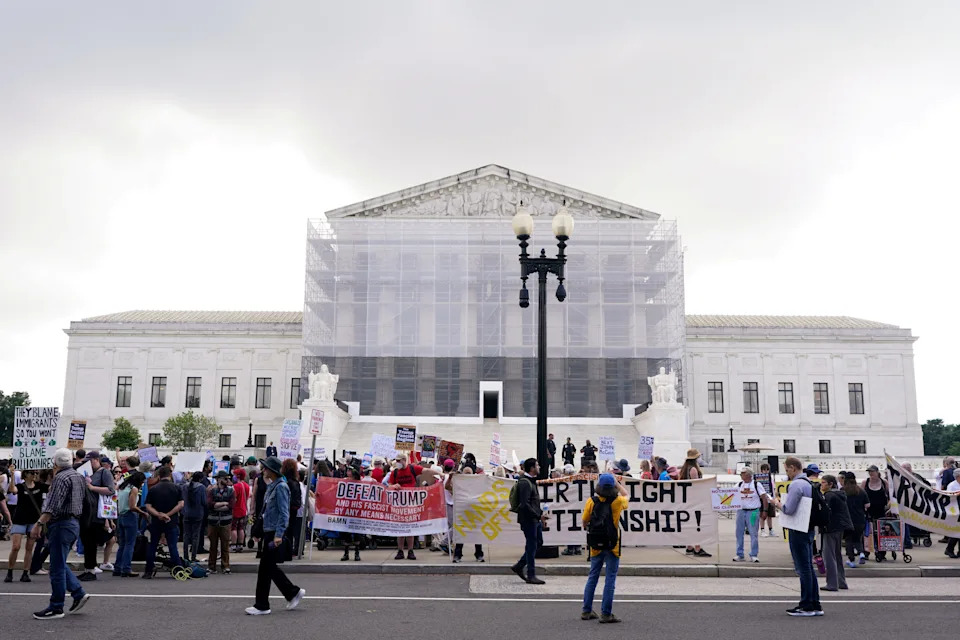
Demonstrators rally on the day the Supreme Court justices hear oral arguments over President Donald Trump's bid to broadly enforce his executive order to restrict automatic birthright citizenship, during a protest outside the U.S. Supreme Court in Washington, D.C.,May 15, 2025.(Nathan Howard, Reuters)
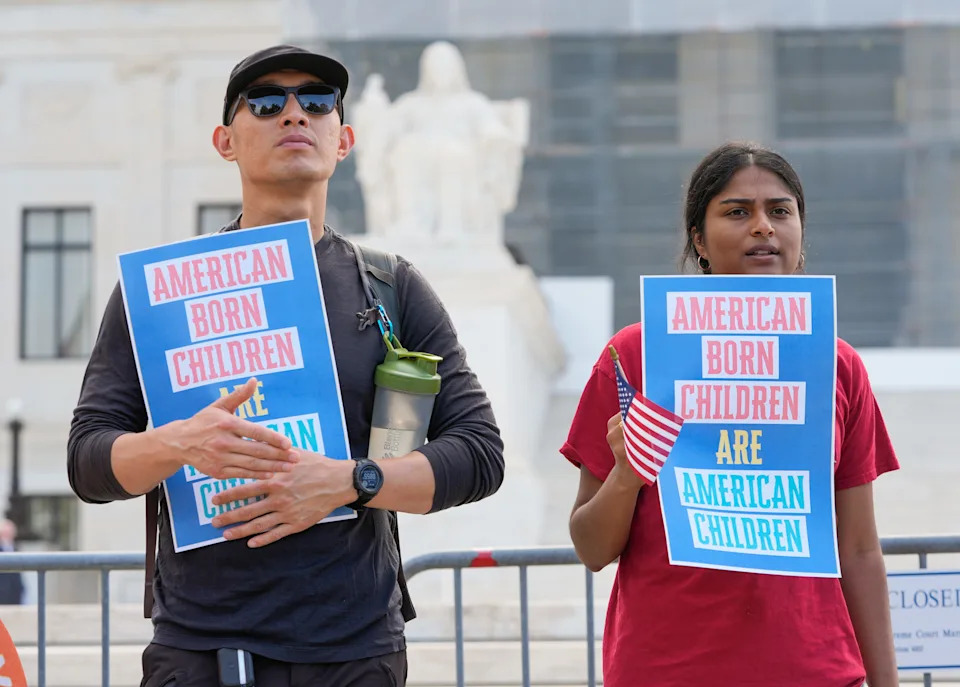
People demonstrate outside the Supreme Court before justices hears oral arguments in Trump v. CASA, Inc. At issue in the case is if the Supreme Court should stay the district courts' nationwide preliminary injunctions on the Trump administration’s executive order ending birthright citizenship.(Jack Gruber, USA TODAY)
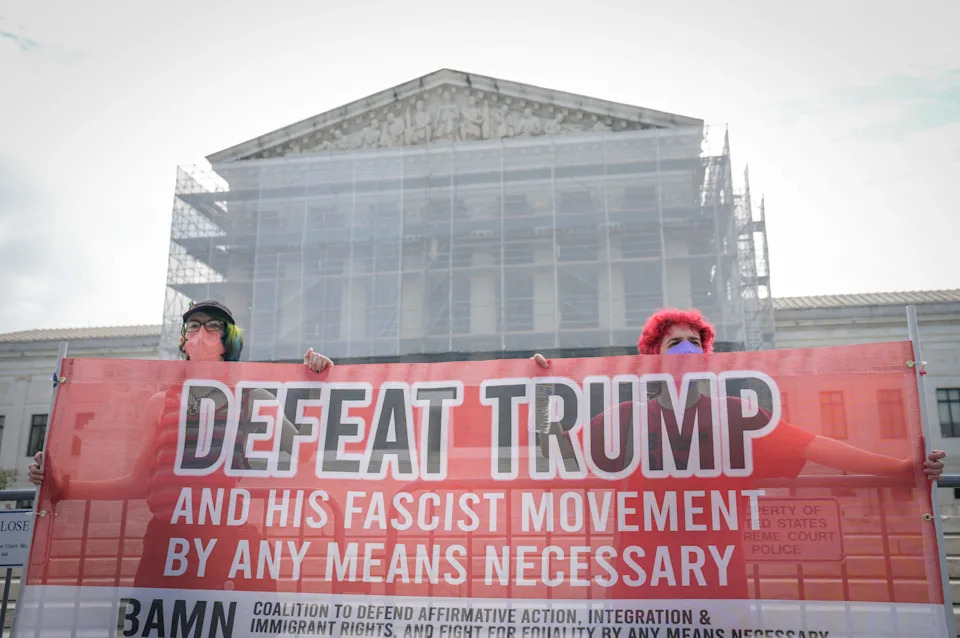
People demonstrate outside the Supreme Court before justices hears oral arguments in Trump v. CASA, Inc. At issue in the case is if the Supreme Court should stay the district courts' nationwide preliminary injunctions on the Trump administration’s executive order ending birthright citizenship.(Jack Gruber, USA TODAY)
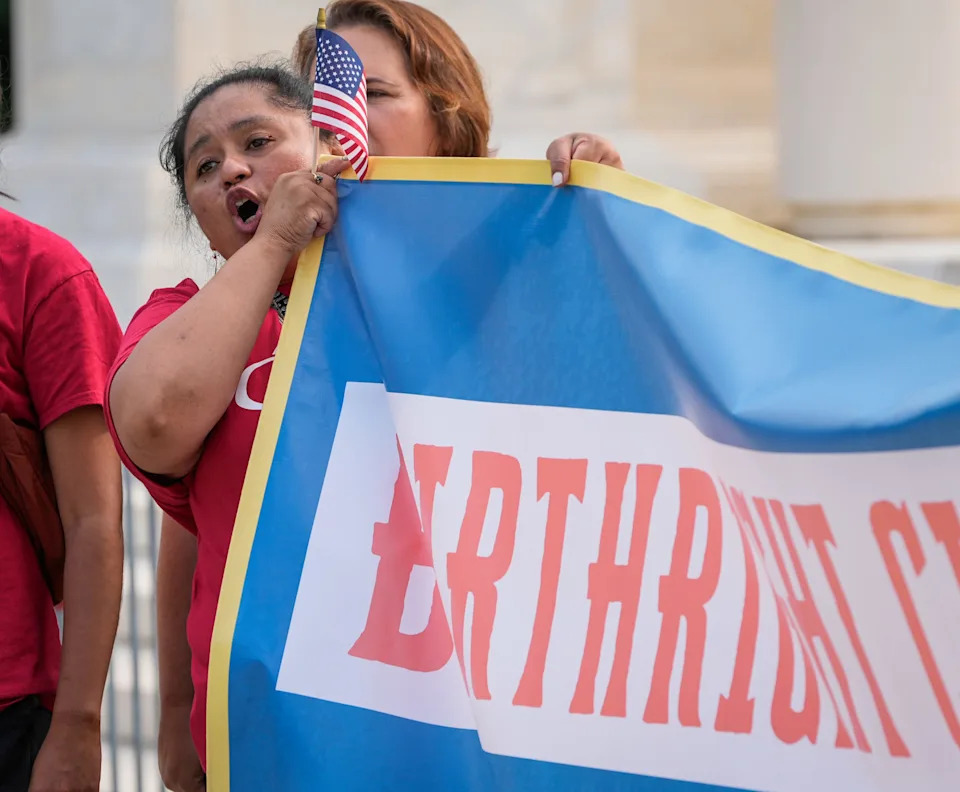
People demonstrate outside the Supreme Court before justices hears oral arguments in Trump v. CASA, Inc. At issue in the case is if the Supreme Court should stay the district courts' nationwide preliminary injunctions on the Trump administration’s executive order ending birthright citizenship.(Jack Gruber, USA TODAY)
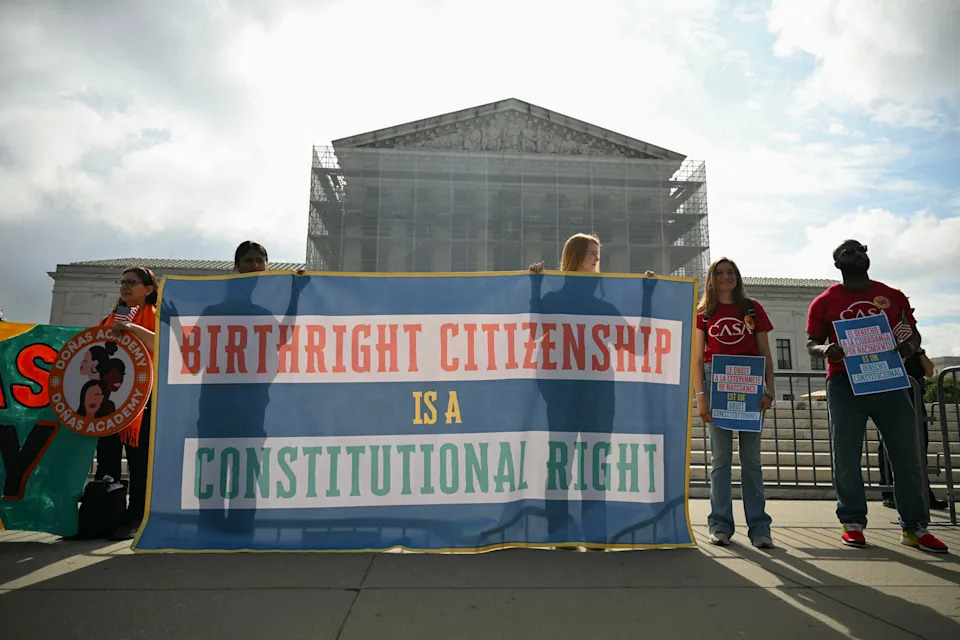
People outside the U.S. Supreme Court protest President Donald Trump's executive order on birthright citizenship as the court hears arguments over the order on May 15, 2025.(Drew Angerer/AFP via Getty Images)
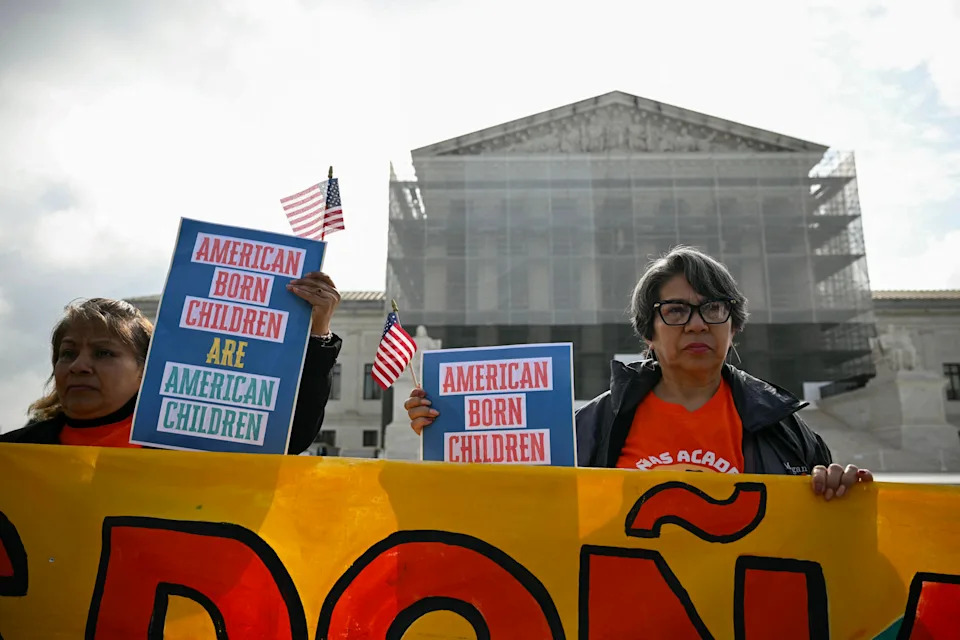
People participate in a protest outside the Supreme Court over President Donald Trump's move to end birthright citizenship as the court hears arguments over the order in Washington, DC, on May 15, 2025. Trump issued an executive order on his first day in office seeking to limit birthright citizenship for children whose parents are in the United States illegally or on temporary visas, but it has been blocked in multiple appellate courts. He appealed the case to the Supreme Court on March 13.(Drew Angerer, AFP via Getty Images)
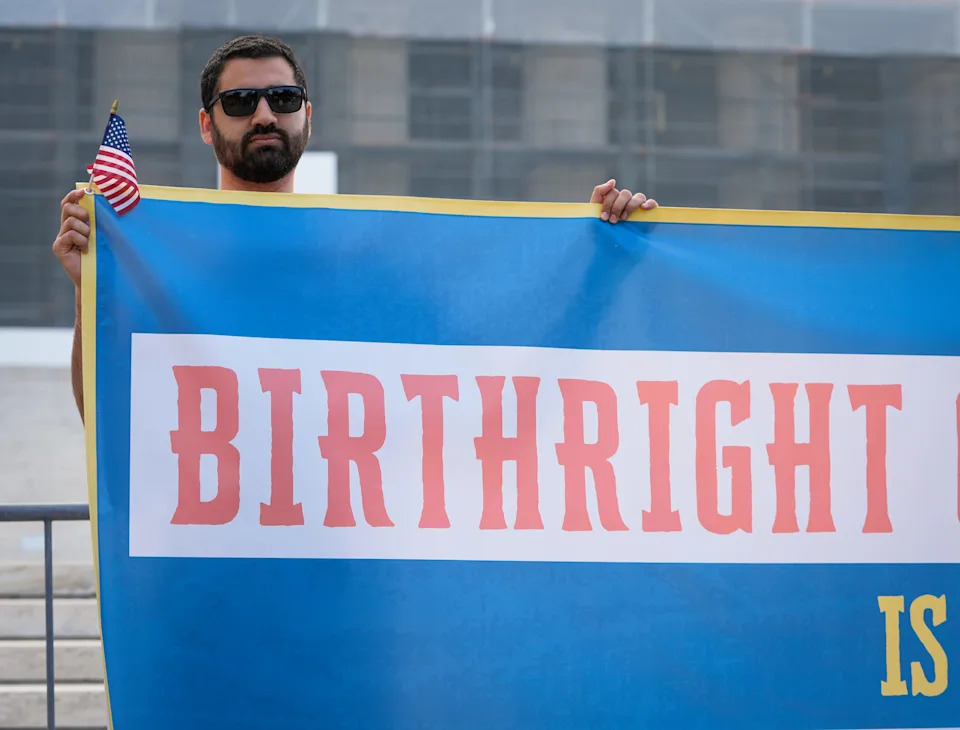
A person demonstrates outside the Supreme Court before justices hears oral arguments in Trump v. CASA, Inc.(Jack Gruber, USA TODAY)
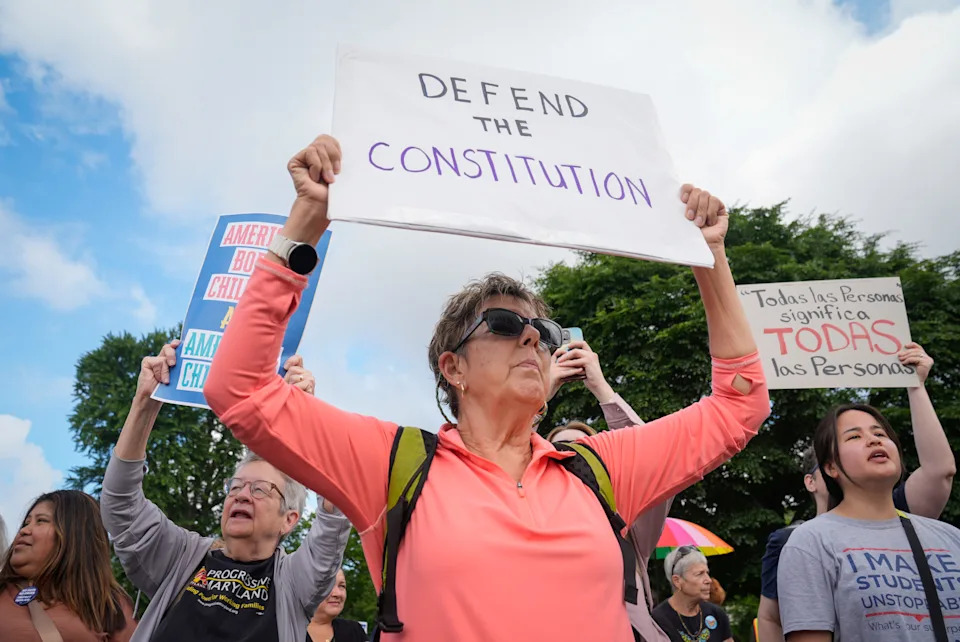
People demonstrate outside the Supreme Court before justices hears oral arguments in Trump v. CASA, Inc. At issue in the case is if the Supreme Court should stay the district courts' nationwide preliminary injunctions on the Trump administration’s executive order ending birthright citizenship.(Jack Gruber, USA TODAY)
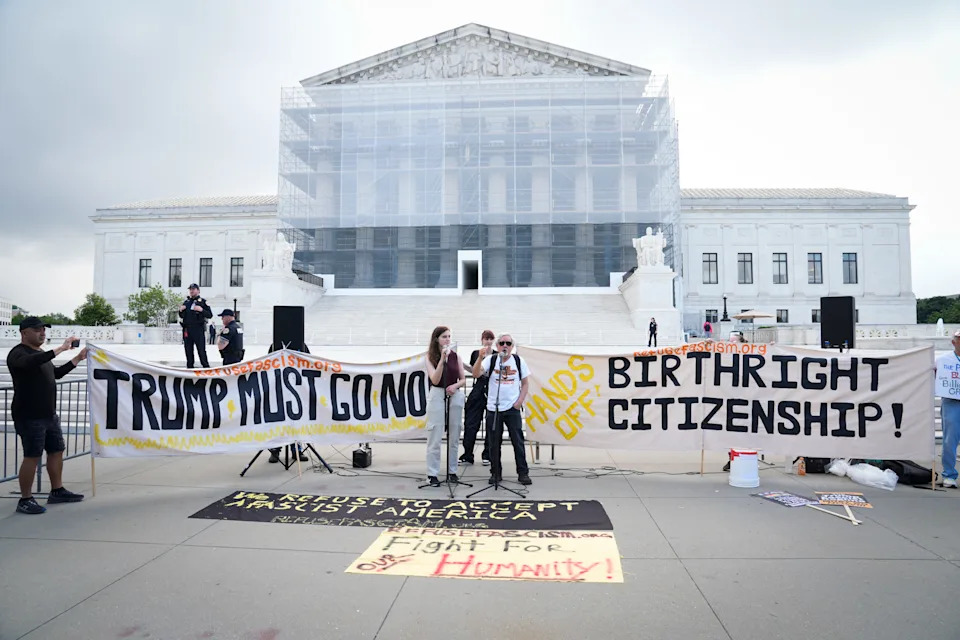
People demonstrate outside the Supreme Court before justices hears oral arguments in Trump v. CASA, Inc. At issue in the case is if the Supreme Court should stay the district courts' nationwide preliminary injunctions on the Trump administration’s executive order ending birthright citizenship.(Jack Gruber, USA TODAY)
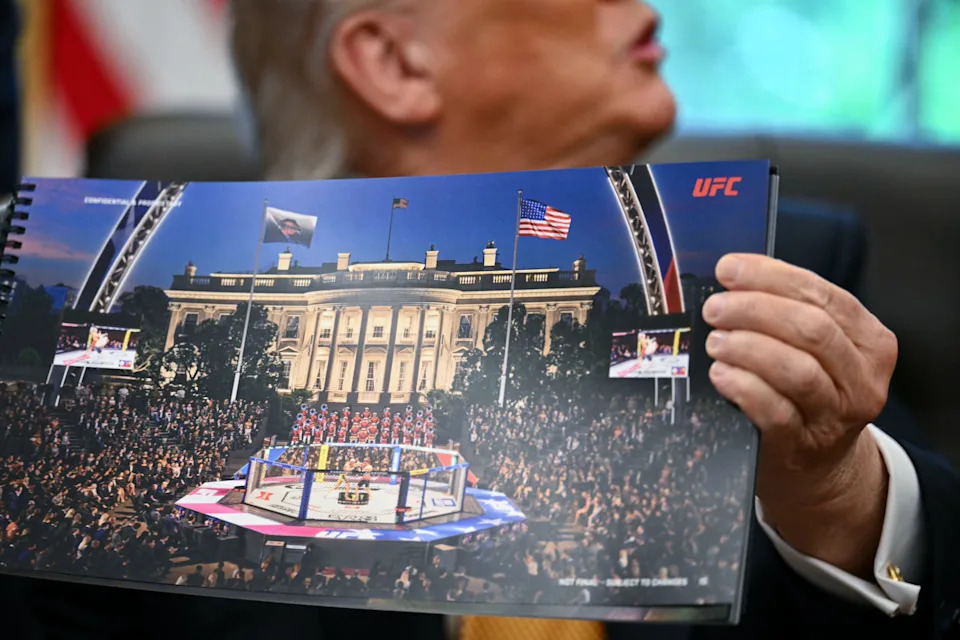
US President Donald Trump shows a rendering of the upcoming "UFC Freedom 250" event as he speaks in the Oval Office of the White House on May 6, 2026, in Washington, DC. An Ultimate Fighting Championship event is planned for the White House's South Lawn on June 14.
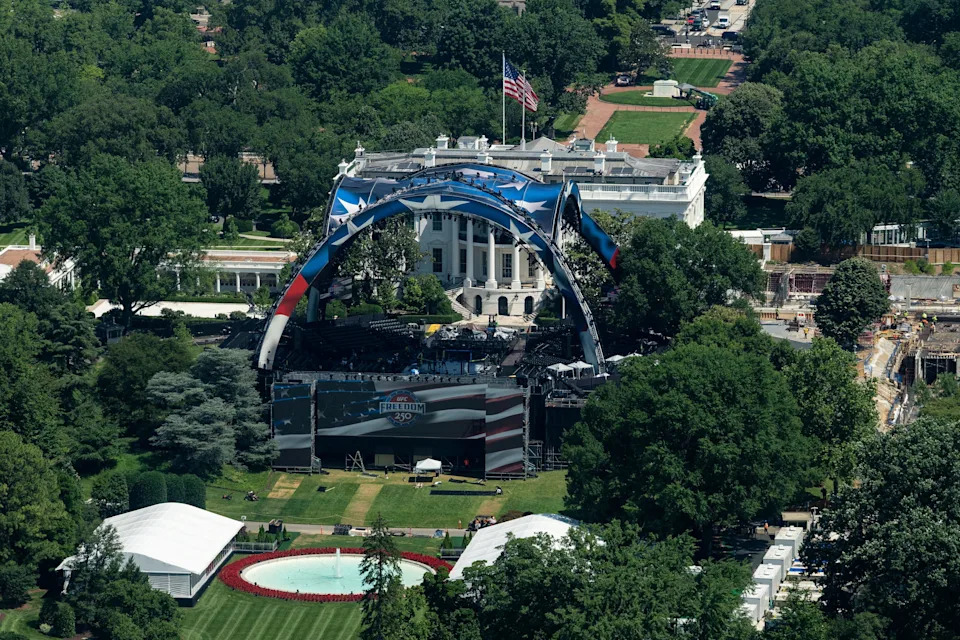
Preparations continue at a temporary arena that will host the UFC Freedom 250 fight card at the White House in Washington, D.C., U.S., June 12, 2026.
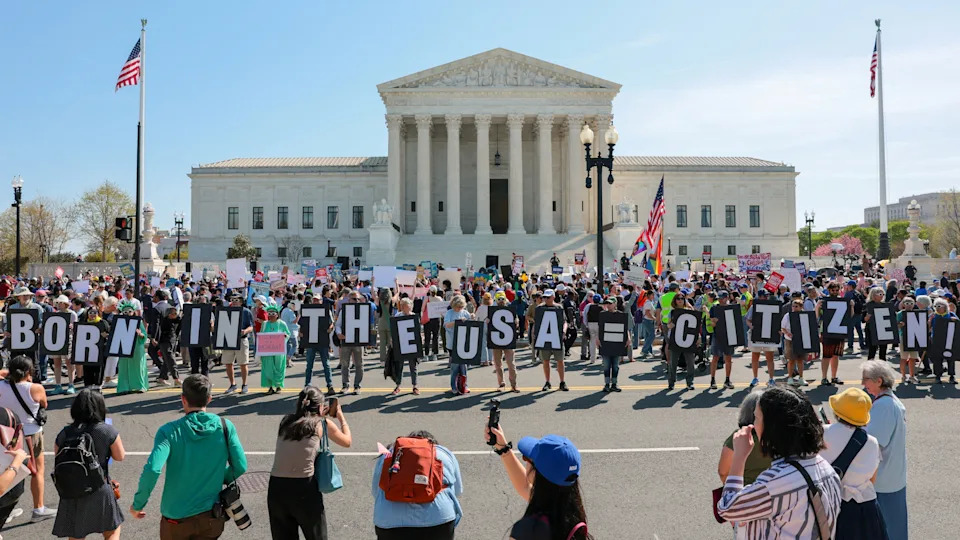
Demonstrators hold letters making up the slogan "Born in the USA = citizen!" outside the U.S. Supreme Court building as the court hears oral arguments on the legality of the Trump administration's effort to limit birthright citizenship for the children of immigrants, in Washington, D.C., U.S., April 1, 2026.
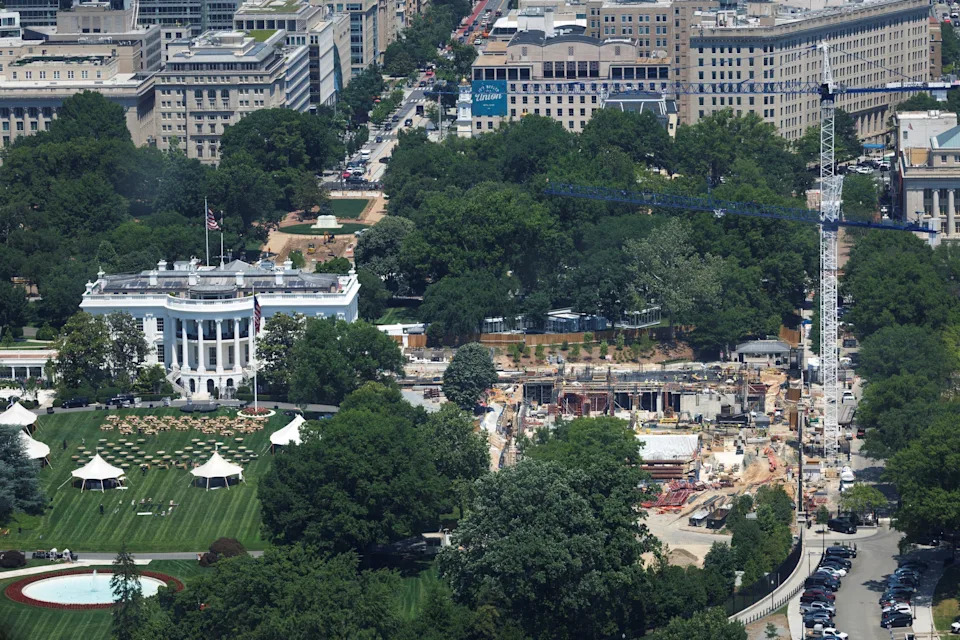
Construction continues on the planned White House ballroom in the area of the former East Wing in Washington, D.C., U.S., May 18, 2026.
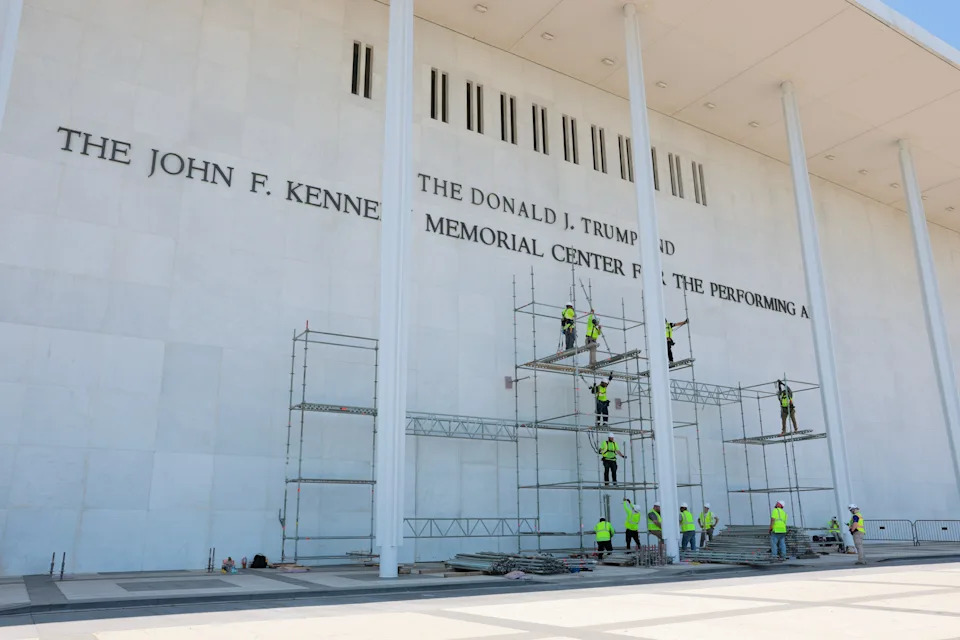
Construction workers build scaffolding at the Kennedy Center on June 12, 2026 in Washington, DC, after a judge denied a request from the center's board to halt a court order requiring the removal of President Donald Trump's name from the facade by the end of the day.
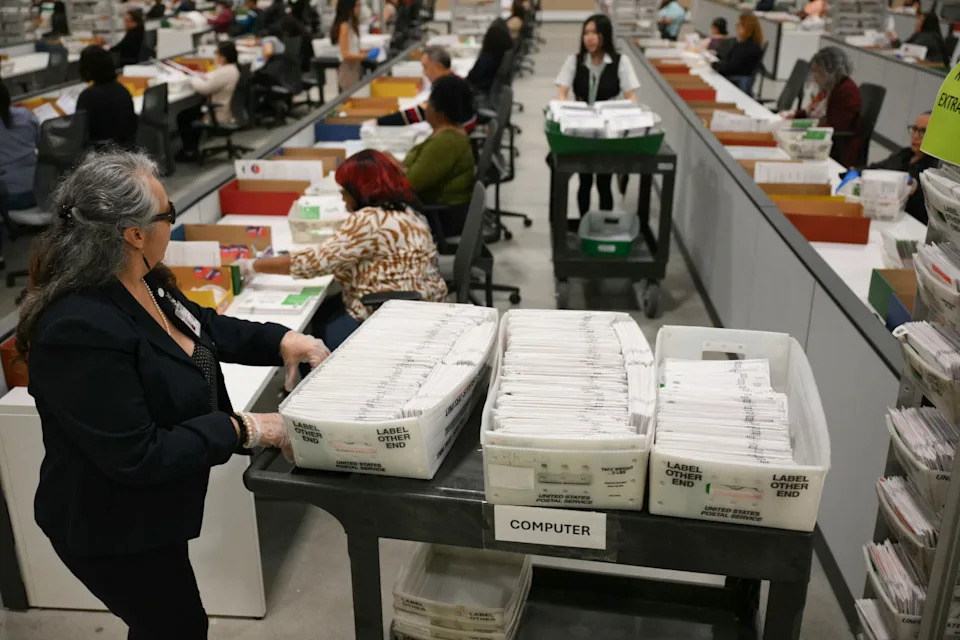
An election worker moves mail-in ballots to be organized for tabulation at the Los Angeles County Ballot Processing Center during California's state primary election in the City of Industry, California, on June 2, 2026.
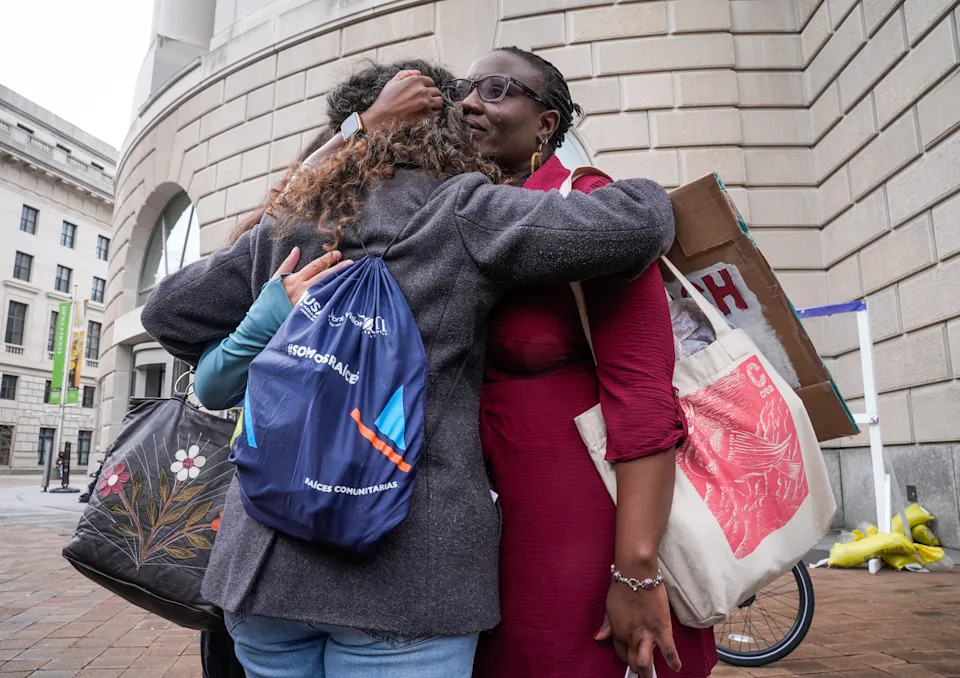
Tears and hugs as USAID workers come together after removing their belongings from the agency's headquarters in Washington, D.C., on Feb. 27, 2025. With the exception of critical staff, the Trump administration placed all personnel at USAID on paid administrative leave and eliminated 1,600 U.S. positions.
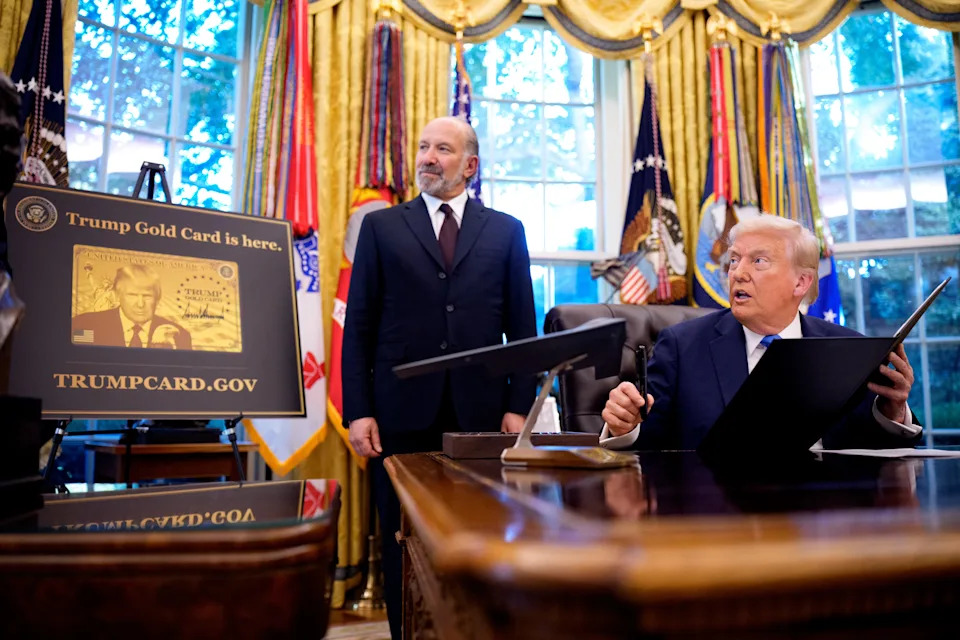
U.S. President Donald Trump, accompanied by U.S. Commerce Secretary Howard Lutnick (L) speaks before signing two executive orders, establishing the "Trump Gold Card" and introducing a $100,000 fee for H-1B visas in the White House Oval Office on September 19, 2025 in Washington, DC.
Help us improve.