This week’s science roundup is led by NOAA’s formal El Niño declaration, with models warning it may become an unusually strong, possibly record event with broad climate impacts. Researchers also flagged an expanding Atlantic "cold blob" south of Greenland that could signal weakening ocean circulation, while the Arctic passes critical biological thresholds. NASA named the Artemis III crew for a 2027 low-Earth-orbit test of commercial lunar landers — a mission complicated by recent setbacks at SpaceX and Blue Origin. Archaeologists and paleontologists reported an extraordinary ancient burial in northern Scotland and a vast 5-million-year-old whale "megasite" in the Indian Ocean.
Science Roundup: NOAA Confirms Potential 'Super' El Niño; Artemis III Crew Named; Atlantic 'Cold Blob' Grows
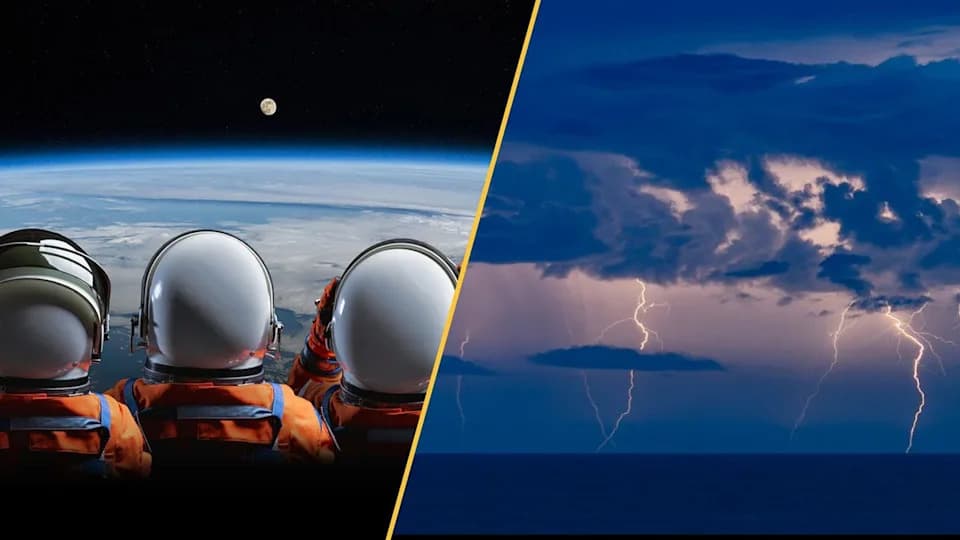
El Niño arrives, the Artemis III crew are revealed, a 'cold blob' worsens in the Atlantic, and a Richard Feynman note is finally deciphered. | Credit: NASA | Getty Images
This week’s science headlines were dominated by major developments in the oceans and in space, alongside striking discoveries in archaeology and paleontology.
Oceans and Climate
The U.S. National Oceanic and Atmospheric Administration (NOAA) has declared the official onset of El Niño. This warm phase of the Pacific climate cycle typically boosts global temperatures and alters weather patterns; current model projections suggest this event could be unusually strong — earning it the informal label of a "super" El Niño. If it reaches the higher projected intensities, impacts could include altered rainfall patterns, greater wildfire risk in some regions, and effects on agricultural yields worldwide.
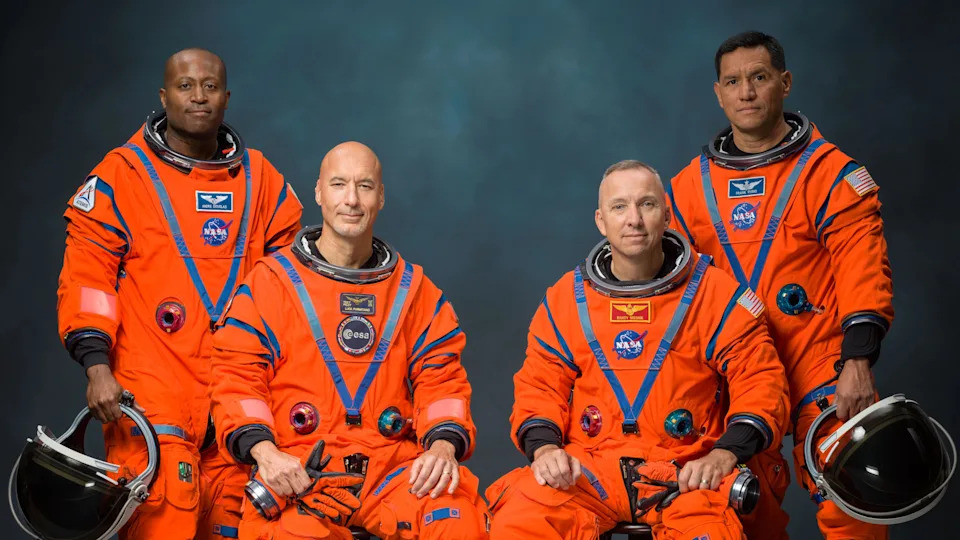
The Artemis III crew from left to right: Andre Douglas, Luca Parmitano, Randy Bresnik, and Frank Rubio | Credit: NASA
In the North Atlantic, researchers reported an expanding "cold blob" south of Greenland. Scientists warn that this anomalously cold area could be a sign of a weakening in ocean circulation systems that help regulate climate across the Northern Hemisphere. Monitoring of these deep currents has declined since earlier policy changes, complicating efforts to track evolving risks.
Farther north, studies indicate the Arctic may have passed a critical biological tipping point — a signal of shifting ecosystems as warming progresses.
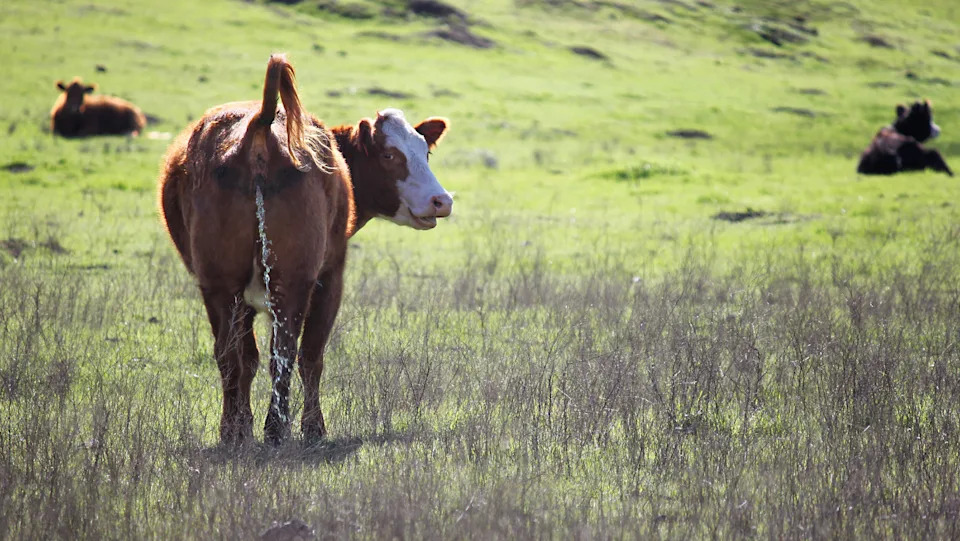
Was your water once peed out by an animal? | Credit: Monica Murphy via Getty Images
Ecology and Paleontology
On a surprising ecological note, paleontologists identified a roughly 5-million-year-old whale "megasite" in the Indian Ocean. The extensive fossil deposit, stretching across hundreds of miles, appears to have supported diverse marine communities long after the whales perished.
Space: Artemis III and Commercial Landers
NASA announced the crew for Artemis III, a complex test mission planned for low Earth orbit in 2027 to evaluate commercial lunar landers ahead of a targeted 2028 return to the Moon. Commander Randy Bresnik will lead the mission, with European Space Agency pilot Luca Parmitano and NASA mission specialists Andre Douglas and Dr. Frank Rubio.
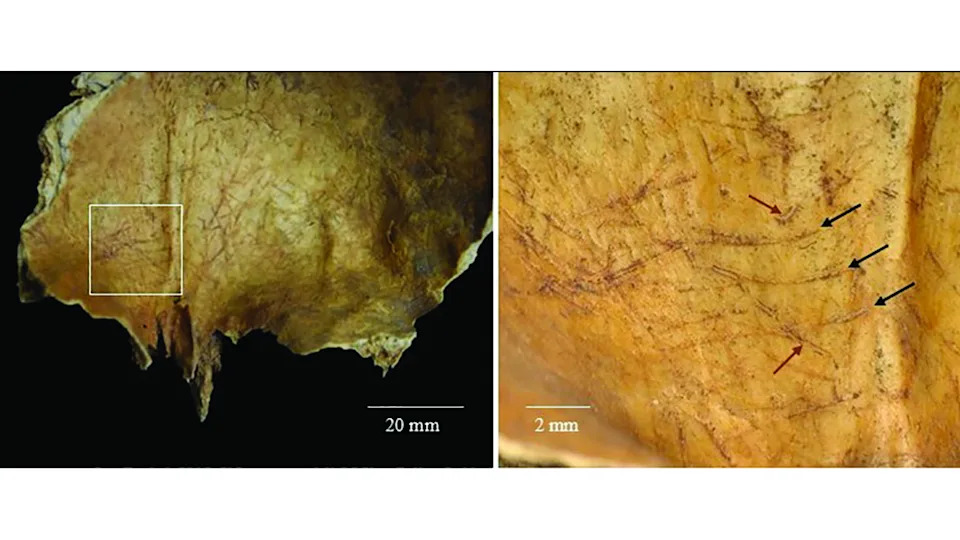
The inside of the skull of Individual 1 shows cut marks, possibly made during brain removal. | Credit: Castells Navarro et al. / Antiquity Publications Ltd.
The mission’s timeline faces uncertainty: both private contractors developing landers for NASA, SpaceX and Blue Origin, have recently experienced explosive setbacks during testing. Those incidents raise questions about schedules and safety as NASA prepares for upcoming lunar operations.
Archaeology and Human Stories
Archaeologists examining a burial in northern Scotland described a striking and unsettling ritual: a woman’s brain appears to have been removed and her arms carved into implements before burial. The team noted the careful reassembly and placement of her remains in a cairn, which may suggest she held a respected or unique role in her community. Genetic analysis linked her to individuals buried at distant sites across ancient Scotland, indicating long-range social connections.

A panorama image of the Milky Way captured in Catamarca, Argentina. | Credit: Daniel Viñé Garcia/Capture the Atlas.
"However, the care with which she was reassembled and deposited in the cairn possibly suggests she commanded a level of reverence and respect by her community," said Laura Castells Navarro of the University of York, a member of the research team.
Other Notable Items
This week’s briefs included theoretical work on exotic black holes and space-time "crystals," a small robot that rolled across the Moon and took historic images, progress and setbacks in quantum computing, and troubling conservation news — including severe losses to a critically endangered great ape population after extreme rainfall tied to a cyclone.
For visuals, one highlight is a winning long-exposure image from the 2026 Milky Way Photographer of the Year contest, captured by Daniel Viñé Garcia over a salt flat in Argentina, where starlight and galactic detail reflect in turquoise brine pools.
Follow specialist outlets and newsletters for continuous, in-depth coverage of these evolving stories.
Help us improve.