The FBI opened the 22,000 sq. ft. Kinetic Cyber Range in Huntsville in February 2025 to train investigators in realistic cyberattack response and digital forensics. The replica town—complete with residences, a hospital, a power company and a data center of 200+ servers—has trained over 1,400 students. The effort responds to rising cybercrime (the FBI logged $20.9B in losses in 2025) and focuses on high-pressure scenarios like ransomware affecting hospitals. Training also covers controversial forensic tools that exploit undisclosed vulnerabilities to extract data from encrypted devices.
Inside the FBI’s 22,000-Sq.-Ft. Kinetic Cyber Range: A Replica Town Built to Train Investigators Against Ransomware
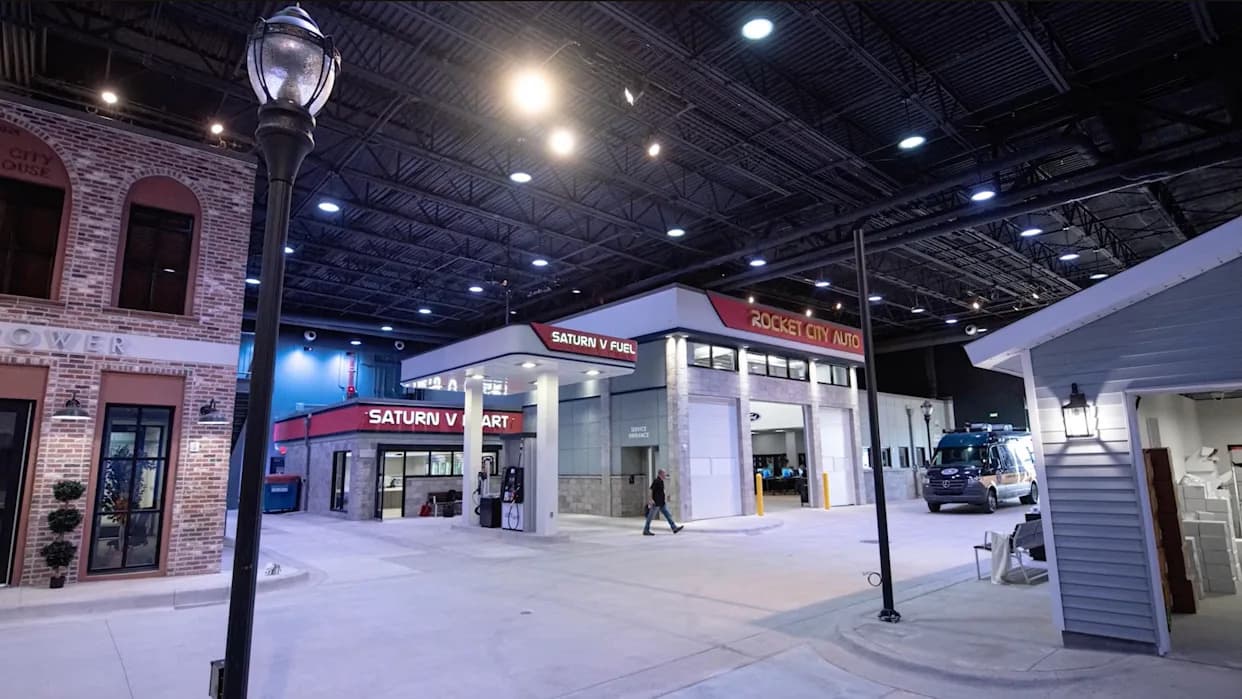
Image Credits:FBI / YouTube
The Federal Bureau of Investigation has unveiled a 22,000 square-foot training site on its Huntsville, Alabama campus called the Kinetic Cyber Range, built to give law enforcement practical, hands-on experience in simulating and investigating real-world cyberattacks.
The program moves investigators out of the classroom into a secure, realistic environment where they can work directly with current consumer and enterprise technologies that are frequent targets for malicious actors. The need for such preparation is clear: the FBI’s 2025 Internet Crime Report—based on more than one million complaints—recorded a record $20.9 billion in U.S. cybercrime losses, a 26% increase over the prior year, and identified ransomware as the top ongoing threat to critical infrastructure.
Opened in February 2025, the Kinetic Cyber Range is a purpose-built miniature U.S. town that includes fully furnished houses, a hotel, a gas station and grocery mart, a courthouse, a hospital, and a power company—complete with roads and traffic lights—designed to mirror the systems and devices investigators will encounter in real investigations. Since opening, the facility has trained more than 1,400 students, including FBI personnel and partners from federal, state and local agencies.
Every part of the town is wired with functioning devices and systems that behave as they would in a real community or business. Safeguards and network isolation prevent simulated attacks from spilling out beyond the facility while preserving realism for trainees. The site also includes a data center with more than 200 physical servers—running a mix of Windows and Linux—to replicate corporate and municipal environments investigators are likely to see when responding to breaches or executing search warrants.
“They’re cold, they’re cramped, they’re noisy, they’re dark, they’re miserable,”
—Dave Beachboard, the range’s program manager, describing the realistic data-center conditions trainees experience.
The replica town enables teams to rehearse ransomware scenarios and other high-pressure incident responses, including decisions that may affect public safety—such as hospital systems going dark or utilities being disrupted. The site is also used to teach digital forensics techniques investigators rely on to extract evidence from modern encrypted devices.
Those forensic tools are controversial: they often work by exploiting undisclosed vulnerabilities to bypass protections installed by device makers such as Apple or Google. The practice raises policy and ethical questions about disclosure, privacy and long-term security trade-offs, even as agencies argue that such capabilities are sometimes necessary to investigate serious crimes and protect public safety.
Why it matters: As cybercrime grows in scale and sophistication, realistic, hands-on training helps investigators build the technical skills and exercise the judgment needed to respond quickly and safely to incidents that can disrupt critical services and harm people.
Help us improve.