Roni and Yitzy Friedman have been tested by repeated reserve call-ups since October 7, 2023. Yitzy believes his service defends their family; Roni says the deployments have strained their marriage, parenting and mental health. Short returns bring relief but also surface deep tensions, and Roni urges the government to adopt a sustainable rotation plan to protect reservists’ families.
The War Inside Israel’s Reserve Families: “Defending The Border Protects Our Family” — One Couple’s Story

‘FOR ME, it’s my family first, then nation and border. But he believes that by going to the border, he is defending his family.’ Here, a pregnant Roni sits below her windowsill as one of her children reaches out to her husband, already separated from the family, on his way to his sixth call of duty. (photo credit: Chen G. Schimmel/The Jerusalem Post)
Nearly three years after he was first called up on October 7, 2023, Yitzy Friedman is serving his sixth rotation in the reserves. His wife, Roni, pregnant with their fourth child and juggling a demanding job, describes the emotional, logistical and parental toll that repeated deployments have taken on their family.
From Simchat Torah To Sudden Deployment
On October 6, 2023, the Friedmans celebrated Simchat Torah at home in Jerusalem. Hours later sirens sounded and neighbors began to be called up for miluim (reserve duty). Within minutes of receiving his call-up, Yitzy packed and left.
“He hugged me and said, ‘Roni, I’m sorry, everybody has to go,’ and then he was gone,” Roni recalled. “It was like a force stronger than nature.”
Yitzy was away for 40 days during that first period and then fought consistently through the first six months of the war. For him, serving is the way to protect his family and community; for Roni, each departure carries a heavy domestic price.
Different Priorities, Same Household
Roni grew up in Petah Tikva and now leads a team in the Tel Aviv office of an American hi‑tech firm after a decade in public service. She says she admires Yitzy’s values and devotion but feels the repeated call-ups have strained their marriage, parenting and mental health.
“For me, family comes first,” she explained. “He believes going to the border defends our family in Jerusalem. Those perspectives are hard to reconcile after the third, fourth and sixth rotations.”
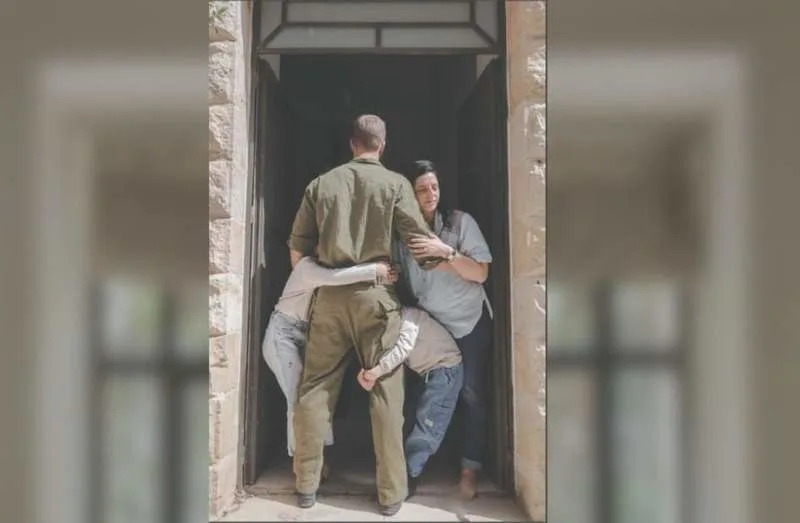
‘I’M ALWAYS admiring him for putting his values in front. But I cannot pretend that it doesn’t create tension when our house is literally falling apart.’ Here, Yitzy hugs his family as he readies to depart. (credit: Chen G. Schimmel/The Jerusalem Post)
Emotional Fallout
Roni describes living with constant anxiety when Yitzy is away: “One step I take, he’s alive. The next, he might not be.” She says that early in the war she felt unable to voice those fears — she had done national service, not military service — and only spoke openly on camera seven months in during a KAN 11 interview.
Guilt, resentment and anger have built over time. She wants the government to plan sustainable rotations, arguing that reservists and their families cannot indefinitely absorb repeated deployments without support.
Reintegration And Parenting Strain
Short returns home bring relief but also conflict. Roni describes a pattern: relief in the first month, tensions surfacing in the second, and then another deployment. When Yitzy is home he is devoted and fully present with the children, but the long absences have eroded Roni’s patience and affected her parenting. One child vents anger at her while Yitzy is away, she says, a price the family pays for miluim.
Now six months pregnant, Roni had hoped this would be a moment for Yitzy to decline a rotation; he did not. The lack of a reliable support network and the demands of extra work hours have increased her burden.
Accountability And Hope
Roni directs much of her anger toward the government, which she says relies on reservists to “keep showing up” without a long-term plan for rotation and relief. Still, she believes the family can emerge stronger with therapy and mutual effort. She admires her husband’s compassion even as she fears for him in a war zone.
“He’s the most sensitive person — his heart is in his eyes. He’ll help anyone, anywhere, even to his own harm,” she said. “I don’t want to do this another second, but I’m proud I held the fort.”
The Friedmans’ story underscores the invisible costs of prolonged reserve mobilization: the strain on spouses, the fragility of reintegration, and the urgent need for policies that balance national defense with family stability.
Help us improve.