The article assesses how Gulf states may reconfigure collective security if a ceasefire and memorandum between Washington and Tehran move forward. It explains how the longstanding US military presence in the region helped deter threats but also made host states targets, and it notes at least 28 fatalities from suspected Iranian strikes in the Gulf. Analysts argue Gulf countries will likely pursue a hybrid strategy — retaining US ties while boosting regional cooperation, diplomatic engagement with Iran where possible, and investment in domestic defence capacity.
How Gulf States May Rebuild Collective Security Once a Ceasefire With Iran Is Reached
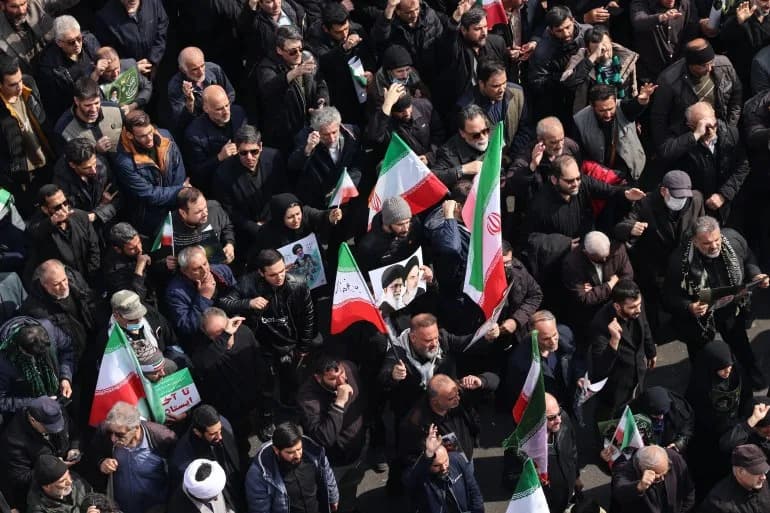
Iranians in Tehran at the funerals of Iran’s Revolutionary Guards Corps (IRGC) commanders, army officers and others killed in the early days of the United States and Israeli strikes on Iran, March 11, 2026 [AFP]
As Washington and Tehran move toward a long-term ceasefire, Gulf states are likely to reassess how they secure their territories and economies after a conflict they did not start finally subsides. The potential agreement — and comments suggesting a signing "time" and "place" — could prompt a strategic reset across the Gulf, where hosting foreign forces has shaped security policy for decades.
Background
The United States maintains military facilities at some 19 locations across the Middle East and North Africa, including permanent bases in Bahrain, Egypt, Iraq, Jordan, Kuwait, Qatar, Saudi Arabia and the United Arab Emirates. Before the war on Iran began, roughly 40,000–50,000 US troops were stationed across the region. That US–Gulf security nexus has long underwritten regional defence, intelligence sharing and logistical support.
How the War Changed the Equation
Over the past months, Gulf states that host US facilities have themselves been targeted in suspected Iranian drone and rocket strikes. At least 28 people have been killed across the six Gulf Cooperation Council states in such attacks since the start of the offensive on 28 February. Those strikes have exposed a paradox: Tehran repeatedly calls Gulf neighbours "brothers," even as some of its forces have attacked Gulf targets.
"If there is a way to describe the prevailing security model in the region since the 1980s, the concept of security partnerships best encapsulates it," said Mahjoub Al-Zuwairi, an academic and Middle East politics expert. "The countries of the region have chosen to align their security with broad international alliances. For decades, this model has provided a reasonable deterrent and logistical and intelligence depth that is difficult to replace."
Scholars and officials increasingly question whether reliance on distant guarantors still delivers security when those guarantors also expose hosts to retaliation. "The war itself has pierced that sense of security," Simon Mabon of Lancaster University told Al Jazeera. "The US security umbrella is moribund at worst, or ineffective at best. The presence of US forces on their territory directly meant they became targets."
Economic and Strategic Pressures
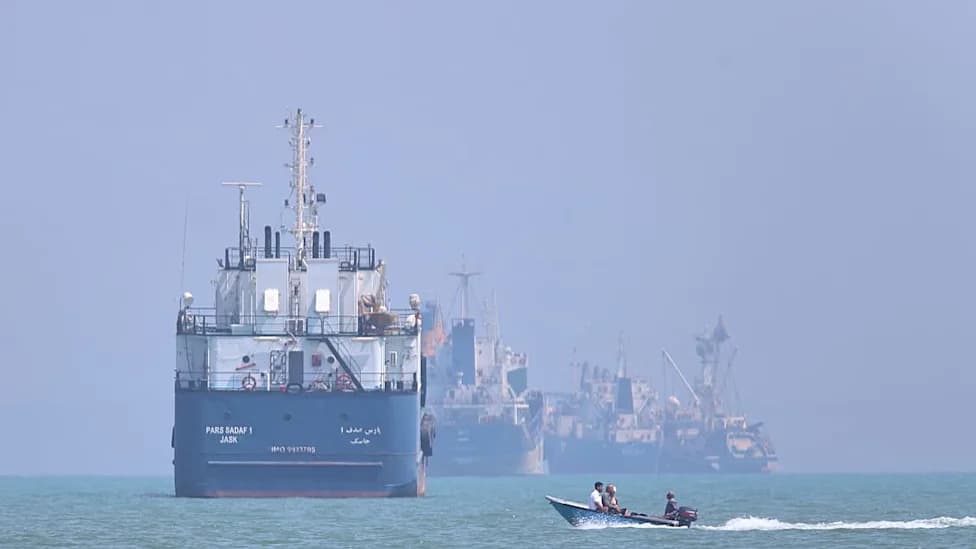
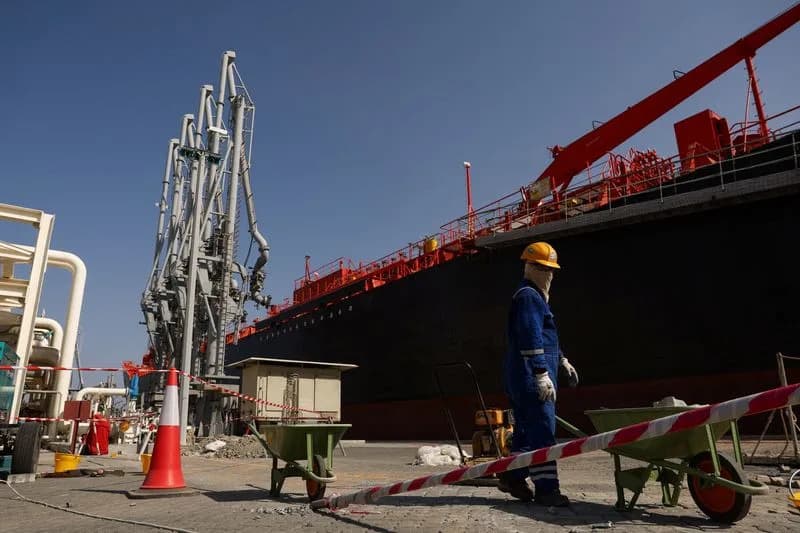
The temporary closure of the Strait of Hormuz highlighted economic vulnerabilities. Saudi Arabia diverted some exports through its East–West pipeline to the Red Sea, and Oman — with ports largely outside the strait — benefited from higher prices. But the UAE, Bahrain, Kuwait and Qatar were more exposed, accelerating debates about diversifying export routes and energy dependencies.
"There are new pipelines being set up, but the capacity of these alternatives is infinitely smaller than the Strait itself," Mabon noted. Building comparable capacity will require substantial investment and years of work.
Paths Forward
Gulf responses are likely to be pragmatic and plural. Options discussed by analysts and regional actors include:
- Hybrid Security Arrangements: Retain ties with the United States while strengthening regional cooperation, mutual-defence agreements and interoperability among Gulf states.
- Engagement With Iran: Where politically feasible, deepen diplomatic ties to reduce the risk of future escalation. The UAE restored diplomatic relations with Tehran in 2022, and Saudi Arabia and Iran agreed to normalise relations in a China-brokered deal in 2023.
- MENA-Led Security Frameworks: Revisit proposals such as the 2019 Hormuz Peace Initiative, which envisioned a security architecture including Iran, Iraq and the six GCC countries — though recent attacks have badly eroded immediate prospects for trust.
- Domestic Defence Investment: Expand local defence industries, logistics and early-warning capabilities so states are less reliant on external forces and better able to deter or absorb attacks.
One concrete template already in the region is the mutual defence understanding between Saudi Arabia and Pakistan, signed last September, which treats an attack on one as an attack on both. Yet history shows Gulf states respond differently when they feel abandoned; some deepened ties with Israel, while others sought closer relations with neighbours or new security partners.
Outlook
The most probable near-term outcome is a hybrid model: continued security relationships with extra-regional partners (notably the United States) combined with stronger regional cooperation, selective engagement with Iran, and greater investment in domestic defence and economic resilience. A truly regional security architecture including Iran remains an aspirational goal but will depend on tangible changes in behaviour and trust-building measures.
Bottom line: The war underscored that no external guarantor fully insulates Gulf states from regional fallout. Many leaders now see that lasting security will require local ownership, new regional mechanisms and pragmatic hedging between global partners and neighbouring powers.
Help us improve.