The House of Representatives passed H.R. 5408, the Faster Labor Contracts Act, changing how first collective-bargaining agreements are negotiated after union certification. The measure imposes a compressed, mandatory federal timeline that culminates in binding interest arbitration if parties have not reached agreement within roughly five months.
Personal Context
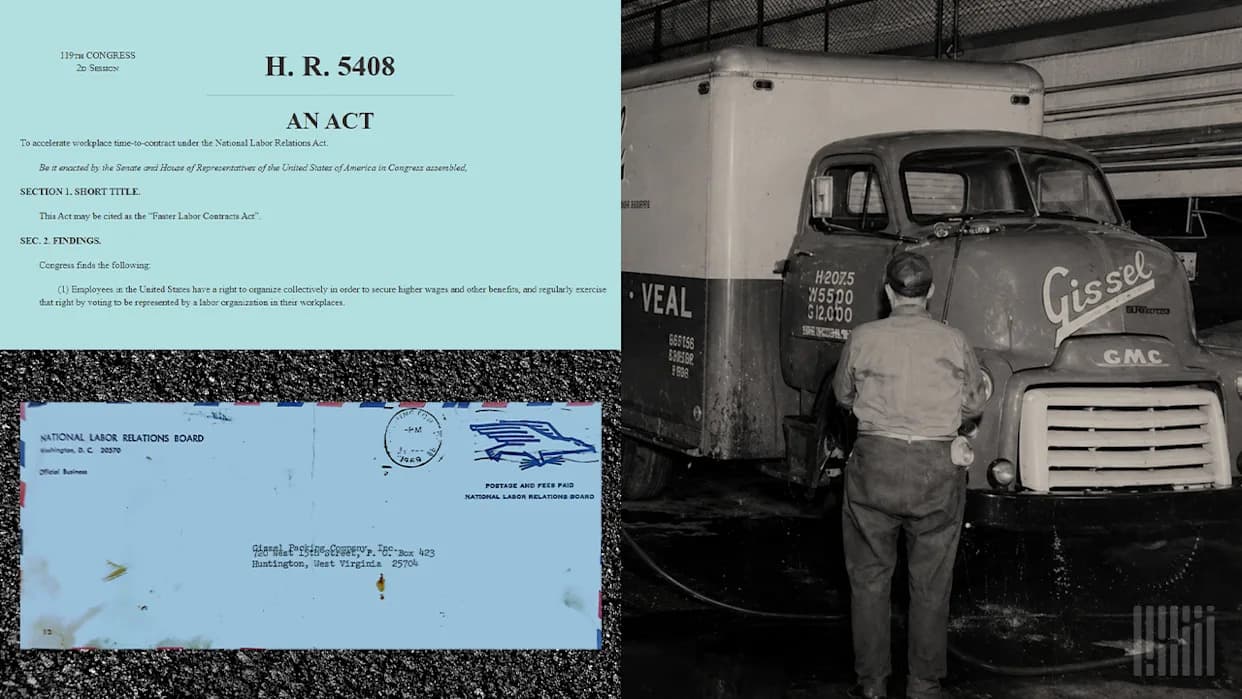
I come from a family steeped in American industry and labor disputes. My paternal grandfather, Jack Emerson, farmed in Virginia and helped raise me; another ancestor, Irvin Carpenter, was once involved in a Supreme Court case about prenuptial asset disclosure. The most consequential family episode for this debate was my maternal grandfather, Roman Gissel of Gissel Packing in Huntington, West Virginia. He emigrated with virtually nothing, built a meatpacking business, and ultimately chose to close the company rather than operate under terms he considered imposed and illegitimate after an NLRB bargaining order. That episode—NLRB v. Gissel Packing Co. (1969)—remains a touchstone in labor-law classes and informs my view of what mandatory arbitration can mean in practice.
What H.R. 5408 Does
- Day 10: Employer must begin bargaining after union certification.
- Day 100: If no agreement, the Federal Mediation and Conciliation Service (FMCS) is engaged.
- Day 130: If mediation fails, binding interest arbitration is triggered.
- Day 144: An arbitration panel may impose a complete first contract covering wages, benefits, work rules, and related terms.
In practice this yields up to about 120 days of bargaining (90 days of direct negotiation plus 30 days of mediation) before a government-appointed arbitrator can impose terms.
Legislative Path And Vote
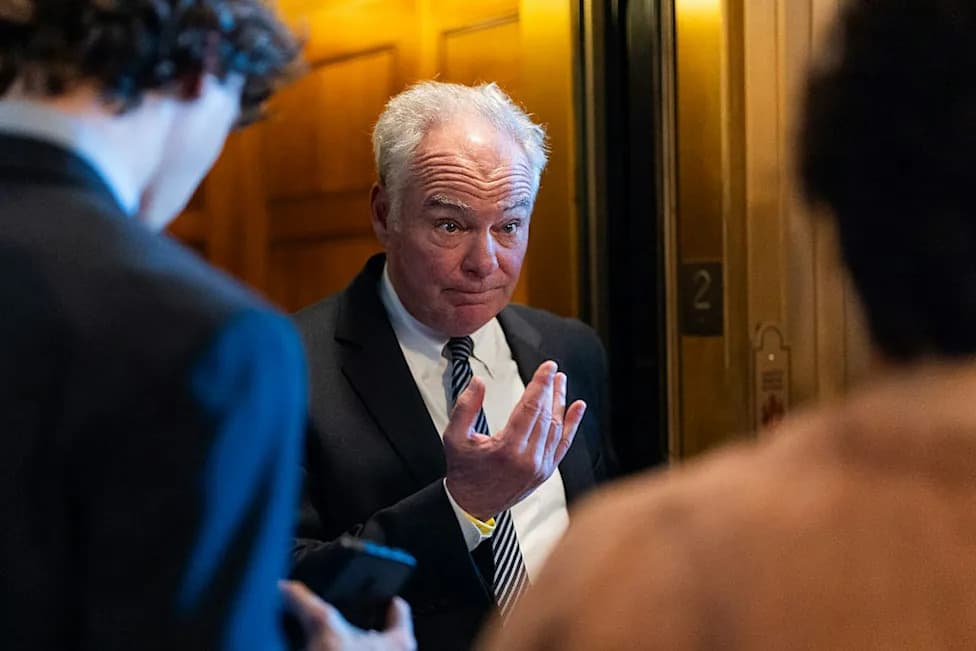
Representative Donald Norcross (D–NJ) introduced the bill. A discharge petition reached 218 signatures on May 20, 2026, forcing the bill out of committee and onto the House floor without the usual committee process, CBO scoring or extended stakeholder input. The House passed H.R. 5408 on June 9 by a 230–193 vote: all 210 Democrats and 20 Republicans voted in favor. Many of those Republican yes votes came from swing districts with substantial union households — a notable political calculation that could matter in the Senate.
Why Trucking And Freight Operators Are Worried
Trucking and freight operations face complex, multi-state compliance, seasonal freight patterns, fluctuating fuel costs, equipment financing, insurance renewals and driver-classification issues. Those cost drivers and operational nuances often require several budget cycles and detailed negotiation to reflect business realities. Under H.R. 5408, an arbitrator who has not run a terminal or managed a fleet P&L could impose a contract within five months, potentially undermining fragile margins or mismatching comparables from larger carriers.
Arguments For And Against
Supporters: Proponents argue the bill speeds agreement, reduces prolonged bargaining stalemates, and guarantees workers a timely first contract.
Critics: Opponents warn it creates a one-size-fits-all mechanism that ignores sector differences, distorts bargaining incentives (both sides may wait for arbitration), and could push marginal employers to close — examples cited include Gissel Packing and the Hostess liquidation in 2012.
Next Steps And Practical Advice
The bill moves to the Senate, where it would need 60 votes to overcome a filibuster. A White House statement of support could change the political calculus for GOP senators from labor-heavy states, making the outcome a matter of sustained lobbying.
If you are an employer, fleet operator or trade association member (ATA, OOIDA, TCA or state associations), take immediate steps:
- Consult experienced labor counsel now to understand exposure under a 120-day mandatory bargaining timetable.
- Engage your government affairs office and trade associations about a coordinated Senate strategy.
- Prepare operational scenarios (budget impacts, contingency plans) in case an organizing campaign begins while this framework is in effect.
Bottom Line
H.R. 5408 represents a structural change to first-contract bargaining in the private sector. If enacted, it would accelerate the timeline for agreements but could also impose contracts that do not account for industry-specific costs and operational realities. The Senate is the firewall; employers and associations should mobilize now.