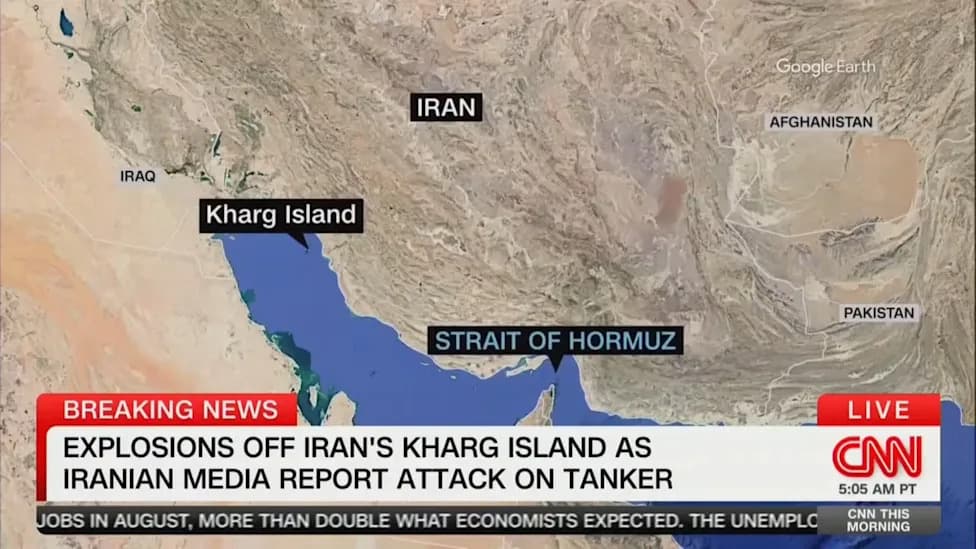
Kharg Island hosts Iran’s main crude export terminal and has become a central strategic target in the recent U.S.-Israel campaign. Strikes on the island or a U.S. occupation would sharply reduce Iran’s oil revenue and remove supply from global markets, risking higher fuel prices and economic disruption. President Trump has alternately warned energy sites could be targeted and then paused strikes amid fragile ceasefire talks. Because Kharg sits just 33 km from Iran and near the Strait of Hormuz, any action there could rapidly escalate into wider regional conflict.
Why Kharg Island Matters: The High Stakes of Targeting Iran’s Oil Hub
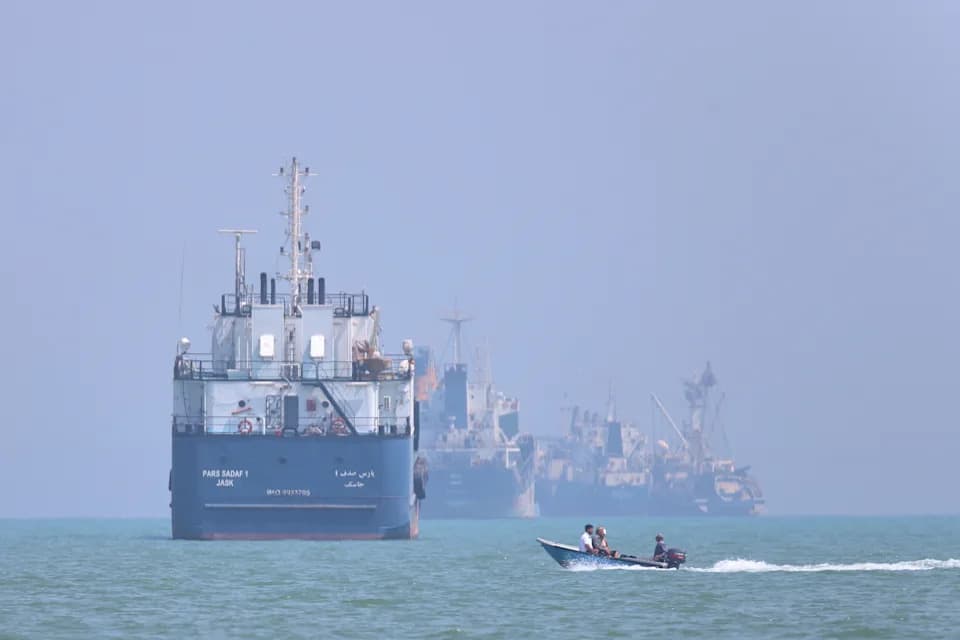
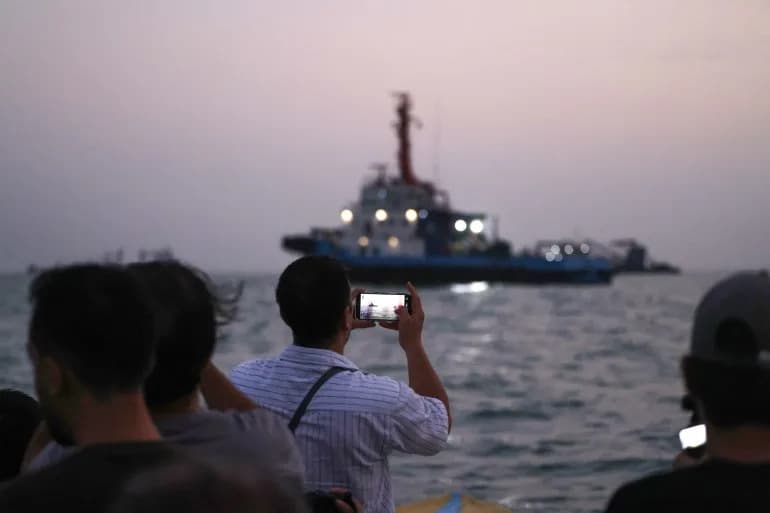
A small motorboat passes anchored vessels in the Strait of Hormuz off Bandar Abbas, Iran, Thursday, June 11, 2026.(Amirhosein Khorgooi/ISNA via AP)(AP Photo/Amirhosein Khorgooi)
Kharg Island, home to the export terminal that handles the bulk of Iran’s crude shipments, has emerged as a strategic flashpoint in the conflict that intensified in late February involving the United States and Israel.
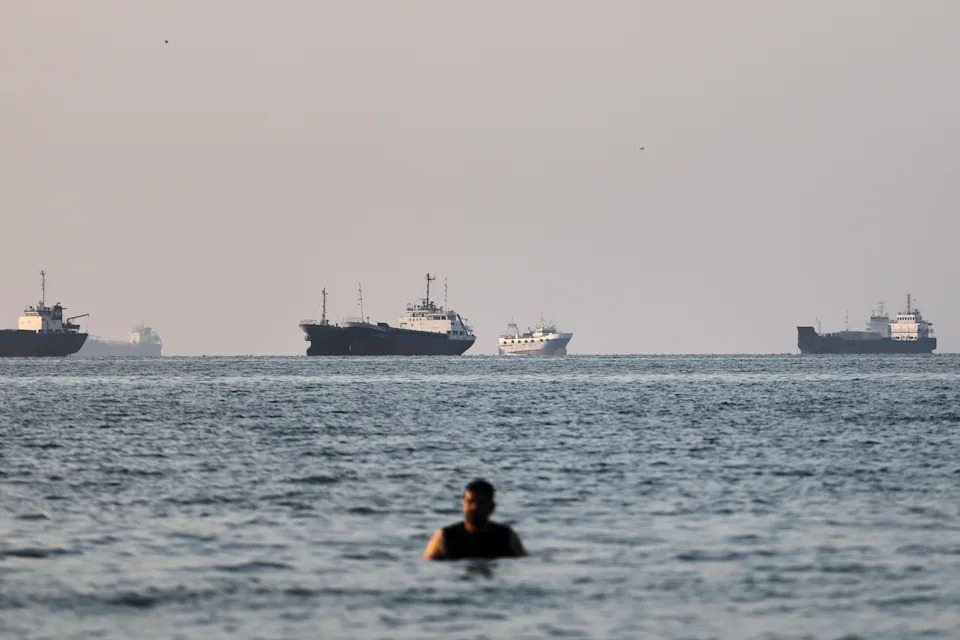
A person stands on shallow water as cargo and commercial vessels are anchored in the Strait of Hormuz off Bandar Abbas, Iran, Monday, June 8, 2026. (Amirhosein Khorgooi/ISNA via AP)(AP Photo/Amirhosein Khorgooi)
Why Kharg Matters
Kharg’s terminal is central to Iran’s oil exports—a principal source of government revenue. Attacks on the island’s oil facilities or a ground occupation would sharply curtail Iran’s ability to sell crude and would remove additional supply from already-tight global markets, driving prices higher and increasing economic stress worldwide.
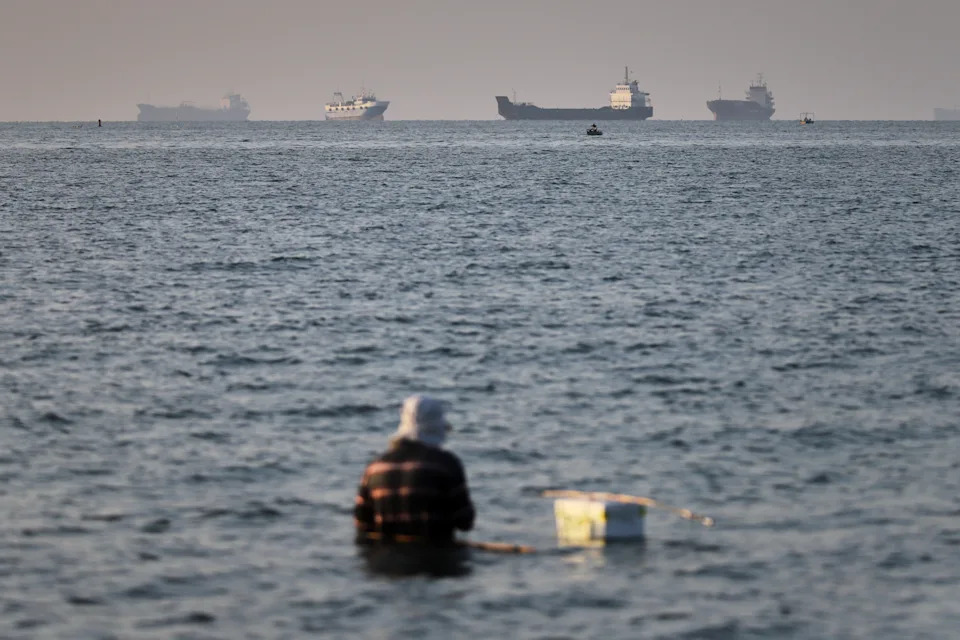
A person sits on shallow water as cargo and commercial vessels are anchored in the Strait of Hormuz off Bandar Abbas, Iran, Monday, June 8, 2026. (Amirhosein Khorgooi/ISNA via AP)(AP Photo/Amirhosein Khorgooi)
Military and Political Risks
U.S. President Donald Trump said mid-March strikes had “obliterated” Kharg’s military installations but that energy infrastructure on the island had not been targeted. He warned that continued Iranian interference with shipping through the Strait of Hormuz could prompt a reversal of that restraint. In a later social media post he claimed the U.S. would “assume total control” of Iran’s oil and gas industries — specifically naming Kharg — before stating he called off planned strikes after reporting progress in ceasefire talks.
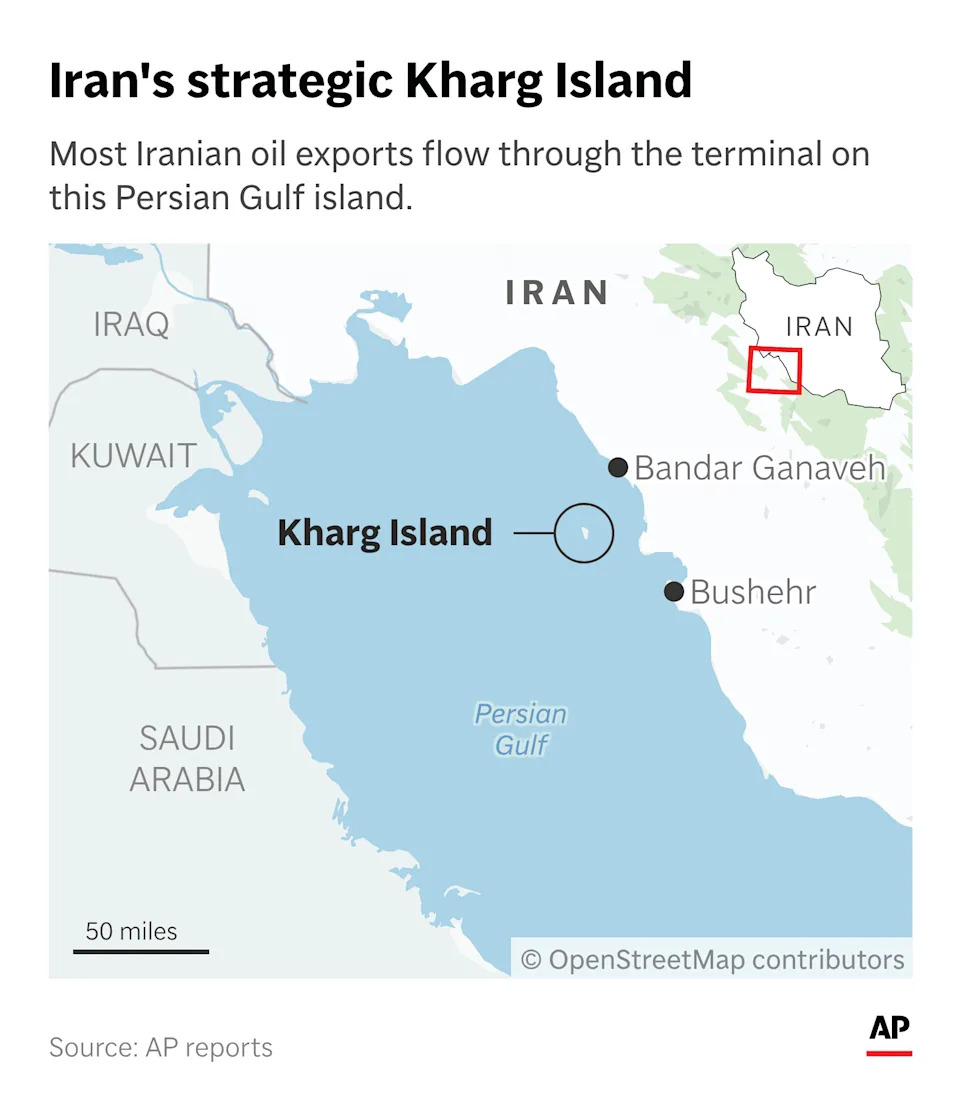
Iran exports most of its oil through a terminal on a Persian Gulf island. (AP Digital Embed)(AP Photo/Kevin S. Vineys)
An assault or occupation would represent a significant escalation, likely provoking heavy reprisals against Gulf Arab energy infrastructure and further destabilizing global energy markets. Any sustained U.S. presence on Kharg would place forces roughly 33 kilometers (21 miles) from Iran’s coast, well within range of Iranian drones and missiles, raising the prospect of intense retaliation and rapid escalation.
Geography, Logistics, and Economic Impact
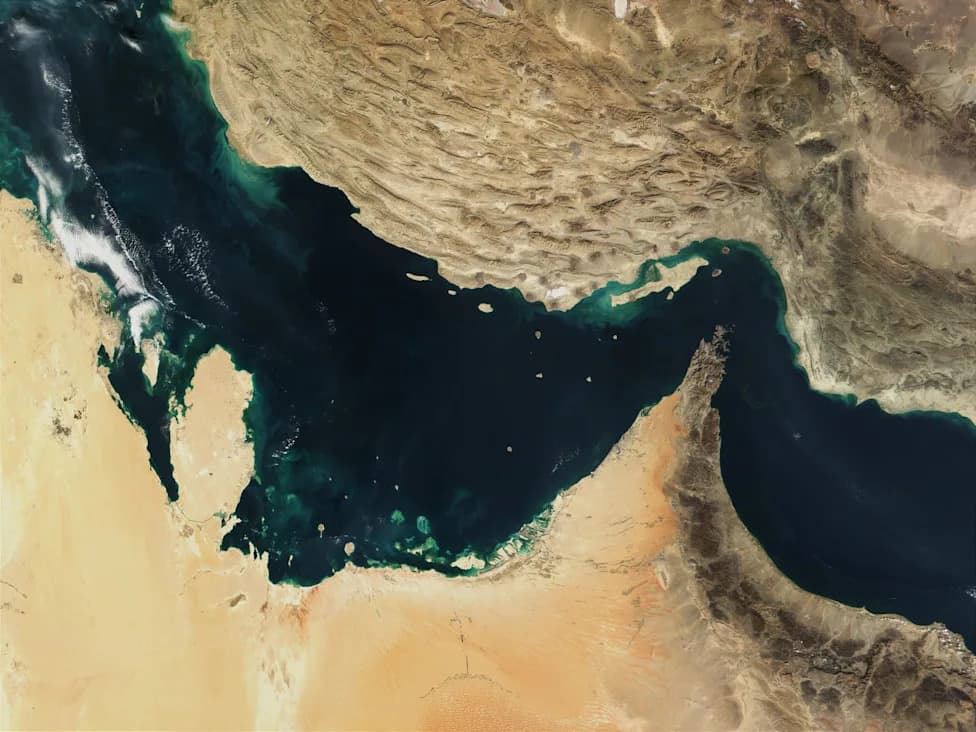
Kharg’s strategic value is amplified by Iran’s shallow coastline, which prevents most tankers from berthed loading; export operations therefore rely on the island’s terminals and storage facilities. A U.S. naval blockade of Iranian ports has already constrained Tehran’s exports—many of which are destined for China—while Iranian attacks have intermittently disrupted traffic through the Strait of Hormuz, a waterway that handled about one-fifth of world-traded oil before the conflict.
Destroying or losing the Kharg terminal would both deprive Iran of crucial revenue and remove more oil from world markets at a time of elevated prices, further weakening Iran’s economy and complicating any postwar reconstruction efforts.
Human and Cultural Considerations
Kharg Island hosts extensive storage tanks and housing for thousands of workers. The island’s environment features roaming gazelles near refineries and depots, and it contains cultural heritage sites, including a medieval Portuguese fortress and the ruins of one of the Persian Gulf’s oldest Christian monasteries—places at risk if fighting intensifies.
Bottom line: Targeting Kharg carries large military, economic and diplomatic risks. Any attack would reverberate far beyond the island—threatening regional stability, global energy markets, and cultural heritage.
Help us improve.