
The House is expected to vote on a short-term renewal of FISA section 702 on Thursday amid Democratic protests over President Trump’s appointment of Bill Pulte as acting director of national intelligence. Democrats say Pulte lacks required national security experience and are demanding reforms before they will support reauthorization. Republicans seek an extension only until 2 July under a two-thirds fast-track vote, a threshold they are unlikely to clear. A FISC certification currently allows collection to continue through about March 2027 even if Congress does not act.
House Poised To Push Short-Term Renewal Of FISA Section 702 Amid Row Over Bill Pulte Appointment
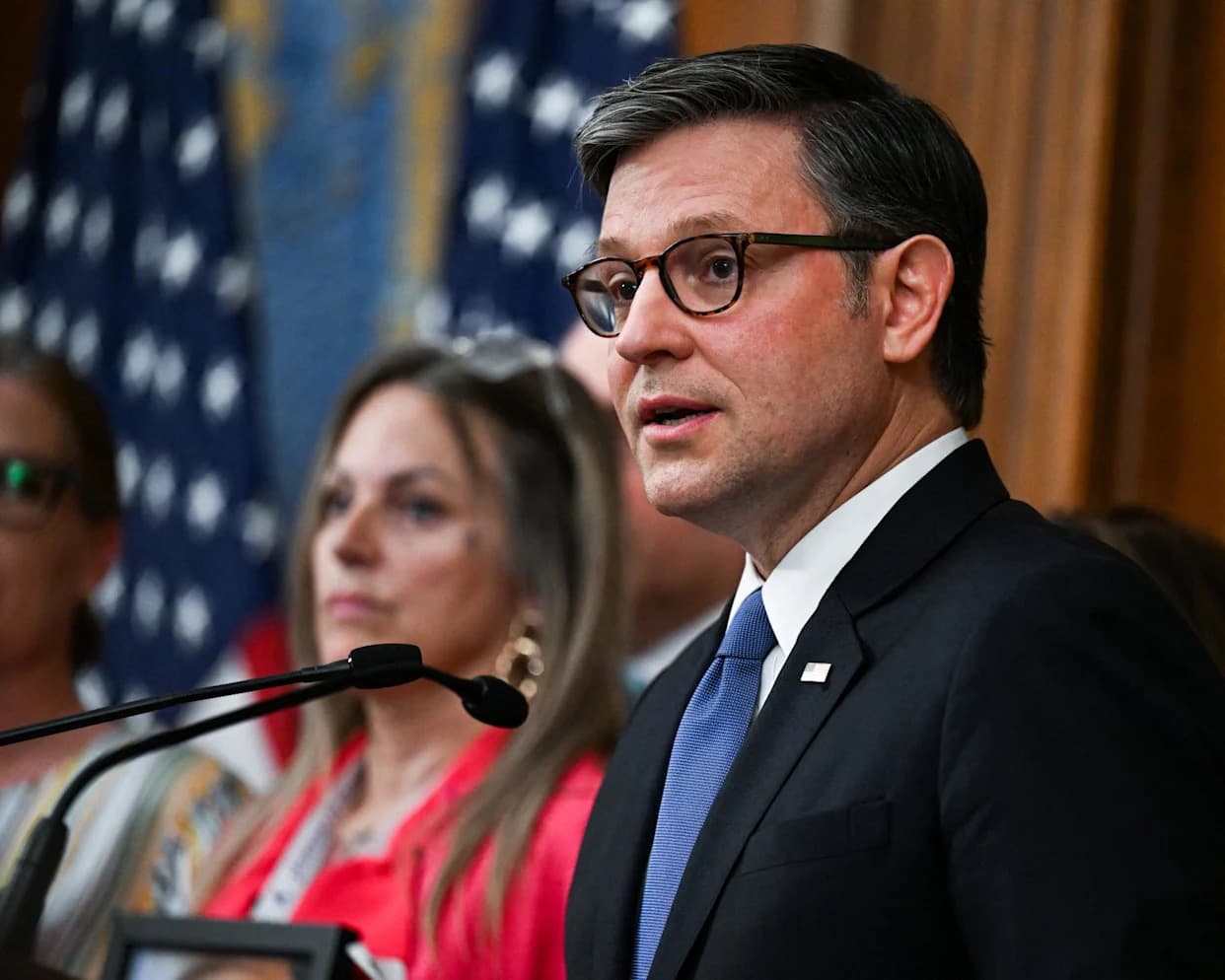
Mike Johnson on Capitol Hill in Washington DC on Tuesday.Photograph: Annabelle Gordon/Reuters(Photograph: Annabelle Gordon/Reuters)
The US House of Representatives is set to vote Thursday on a short-term renewal of section 702 of the Foreign Intelligence Surveillance Act (FISA), a powerful surveillance authority that permits certain warrantless collection of foreign communications. The move comes as Democrats threaten to block renewal in protest of President Donald Trump’s appointment of Bill Pulte as acting director of national intelligence.
Democrats argue Pulte — a major Republican donor and heir to a homebuilding fortune — lacks the national security experience the law’s authors and congressional critics say the office demands. Their leaders have tied opposition to reauthorization to concerns about the appointment and to demands for meaningful reforms to the surveillance program.
Republican leaders in the House are planning to offer a short extension that would keep section 702 in force only until 2 July, advancing the measure under an expedited procedure that requires a two-thirds majority to pass. Given unified Democratic opposition, that threshold is unlikely to be met.
Why The Fight Matters
Section 702, enacted after the 11 September 2001 attacks, authorizes US intelligence agencies to collect certain foreign-to-foreign communications and communications of foreigners based overseas without a traditional court warrant. Civil liberties advocates and some lawmakers have long pushed for reforms to protect Americans’ privacy and to tighten minimization and query rules.
"Bill Pulte has no relevant national security experience. Consequently, his appointment is in defiance of the law that requires the Director of National Intelligence to have ‘extensive’ national security experience," House Minority Leader Hakeem Jeffries and top House Democratic leaders said in a joint statement. "The apparent motivation for his elevation is the demonstrated willingness of Bill Pulte to search government databases for alleged dirt on President Trump’s chosen political enemies."
"There is a path to reauthorizing FISA, but it will require enacting meaningful reforms," the Democrats added, saying they oppose a short-term measure that they view as "kicking the can down the road."
Practical Impact If Congress Does Not Act
A failure to pass a reauthorization would not immediately halt section 702 collection. A Foreign Intelligence Surveillance Court (FISC) certification currently authorizes collection under section 702 through roughly March 2027, and the statute contains a provision allowing collection to continue under that court order for a limited period even if the statutory authority lapses.
Last week a similar short-term extension failed in the US Senate: most Democrats voted against the measure (with Sen. John Fetterman as an exception), and seven Republicans also opposed it citing civil liberties concerns. After that defeat, the Republican chairs of the Senate Intelligence and Judiciary committees asked the administration and relevant national security offices to prepare for a potential significant gap in foreign intelligence collection if section 702 is not reauthorized.
As the House moves toward its vote, the outcome will shape not only near-term intelligence authorities but also the broader debate over surveillance reforms and oversight of the national intelligence apparatus.
Help us improve.





















