
Cuba, facing an almost five-month US oil blockade, is hoping the World Cup — which runs until 19 July and stages seven matches in nearby Miami — will reduce the immediate risk of a US military strike. Leaked intelligence suggests Havana may have acquired up to 300 drones from Russia and Iran, some reportedly with ranges of about 1,500 miles. US officials have warned against weapons that could reach Guantánamo Bay or the US mainland, while domestic unrest, blackouts and new armed patrols raise tensions at home.
World Cup Could Offer Cuba a Brief Respite From U.S. Pressure — But Havana Readies for the Worst
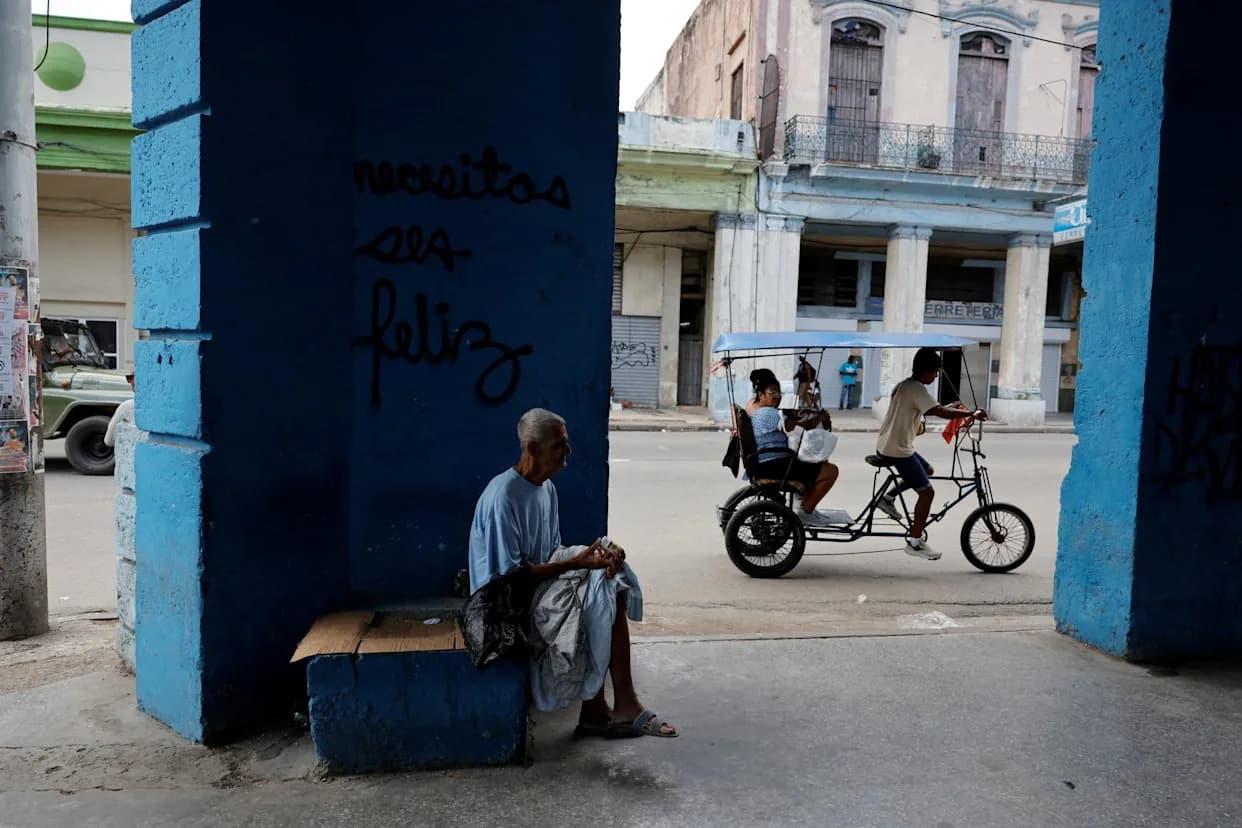
A man sells used items on the street in Havana, Cuba, on 6 May 2026.Photograph: Norlys Perez/Reuters(Photograph: Norlys Perez/Reuters)
Cuba, reeling under an almost five-month US oil blockade, is pinning hopes on the World Cup as a short-term diplomatic shield — at least until the tournament concludes on 19 July. With seven matches scheduled in nearby Miami, some Cubans and diplomats hope global attention on the event could make a US military strike politically costly or diplomatically awkward.
Geography and the tournament
Miami will host seven World Cup matches, including high-profile fixtures such as Scotland vs. Brazil. The city is only a little more than 200 miles (about 320 km) from Cuba’s northern coast; the Scottish Football Association expects roughly 20,000 travelling fans. Eight national teams have training bases in Florida, and the first Miami match — Uruguay vs. Saudi Arabia — is scheduled for 15 June, with tens of thousands of visitors expected in the region.
Military concerns and intelligence reports
Last month, classified US intelligence documents reportedly leaked to Axios suggested that Havana may have acquired up to 300 military drones from Russia and Iran. Some models of Iranian-made drones have been reported to have ranges of roughly 1,500 miles (about 2,400 km).
"The beginning of the World Cup will make it more difficult for the United States to carry out a military action in Cuba," said Carlos Alzugaray, Cuba’s former ambassador to the EU. "Cuba is very close to the US, and can hit many targets inside the US, especially in south Florida, with drones or other weapons."
US Defence Secretary Pete Hegseth, visiting the Guantánamo Bay base, appeared to reference those reports, warning troops that "it would be unwise for the government of Cuba to try to procure or get access to the types of weapons that could reach this base or the American homeland." The US has also positioned naval assets in the region and flown surveillance sorties near the island, steps that have heightened tensions.
Havana’s stance and domestic pressures
There is no verified evidence that Cuba plans to disrupt the World Cup. Still, Havana’s leadership has pledged to retaliate if attacked. President Miguel Díaz-Canel warned that any US military assault would produce "a bloodbath with incalculable consequences."
At home, pressure on the government is rising. Prolonged electricity blackouts are straining daily life; protesters have used burning bins to block Calzada — a route the president often uses to reach his office near the Plaza de la Revolución — and authorities have deployed new police units in bulletproof vests, armed and patrolling on high-powered off-road motorbikes.
Context and outlook
Some observers say the World Cup could act as a temporary deterrent simply because global attention and the presence of thousands of foreign visitors raise the political cost of a major military move. Others are more skeptical, noting public rhetoric from US political figures about military options and the recent intensification of US surveillance in the Caribbean.
Whether the tournament will meaningfully reduce the risk of confrontation remains uncertain. For now, many Cubans prepare for the worst while hoping that an international sporting event will at least delay any outright military escalation.
Help us improve.





















