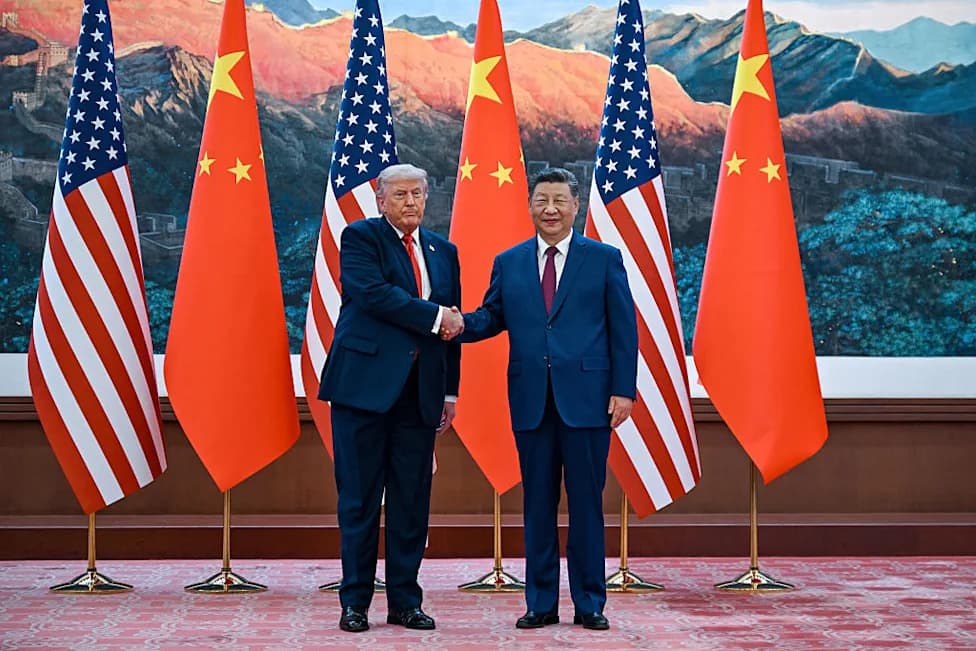
China has sharply criticized Japan’s recent moves to expand its defense role across the Indo‑Pacific, labeling Tokyo’s actions “remilitarization.” The dispute escalated after Prime Minister Sanae Takaichi said a Chinese attack or blockade of Taiwan could be a “survival‑threatening situation,” potentially allowing JSDF cooperation with allies. Tokyo has raised defense spending to 2% of GDP, approved limited lethal arms exports, and accelerated deployments and partnerships with the Philippines and Australia. Concerns about Japan’s plutonium stockpile and talk of nuclear deterrence have further alarmed Beijing, though most Japanese remain opposed to acquiring nuclear weapons.
Why Japan’s Shift From Pacifism Has Beijing on Edge
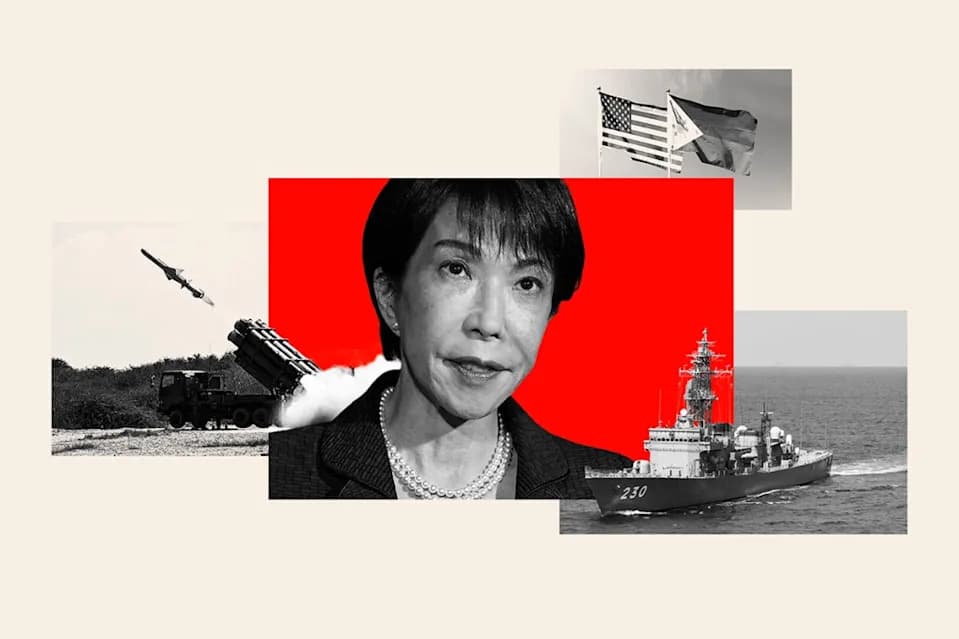
Beijing has intensified its criticism of Tokyo’s recent efforts to expand Japan’s defense posture and play a more active security role across the Indo‑Pacific. Chinese officials have characterized Tokyo’s initiatives as “remilitarization,” pointing to new defense policies, deeper cooperation with U.S. allies and deployments near contested areas.
Triggering the Latest Diplomatic Freeze
Relations chilled after Japanese Prime Minister Sanae Takaichi’s November comment that a Chinese attack on—or blockade of—Taiwan could amount to a “survival‑threatening situation.” Under Japan’s current legal framework, that threshold could permit the Japan Self‑Defense Forces (JSDF) to use force alongside an ally, such as a U.S. task force. Beijing demanded a retraction and retaliated with measures ranging from reduced China‑Japan air links to curbs on rare‑earth exports, which China says are intended to prevent strategically sensitive materials from reaching foreign defense industries.
From Postwar Restraint to Broader Security Roles
Japan’s postwar constitution renounces war and limits the maintenance of offensive armed forces. Despite that, successive administrations have widened Tokyo’s security footprint in response to China’s rapid military buildup, pressure on Taiwan and tensions over disputed islands in the East China Sea.
Former Prime Minister Shinzo Abe reinterpreted Article 9 to allow limited collective self‑defense, established a National Security Council and loosened long‑standing restrictions on defense exports. Building on that legacy—and backed by a historic political majority—Prime Minister Takaichi has pushed further. In February, her government approved limited exports of lethal weapons to partner countries under strict end‑use controls and accelerated plans to increase defense spending to 2 percent of GDP.
Notable Deployments and Partnerships
Tokyo has moved to reinforce remote islands and upgrade its deterrence posture. The Defense Ministry said it began shipping a Type‑12 surface‑to‑ship missile launcher to Minamitorishima, Japan’s easternmost island. Earlier announcements confirmed plans to deploy Chu‑SAM surface‑to‑air missile units on Yonaguni, about 70 miles from Taiwan—deployments that Beijing condemned as “extremely dangerous.”
Japan has deepened security ties with regional partners, notably the Philippines and Australia. At the Shangri‑La Dialogue, Defense Minister Shinjiro Koizumi urged pooled capabilities—joint training, intelligence sharing, technology cooperation and defense‑industrial collaboration—to build “effective deterrence and response capabilities.”
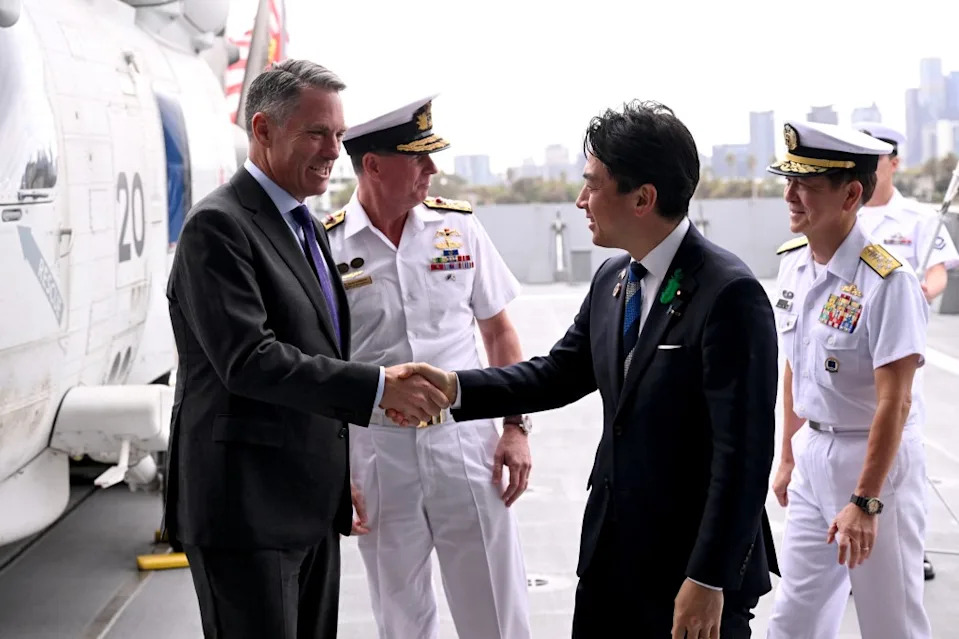
Australian Deputy Prime Minister and Minister Richard Marles (L) shakes hands with Japanese Minister of Defense Koizumi Shinjiro (R) in Melbourne after the signing of the contract for Japan to deliver the first three of Mogami-class warships, on April 18, 2026.
Tokyo and Manila agreed to accelerate talks on transferring retired 2,000‑ton Abukuma‑class frigates; Manila hopes to receive up to five vessels, potentially entering service within a year or two. Japan has already supplied radar systems to strengthen Philippine maritime domain awareness and is discussing possible transfers of Type‑88 anti‑ship missiles under Tokyo’s relaxed export rules.
Japan and Australia have also expanded interoperability. The two countries signed reciprocal access arrangements to streamline troop and equipment movements and launched a framework to coordinate defense policy, intelligence sharing and cooperation across cyber, space and missile‑defense domains. Australia plans to acquire and co‑develop Mogami‑class frigates with Japan—the largest defense‑industrial partnership in Tokyo’s postwar era.
Plutonium Stockpile and Nuclear Latency
Beijing has highlighted Japan’s large plutonium stockpile, arguing it exceeds foreseeable civilian needs and could enable a rapid nuclear breakout. The issue resurfaced after a senior adviser to Prime Minister Takaichi suggested Japan should begin discussing the possibility of a nuclear deterrent in light of China’s and North Korea’s expanding arsenals—an idea that would run counter to Japan’s Three Non‑Nuclear Principles (no possession, production or introduction of nuclear weapons).
Japan holds the bulk of plutonium among non‑nuclear‑weapon states and uniquely maintains a civilian nuclear fuel cycle that includes commercial reprocessing. Although Tokyo says the plutonium is intended for mixed‑oxide fuel, the International Atomic Energy Agency (IAEA) generally estimates about 8 kilograms of separated plutonium as sufficient for one nuclear weapon—meaning Japan’s inventory could, in theory, support rapid weapons production if political will changed.
“In terms of a single weapon, on the order of six to 12 months is a fairly conservative estimate, given industrial capacity, facilities, expertise in nuclear science and, of course, the availability of physical materials,” Ankit Panda, a nuclear policy expert at the Carnegie Endowment for International Peace, told Newsweek.
Panda added that actual weaponization remains unlikely unless confidence in U.S. security guarantees were to collapse, framing Japan’s posture as hedging—preserving latency as a contingency.
Public Opinion and Regional Perceptions
Public sentiment in Japan remains largely opposed to acquiring nuclear weapons: a January Jiji Press poll found 62.6 percent opposed and 16.7 percent in favor. Regionally, Beijing’s claims of Japanese “remilitarization” have gained little traction outside China and North Korea. A survey from the ISEAS–Yusof Ishak Institute found Japan to be the most trusted major power in Southeast Asia, with 65.6 percent of respondents naming it their preferred partner.
Newsweek reached out to the Chinese and Japanese Foreign Ministries via email for comment.
Help us improve.