Xi Jinping’s recent visit to Pyongyang drew extensive state media coverage but omitted any public mention of North Korea’s nuclear program, a silence many analysts interpret as a strategic shift by Beijing. China appears to be prioritizing regional stability over a rigid denuclearization-first policy, acknowledging Pyongyang’s entrenched capabilities. North Korea recently unveiled a new nuclear-materials facility and is estimated to produce material for 10–20 bombs annually while nearing ICBM capability. The change could cement a longer-term deterrence posture among the U.S. and its allies while keeping China central to any diplomatic solution.
Xi’s Quiet Message: Why Beijing’s Silence on North Korea’s Nukes Matters
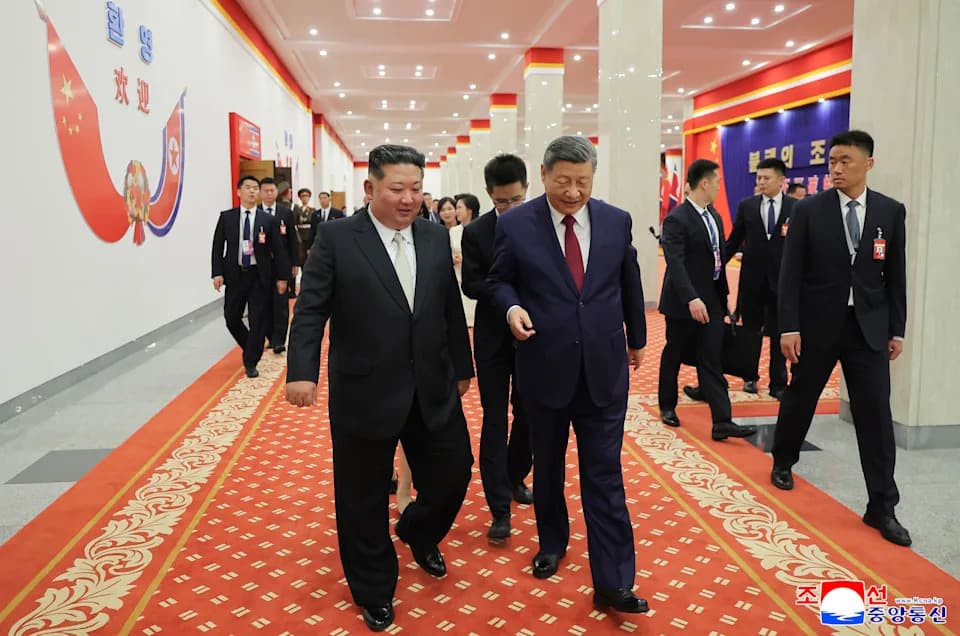
In this photo provided by the North Korean government, North Korean leader Kim Jong Un, left, and Chinese President Xi Jinping, right, walk together after a welcome performance in Pyongyang, Monday, June 8, 2026. Independent journalists were not given access to cover the event depicted in this image distributed by the North Korean government. The content of this image is as provided and cannot be independently verified. Korean language watermark on image as provided by source reads: "KCNA" which is the abbreviation for Korean Central News Agency. (Korean Central News Agency/Korea News Service via AP)(KCNA via KNS via AP)
Chinese and North Korean state media gave extensive, positive coverage this week to President Xi Jinping’s two-day visit to Pyongyang, yet conspicuously avoided public discussion of North Korea’s advancing nuclear program. That omission is significant: it suggests a recalibration of Beijing’s approach toward Pyongyang and has implications for regional security and diplomacy.
Background
For years Washington and Beijing cooperated to persuade North Korea to relinquish its nuclear ambitions in return for aid and recognition. Those talks effectively collapsed in 2019, but at the time Chinese officials regularly invoked the term “denuclearization,” keeping hopes alive in Seoul, Tokyo and Washington that China would pressure Pyongyang.
Xi’s Visit And The Notable Silence
Xi’s first trip to North Korea in seven years carries symbolic weight. Unlike his 2019 visit, when Chinese media quoted Xi promising a constructive role in denuclearization, this trip made no public reference to North Korea’s nuclear program. Analysts view the omission not as an oversight but as a deliberate signal about Beijing’s priorities.
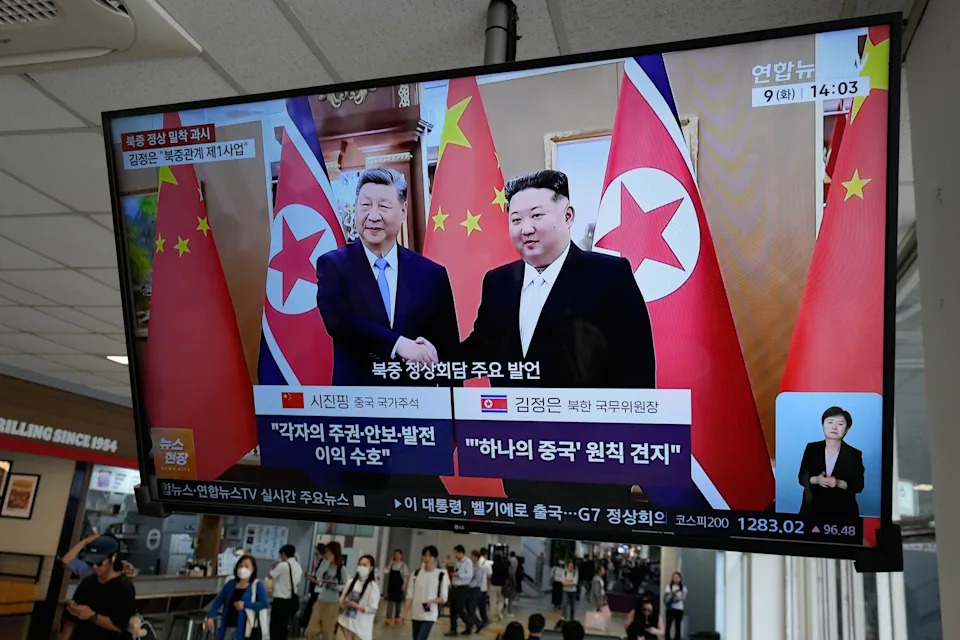
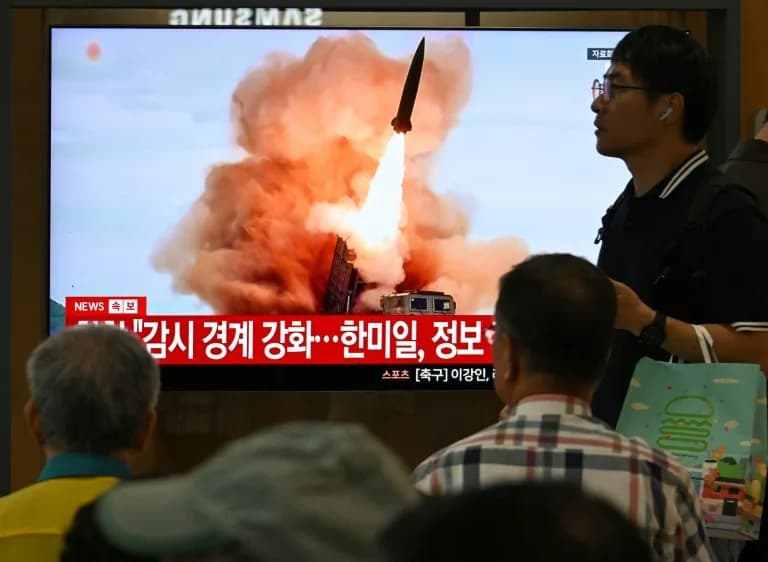
A TV screen shows an image of Chinese President Xi Jinping, left, and North Korean leader Kim Jong Un, during a news program at a bus terminal in Seoul, South Korea, Tuesday, June 9, 2026. (AP Photo/Ahn Young-joon)(AP Photo/Ahn Young-joon)
Why Beijing May Be Quiet
Several factors help explain China’s reluctance to press the denuclearization agenda publicly:
— China increasingly prioritizes regional stability, fearing the humanitarian and geopolitical fallout from a North Korean collapse along their long shared border.
— Beijing prefers the diplomatic formula “denuclearization of the entire Korean Peninsula,” which lets it call for reductions in U.S. nuclear posture in the region as well as Pyongyang’s disarmament.
— Chinese analysts argue a rigid, denuclearization-first approach risks making the situation worse and may be impractical given how entrenched North Korea’s program has become.
North Korea’s Advances
Recent public moves by Pyongyang underscore why many see the silence as consequential. North Korea unveiled a new facility to produce nuclear materials and Kim Jong Un vowed to expand his nuclear forces “at an exponential rate.” South Korean officials estimate the North produces enough nuclear fuel annually for roughly 10–20 bombs and is nearing reliable intercontinental ballistic missile (ICBM) capability.
Reactions And Regional Implications
Analysts are divided on whether Beijing is tacitly accepting North Korea's nuclear status or merely reprioritizing diplomacy toward stability. Some see Xi’s silence as enhancing China’s leverage as an indispensable stakeholder in future negotiations; others warn it could mean longer-term deterrence and coordination among the United States, South Korea and Japan. Still, experts note China’s tolerance has limits: Beijing wants stability and regional respect and may push back if North Korea’s military expansion threatens those interests.
What This Means Going Forward
Xi’s visit signals a strategic recalibration by Beijing: stabilizing the peninsula and preserving influence over Pyongyang now appear to outweigh public pressure for immediate denuclearization. That shift may harden a long-term posture of deterrence among U.S. allies while keeping China central to any future diplomatic path.
Contributors: Associated Press reporters Kim Tong-hyung and Hyung-jin Kim in Seoul, Huizhong Wu in Bangkok, and Simina Mistreanu in Taipei.
Editor’s Note: Foster Klug, AP news director for the Koreas and surrounding regions, has frequently reported from North Korea since 2005.
Help us improve.