Sweden will ban mobile phones in schools from next fall as part of a government-led effort to reduce screen time and restore book-based learning. The policy follows concerns about falling reading skills—24.3% of ninth graders failed to reach basic reading levels in PISA 2022—and includes a 555 million SEK fund for textbooks and teacher guides. While educators and some scientists praise the move, edtech groups warn it could weaken digital skill development.
Sweden to Ban Mobile Phones in Schools Next Fall as Country Embraces 'Back-to-Books' Approach

High school students from left, Vasilije Stjepanovic, Aslan Ozhan Kilicasan and Melina Sallahi pose with a history text book at Malmo Borgarskola high school in Malmo, Sweden, May 21, 2026. (AP Photo/James Brooks)
Sweden, long known for its rapid embrace of classroom technology, will prohibit mobile phones in schools beginning next fall as part of a wider push to reduce screen time and emphasize book-based learning.
The center-right coalition government, in place since 2023, says the policy responds to falling literacy and concentration among young students. Lawmaker Joar Forsell, chair of the Swedish parliament's education committee, said officials have documented a decline in basic reading and writing skills and that "books and more traditional ways of learning are better for kids."
What the Policy Includes
The national mobile-phone ban will build on restrictions already used independently by many schools. The government has set aside 555 million Swedish krona (about $59 million) to fund textbooks and teachers’ guides as part of the shift back to nondigital materials.
Evidence and Rationale
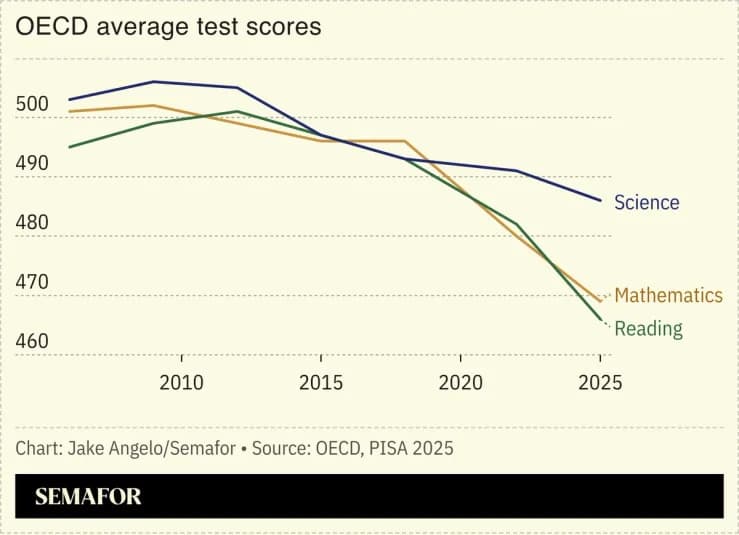
Sweden's move was prompted in part by international assessments: the 2022 Program for International Student Assessment (PISA) found that 24.3% of Swedish ninth graders did not reach a basic level of reading comprehension—slightly better than the EU average but a worrying sign for policymakers.
"We’re rolling the screens back because we believe that books and more traditional ways of learning are better for kids," — Joar Forsell.
Researchers such as Magnus Haake, associate professor of cognitive science at Lund University, argue that physical learning materials engage motor-sensory brain systems and can improve memory and comprehension.
How Schools Are Responding
Some schools have already adopted practical measures: at Malmö Borgarskola high school, students deposit phones in a locked box nicknamed the "Mobile Hotel" during lessons and are still provided laptops for approved tasks. Deputy Headmaster Patrik Sander said teachers now discourage laptop use in class unless it is required for a specific activity, noting that handwriting can aid retention.
Outside the classroom, Sweden's public health agency has encouraged parents to model limited device use by creating "screen-free zones" at home. A new curriculum prioritizing book-based learning is expected by 2028, and rules introduced last summer limit digital materials for children under two.
Pushback and Concerns
Not everyone supports the reversal. The trade group Swedish Edtech Industry warned that roughly 90% of future jobs will require digital skills, and that reducing in-school digital exposure could widen skills gaps, curb innovation and raise youth unemployment risks. Startup leaders also argue that some digital tools—especially assistive technologies and targeted learning software—can be critical for students with learning difficulties.
Peter Carlsson, CEO of Malmö-based Imvi Labs, said: "Not all screens disrupt learning; by using good digital tools, teaching can become more efficient for many students."
Broader Trend
Sweden's decision echoes measures elsewhere: Finland enacted school-device limits in 2023, Denmark is considering similar rules, and districts such as Los Angeles Unified in the U.S. have introduced strict screen-time caps for younger grades.
Supporters say the ban will reduce classroom distractions and improve literacy; critics worry about underpreparing students for a digital economy. For now, Swedish officials are framing the move as a recalibration—not a rejection—of technology in education: one that seeks to balance traditional learning methods with targeted, responsible digital use.
Help us improve.