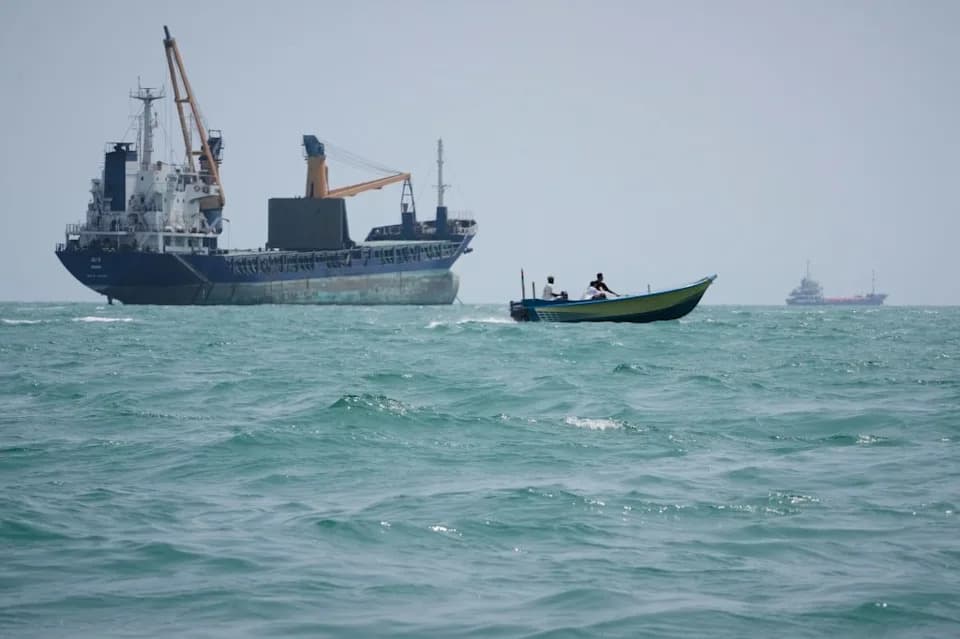
Key Takeaway: Iran currently controls the Strait of Hormuz and has reduced commercial transits dramatically since March 1. Tehran's dispersed, asymmetric forces — fast boats, mobile missiles, loitering drones, midget submarines and mines — have created a de facto blockade that deters reputable shipping. A strong US naval presence has not resolved the situation because of endurance and operational limits, leaving the standoff to risk an energy shock, with marine diesel shortages potentially grounding roughly 10% of the global fleet.
Iran Controls the Strait of Hormuz — Closed For As Long As Tehran Decides
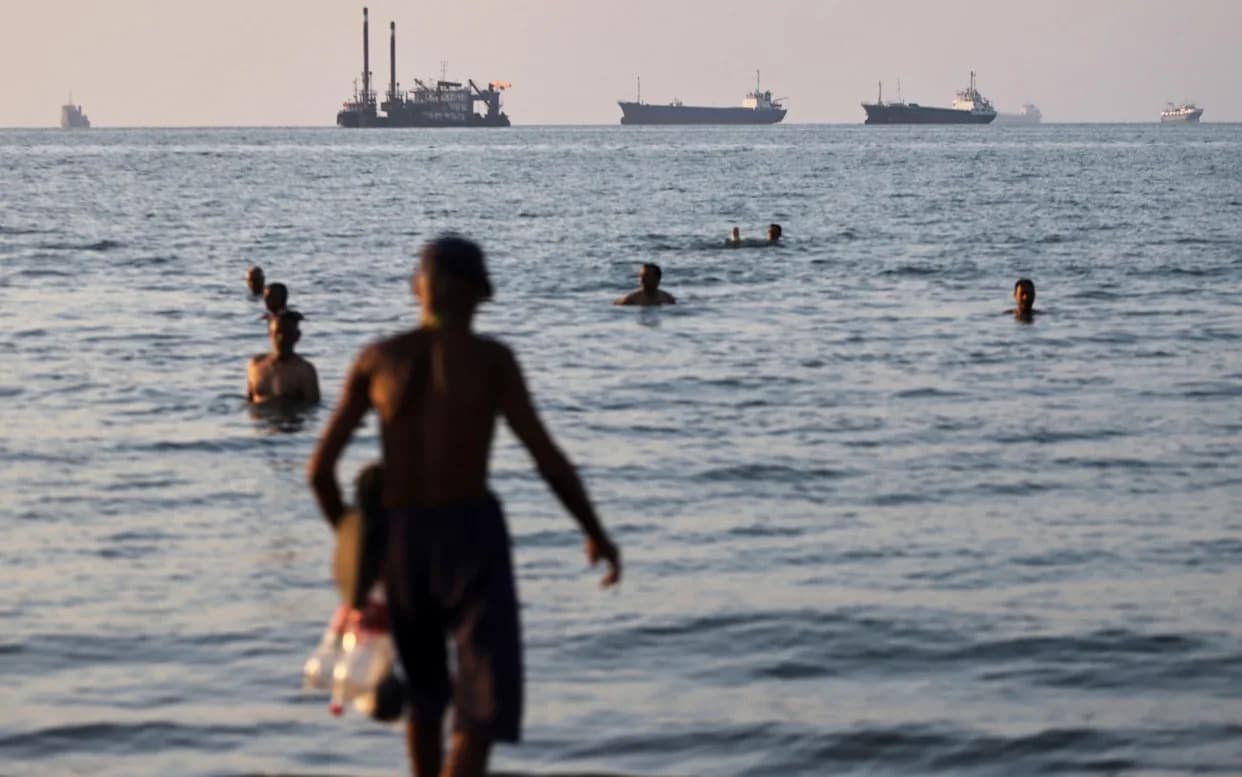
Residents swim with cargo vessels anchored on the horizon in the Strait of Hormuz - Amirhosein Khorgooi/Isna
The strategic balance in the Strait of Hormuz has shifted: Iran currently holds the advantage and commercial transit has fallen to a fraction of pre-crisis levels.
Why Iran Holds the Upper Hand
Since March 1, freedom of navigation through the strait has been severely constrained. Tehran's forces — using asymmetric tools honed since the late 1980s — have imposed a de facto blockade that deters reputable shipping companies. These forces include swarms of fast-attack boats, mobile anti-ship missiles, loitering drones, midget submarines and the persistent threat of mines. Much of Iran's capability is dispersed along hundreds of miles of rugged coastline and concealed in caves, wadis and small harbours, making it hard to neutralise decisively.
Limits of Conventional Power
On paper the US naval presence is formidable: aircraft carriers such as USS Abraham Lincoln and USS George H.W. Bush, the Amphibious Ready Group around USS Tripoli, escort vessels, submarines, long-range B-52 bombers and P-8 maritime patrol aircraft. In practice, however, carriers and carrier groups face endurance limits: crew fatigue, maintenance cycles and huge operational costs mean they cannot remain on station indefinitely. Against a decentralised, resilient adversary operating on home turf, a prolonged stalemate tends to favour the more sustainable side.
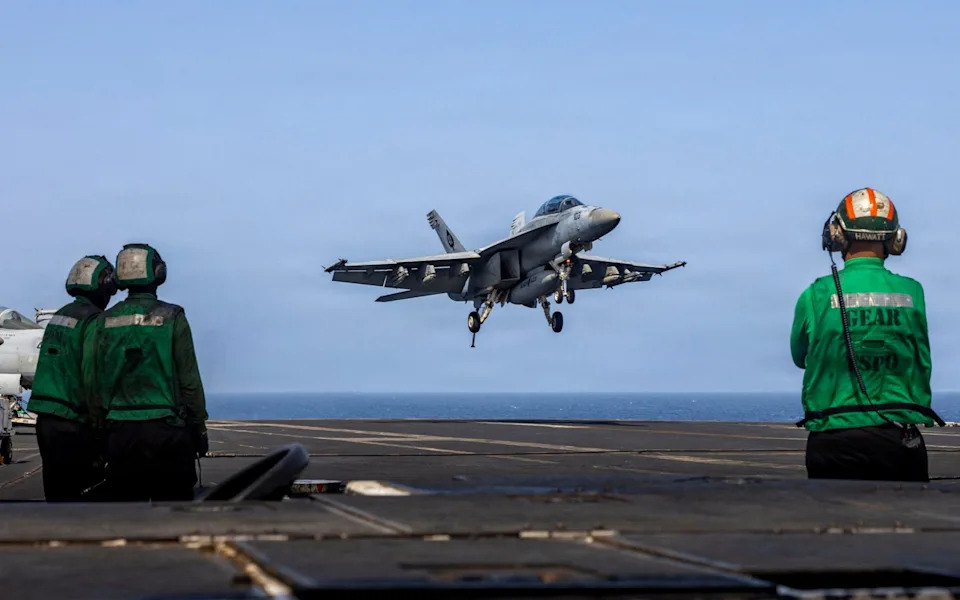
A super hornet prepares to land on the USS Abraham Lincoln’s flight deck last month - AFP/Getty Images
How Shipping Is Responding
Some merchant vessels continue to transit the strait, but routes are reduced to three risky options: comply with Iran's demands ('pay the toll'), attempt a darkened high-speed transit close to the Omani coast, or reroute entirely. Reputable shipping firms generally reject the first two options because they undermine freedom of navigation or are unsustainable and high-risk. There have been cases where vessels complied with Iranian safe-passage demands without triggering US blockade rules and were allowed to proceed — not a breach of the US blockade but an operational nuance that highlights the complexity of enforcement at sea.
Economic Stakes and Energy Risks
The standoff raises the real prospect of energy market disruption. Releases from strategic petroleum reserves have so far prevented extreme price spikes, but supply shortages in key fuels remain likely. Marine diesel may be an early pinch point: estimates suggest up to 10% of ships could be unable to operate globally if supplies tighten, with knock-on effects on aviation fuel, road fuels, fertiliser production and broader supply chains.
Strategic Implications
Tehran currently has little incentive to stop its pressure on the strait: it controls access, shapes international debate and influences trade and economic effects. Even after absorbing losses, Iran appears to retain enough capability to keep reputable shipping away. The result is a practical standoff: military action alone has not delivered a durable solution, and the risk of prolonged disruption remains.
Bottom line: Preventing Iran from obtaining nuclear weapons and seeking regime change are policy objectives some consider justified, but failing to plan for the Hormuz problem has left a critical strategic gap. Without a credible, sustainable path to reopening the strait, a pay-to-pass precedent could erode the international principle of freedom of navigation.
Overnight diplomatic signals suggest Tehran may show willingness to talk, but such signs are often ambiguous. For now, Iran is the stronger party in the Strait of Hormuz; there are limited, practical steps the US or others can take to change that reality quickly.
Help us improve.