France and Germany have abandoned the joint Future Combat Air System (FCAS) fighter jet project after persistent industrial disputes between Dassault Aviation and Airbus. Launched in 2017 to replace Rafale and Eurofighter fleets, the programme faltered over disagreements about management and cooperation. Officials said the FCAS core networking system will continue and both countries will concentrate on a smaller number of realistic defence projects.
France and Germany Scrap Ambitious FCAS Fighter Jet Project After Industrial Deadlock
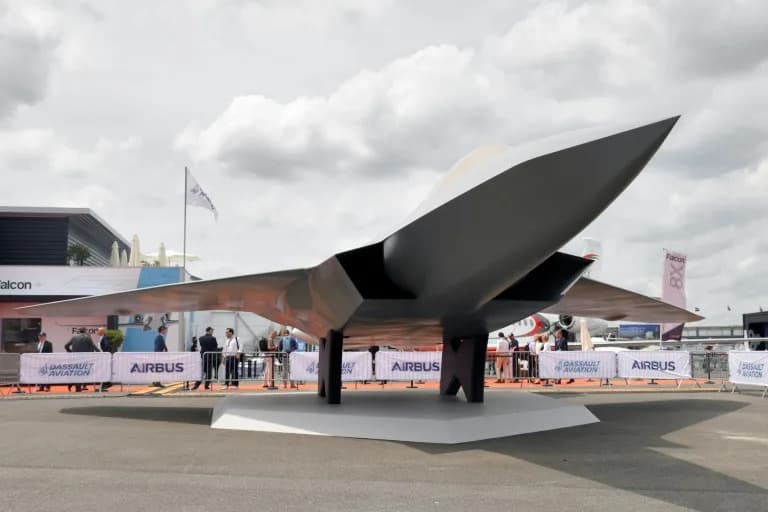
A model of Future Combat Air System fighter jet (Geoffroy Van der Hasselt)(Geoffroy Van der Hasselt/AFP/AFP)
France and Germany announced on Monday that they will abandon plans to develop a joint next-generation fighter jet under the Future Combat Air System (FCAS) programme, citing irreconcilable disagreements between the industrial partners. The move is a setback for European efforts to deepen defence cooperation and produce a unified combat aircraft to replace existing fleets.
Background
Launched in 2017, FCAS was designed to replace France's Rafale fighters and the Eurofighter jets flown by Germany and Spain. The programme was intended not only to produce a new combat aircraft but also to create a shared, networked system linking manned aircraft, drones and other assets to operate as an integrated whole.
Why The Project Collapsed
Officials said the multi-billion-dollar initiative collapsed amid persistent industrial disagreements between France's Dassault Aviation and Airbus, which represents German and Spanish interests. A German government source said Chancellor Friedrich Merz and French President Emmanuel Macron 'reached the shared assessment that the companies will not be able to come together on building a joint combat aircraft.'
'They acknowledge this reality,' the source added.
Attempts to mediate the dispute failed. In March, two mediators — one appointed by France and one by Germany — were unable to bridge the gaps. Executives at Dassault reportedly favoured pursuing a largely national approach rather than a co-managed European structure, a stance that contributed to the impasse.
What Will Continue
Despite abandoning the joint aircraft, officials said parts of the broader FCAS effort will continue. The programme's core 'nervous system' — the networking architecture intended to link aircraft, drones and command systems — is expected to be carried forward as a European capability.
French and German defence ministries will prepare a new cooperation plan focused on 'a few realistic and relevant projects' at an upcoming meeting, officials said. Both governments stressed the importance of ongoing Franco-German defence collaboration even as they acknowledged the industrial setback.
Wider Context And Reactions
The collapse comes amid growing calls for deeper European military integration as geopolitical tensions rise. Russia's war in Ukraine has entered its fifth year, and questions about the future reliability of US security guarantees under President Donald Trump have added urgency to European defence debates.
Cédric Perrin, head of the French Senate's foreign affairs and defence committee, said President Macron was among the last to press for FCAS's survival. Airbus and Dassault did not immediately respond to requests for comment.
While the termination of the joint aircraft project is a notable setback for Franco-German industrial cooperation, officials emphasize that lessons learned will inform future, more focused collaborative defence efforts.
Help us improve.