The Ukrainian “Wolfhound” unit released footage showing a makeshift two-part pontoon — built from modified six-wheeled trucks — attempting to cross the Vovcha River at Vovchansk. Drones tracked the vehicle through town, observed it trigger mines and knock over a power pole, and then destroyed the system as it entered the water. The incident highlights shortages of dedicated bridging equipment, growing frontline improvisation, and the increased vulnerability of river-crossing operations under persistent drone surveillance.
‘Frankenstein’ Pontoon: Ukrainian Drones Destroy Improvised Russian River-Crossing at Vovchansk
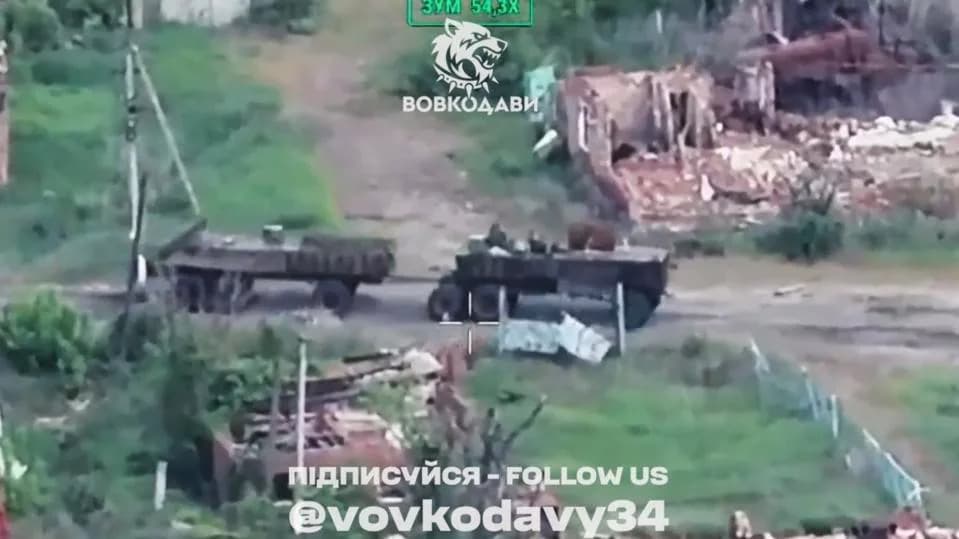
Image capture from video posted by the Ukrainian "Wolfhound" Unit showing a failed Russian river crossing in the town of Vovchansk. The Russian pontoon system appears to have been built by frontline soldiers out of existing vehicles and material.Social Media Capture
A video released by the Ukrainian “Wolfhound” unit documents an improvised Russian pontoon — a two-part, truck-based “Frankenstein” vehicle — that was destroyed by Ukrainian drones while attempting to cross the Vovcha River at Vovchansk. The footage highlights both frontline ingenuity and the vulnerabilities of ad hoc engineering under persistent drone surveillance.
What Happened
The clip, posted by the 2nd Battalion of the 57th Motorized Infantry Brigade, shows a makeshift articulated system built from heavily modified six-wheeled truck chassis (likely Ural-4320 or KamAZ-4310 variants). The assembly consisted of a powered front section and a trailing rear module, each fitted with rectangular, box-like structures roughly 7 m long, 2.5 m wide and 1.5 m tall. The forward unit had a driver hatch and carried soldiers on the roof; the rear module appeared hollow and included what looked like a deployable ramp.
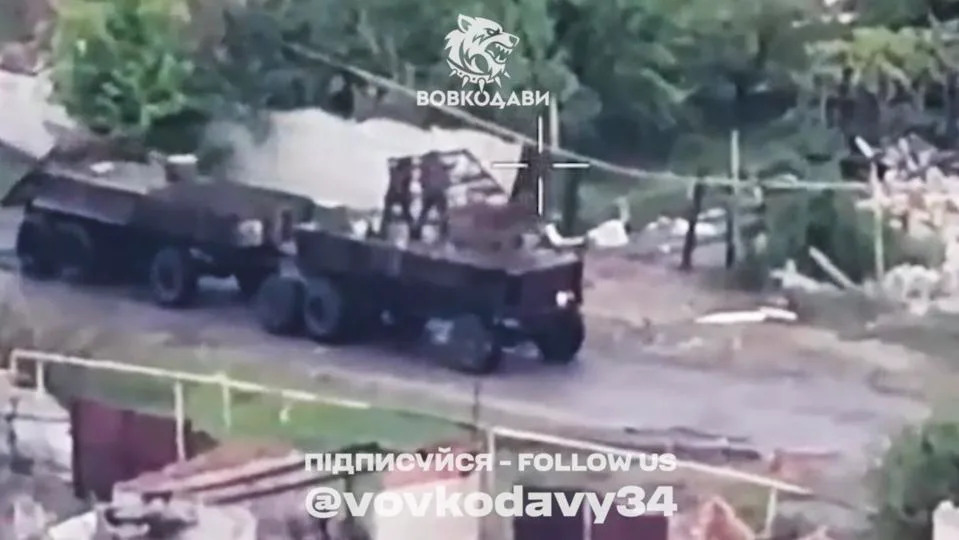
Image capture from video posted by the Ukrainian "Wolfhound" Unit showing a failed Russian river crossing in the town of Vovchansk. The Russian pontoon system appears to have been built by frontline soldiers out of existing vehicles and material.Social Media Capture
Movement Through Town And Engagement
Drones from the Wolfhound unit tracked the vehicle as it moved through Vovchansk, northeast of Kharkiv. The convoy traveled quickly — apparently to reduce exposure to aerial detection — but the trailer swung widely on turns, struck a power pole, and triggered two anti-personnel mines (creating large smoke plumes). After the crew began emplacing the system at the riverbank, Ukrainian FPV and other drones struck the front section as it entered the water, destroying the entire improvised pontoon before it could be used.
Technical And Tactical Context
River crossings are among the most complex and dangerous military operations. Suitable crossing sites are often tied to road networks, creating predictable approach routes and choke points that Ukrainian drones routinely monitor. Deploying bridging equipment exposes crews and vehicles in the open, making them vulnerable to artillery, guided munitions and drone strikes — particularly during the brief window before a bridge or ferry is operational.
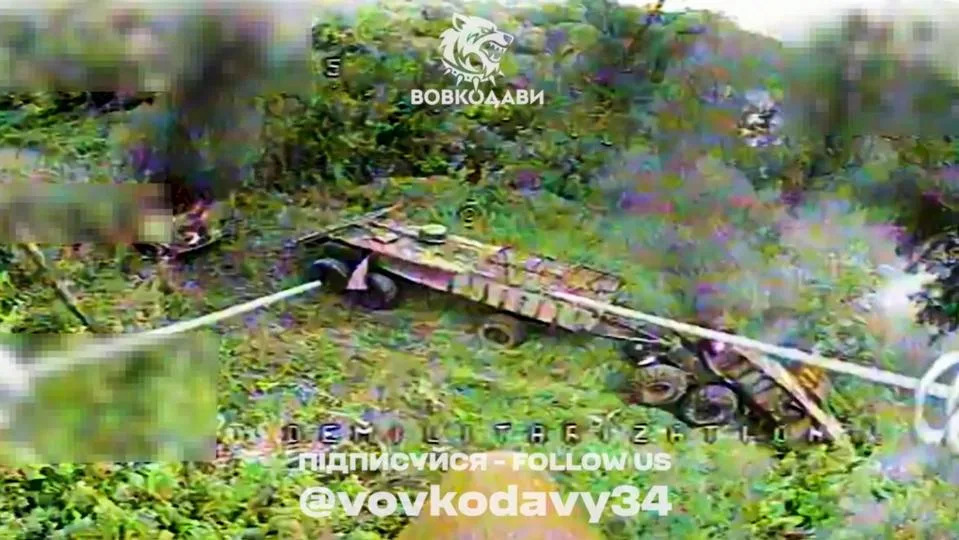
Image capture from video posted by the Ukrainian "Wolfhound" Unit showing a failed Russian river crossing in the town of Vovchansk. The Russian pontoon system was destroyed by a Ukrainian FPV drone.Social Media Capture
Notably, the Vovcha River is a relatively narrow tributary of the Siverskyi Donets, yet it still prevents most armored vehicles from fording. In theory, existing Russian engineering assets (for example MTU-72 armored vehicle-launched bridges and PMP-series pontoon systems) could handle such crossings. The appearance of an improvised solution suggests those dedicated systems were not available to the local force.
Why Improvisation Is Increasing
Russia has lost bridging and engineering assets at multiple points during the war — most famously the May 2022 Siverskyi Donets crossing, which resulted in catastrophic losses for the 74th Separate Guards Motor Rifle Brigade. At the same time, Russian defense production has prioritized high-demand items like artillery, armored vehicles, drones and munitions. Specialized bridging equipment is a smaller-category item, and replacement rates may lag behind battlefield losses.
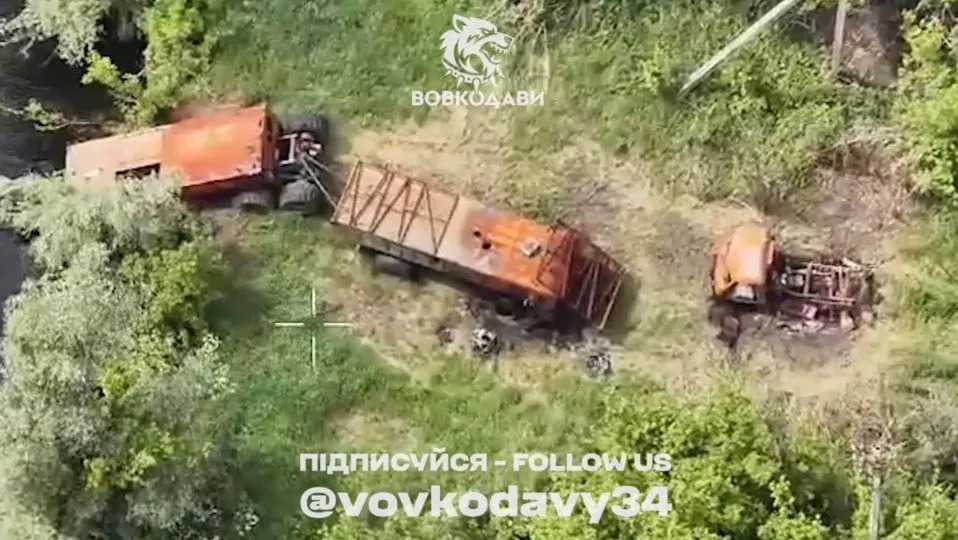
Image capture from video posted by the Ukrainian "Wolfhound" Unit showing a failed Russian river crossing in the town of Vovchansk. The Russian pontoon system appears to have been built by frontline soldiers out of existing vehicles and material.Social Media Capture
As a result, frontline units increasingly modify existing vehicles and equipment to meet immediate needs. Over the past year Russian forces have widely adopted field modifications: improvised anti-drone cages and nets, ad hoc armor, and modified drones and ground robots. The Vovchansk pontoon is another example of this trend — resourceful but inherently vulnerable when exposed during emplacement.
Implications
The failed crossing at Vovchansk underlines several operational lessons: (1) drone surveillance drastically reduces the time and locations safe for bridging operations; (2) improvised solutions can offer short-term capability but remain highly exposed; and (3) sustained losses of specialized engineering gear force units to rely on makeshift approaches, which may constrain maneuver and operational tempo.
Originally published on Forbes.com.
Help us improve.