The article describes growing Republican dissent in Congress as a widening number of GOP lawmakers publicly oppose President Trump on funding, nominations and policy — from rejecting $1 billion tied to a White House ballroom to forcing a pullback on a $1.8 billion "anti-weaponization" fund. The House passed Ukraine aid with new Russia sanctions that may face a veto, and recent moves reflect frustration after Trump intervened in GOP primaries. Pending nominations, notably Bill Pulte as acting DNI and the expected Todd Blanche attorney general pick, could trigger further Senate battles ahead of the midterms.
GOP Resistance Grows: Republicans Break With Trump on Funding, Nominations and Policy Ahead of Midterms
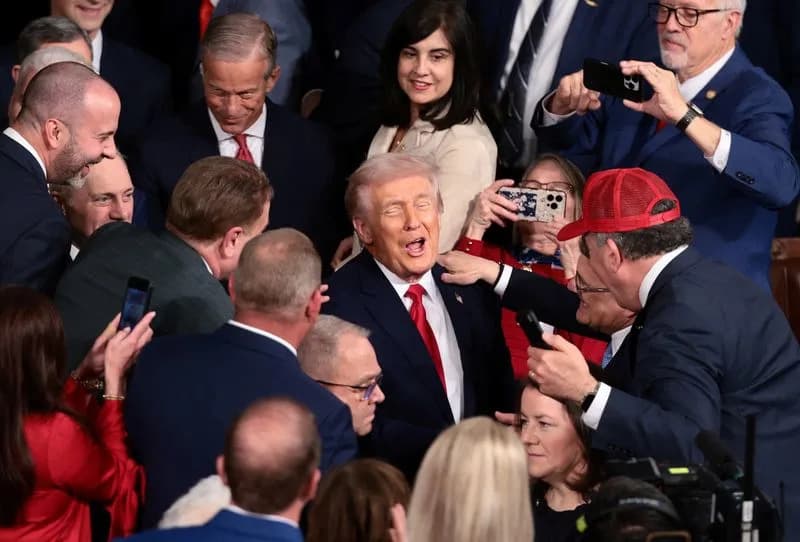
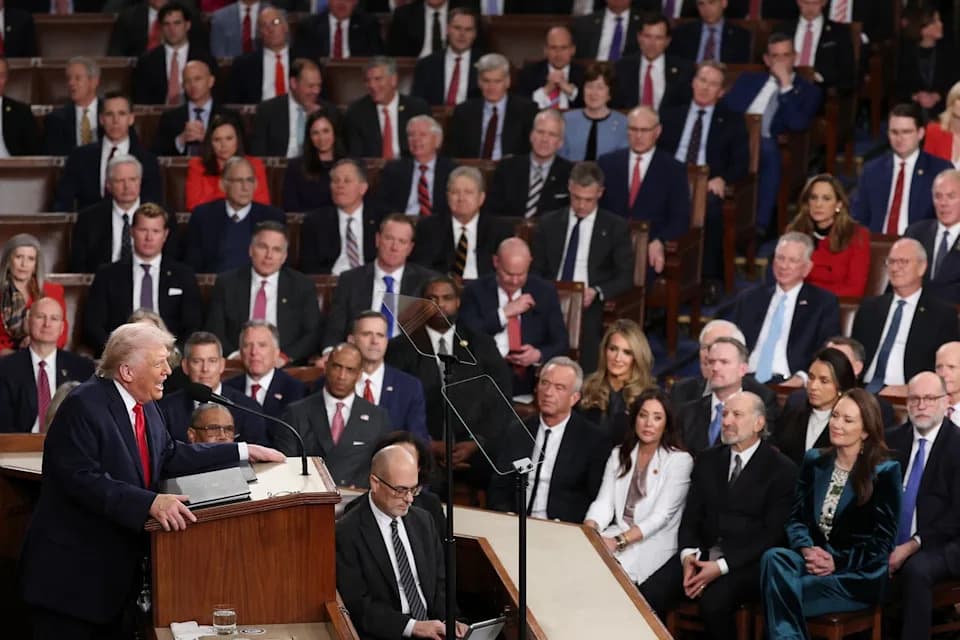
U.S. President Donald Trump arrives to deliver the State of the Union address to a joint session of Congress in the House Chamber at the U.S. Capitol in Washington, D.C., U.S., February 24, 2026. REUTERS/EVELYN HOCKSTEIN
By David Morgan
WASHINGTON, June 6 (Reuters) - A widening number of Republican lawmakers in Congress are openly breaking with President Donald Trump, signaling growing dissent inside a party that for years largely deferred to the White House. The fallout could complicate the administration's agenda as the midterm elections approach.
Key Votes And Rising Tensions
Over the past week, Republican factions in both the Senate and the House have pushed back on a range of high-profile issues: criticizing the administration's posture toward Iran, rejecting $1 billion in funding tied to a White House ballroom project, forcing a retreat on a proposed $1.8 billion "anti-weaponization" fund, and blocking legislation on domestic surveillance. The House also approved aid for Ukraine with new sanctions on Russia — a measure likely to draw a presidential veto.
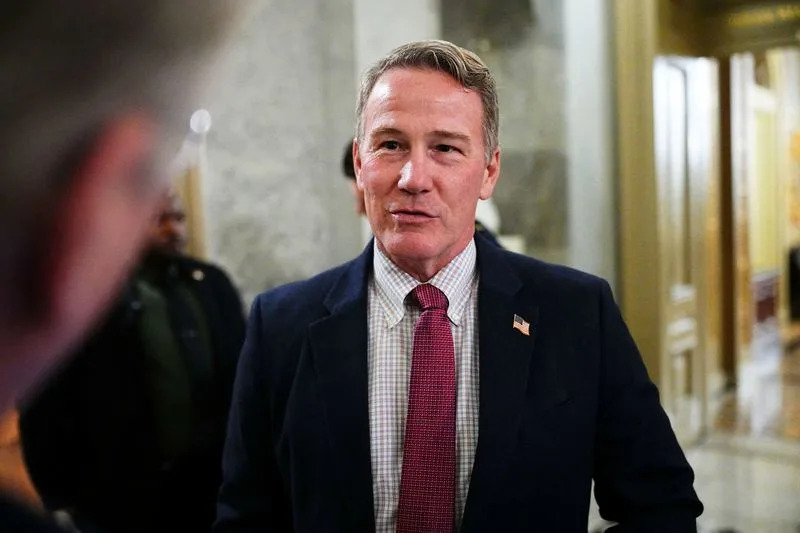
FILE PHOTO: U.S. Senator Jon Husted (R-OH) speaks with reporters outside the Senate Chamber on the 40th day of the partial government shutdown, in Washington, D.C., U.S., November 9, 2025. REUTERS/Aaron Schwartz/File Photo
While party leaders and some analysts caution this is not a full-scale revolt, the instances of public dissent are multiplying and include lawmakers whom Trump previously undermined politically.
Why The Breaks Are Happening
Several Republicans said frustration has built after Trump intervened in GOP primaries and made a string of disruptive announcements. The flashpoint came before Memorial Day, when Trump's opposition to Senator John Cornyn's reelection bid and the rollout of the "anti-weaponization" fund undercut an effort to advance a $70 billion immigration enforcement package, leaving many Senate Republicans angry.
"That was kind of like a perfect storm of events," a Senate Republican aide said.
Democrats largely downplayed the idea of a broad GOP uprising, arguing the party as a whole remains unlikely to defy the president on major priorities. One Democrat, Senator John Fetterman, said those breaking with Trump were often politicians the president had already politically displaced.
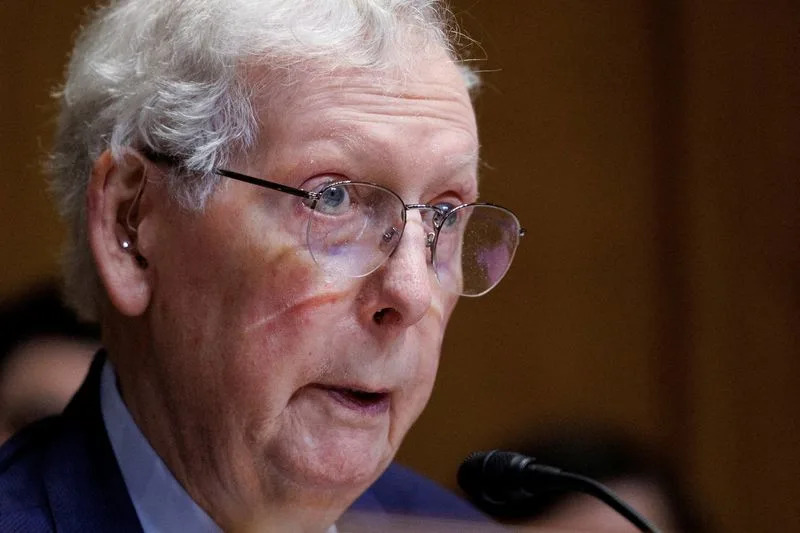
FILE PHOTO: U.S. Senate Appropriations Subcommittee on Defense Chair Senator Mitch McConnell (R-KY) speaks during a hearing on Capitol Hill in Washington, D.C., U.S, May 19, 2026. REUTERS/Tom Brenner/File Photo
Nominations And Senate Battles Loom
The coming weeks could see more concrete tests. Trump appointed Bill Pulte as acting Director of National Intelligence to replace Tulsi Gabbard, a move that drew reservations from some Republicans. Senate Republican leader Mitch McConnell said he would not support Pulte as a permanent DNI nominee unless the candidate met statutory experience requirements.
Another major potential flashpoint is the expected nomination of Todd Blanche as U.S. attorney general. The nomination will first go to the Senate Judiciary Committee, where senators such as John Cornyn have signaled they will press Blanche on whether he views the attorney general as the nation's chief law enforcement officer rather than the president's personal lawyer.
For now, much of the Republican dissent has been symbolic, but it has produced noteworthy votes: three politically vulnerable GOP senators — Susan Collins, Jon Husted and Dan Sullivan — joined Democrats in an unsuccessful effort to ban the controversial fund, and several Republicans opposed amendments or measures tied to the White House's proposals.
What Comes Next
As Election Day nears, lawmakers say many will weigh constituent sentiment more heavily, suggesting political calculations will shape votes. White House officials dismissed the significance of the dissent as "election-year politics," while the administration emphasized its intent to press forward with the president's agenda.
(Reporting by David Morgan; Additional reporting by Nandita Bose and Bo Erickson; Editing by Alistair Bell)
Help us improve.