A video from X user @Horsepower37559 shows exposed rebar, rust stains and surface loss on overhead spans along the Trans-Manhattan Expressway approach to the George Washington Bridge. Two May 2026 incidents—May 7 (vehicle damage) and May 13 (driver injured)—prompted lane closures, inspections and installation of protective netting. Engineers identify spalling (moisture-driven corrosion of reinforcing steel) as the likely cause; netting is an interim safety measure while permanent repairs are planned.
Crumbling Concrete Over Cars: Falling Debris Risk on the George Washington Bridge Approach
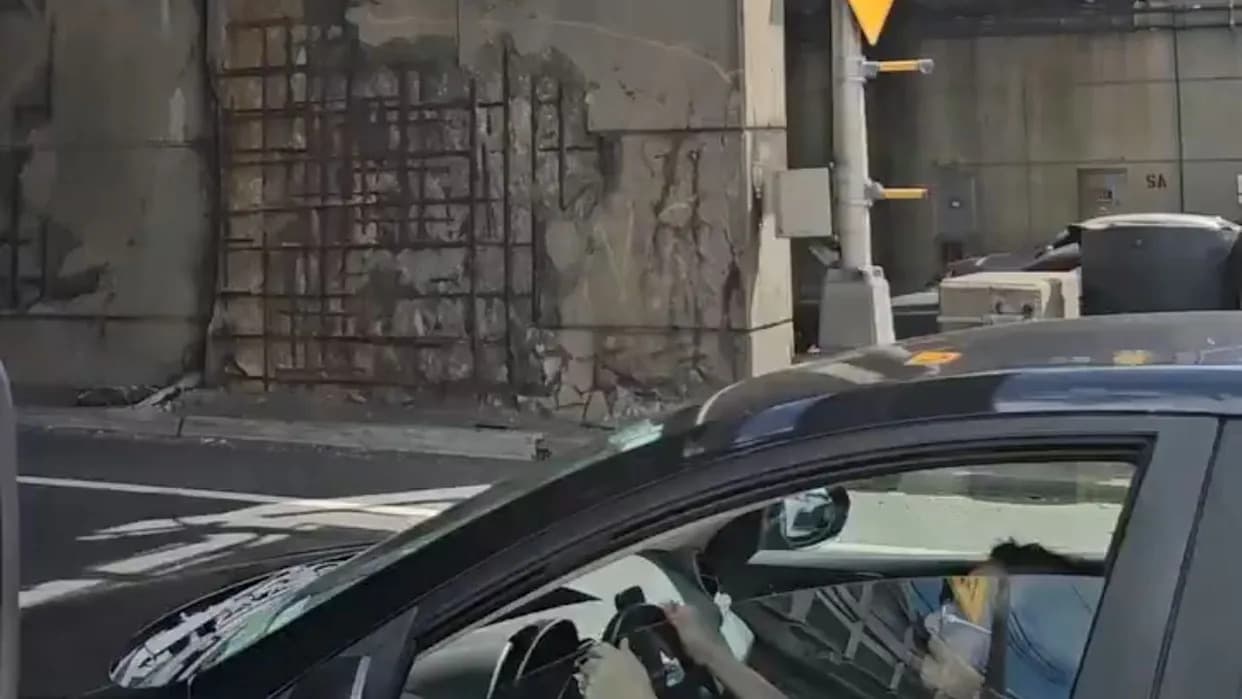
Image Credit: C&H/X.
A video posted on X by @Horsepower37559 shows a motorist driving beneath a deteriorating overhead span on the Trans-Manhattan Expressway approach to the George Washington Bridge. The footage captures close-up views of the underside of the spans that funnel traffic between Manhattan and New Jersey, revealing exposed reinforcing bars, rust streaks and areas where concrete has visibly separated from the main structure.
What the Video Shows
The clip documents sections of concrete with surface loss and visible rebar as traffic continues to pass directly beneath. The exposed steel and discoloration are consistent with ongoing corrosion and spalling—where moisture penetrates concrete, causes embedded steel to rust and expand, and leads to concrete breaking away from the structure.
Recent Incidents and Response
The video follows two reported incidents in May 2026 along the same approach. On May 7, debris damaged a vehicle but caused no injuries. On May 13, falling material struck another vehicle and injured the driver, who was taken to hospital. Those events prompted lane closures, inspections, removal of loose material, and installation of protective netting in affected sections.
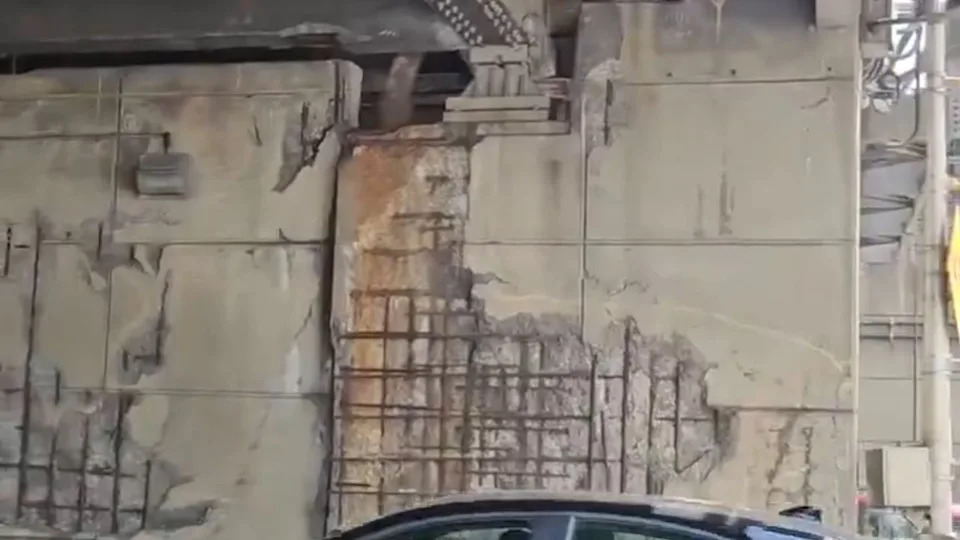
Image Credit: C&H/X.
Why This Happens
Opened in 1931, the George Washington Bridge is now more than 90 years old. The Trans-Manhattan Expressway runs beneath the bridge's lower deck and supporting spans, exposing vehicles to infrastructure that has endured decades of vibration, temperature cycles, road salt and heavy traffic. Engineers say deterioration at this age—especially spalling—is expected in places, though still dangerous for motorists passing underneath.
Netting Is a Temporary Fix
Protective netting placed under compromised overhead elements is a standard interim safety measure designed to catch loose fragments before they reach traffic. Netting reduces immediate risk but does not repair the underlying decay. Full repairs on major expressway approaches are often complex and costly, requiring careful staging and lane closures to complete.
Ongoing Risks and What Drivers Should Know
The June video indicates visible deterioration remains in parts of the corridor, suggesting not every compromised section has been permanently repaired. That is not necessarily unusual for a large, high-traffic structure, but it does mean drivers rely on inspectors to identify and secure every area at risk. While the footage and engineering signs do not point to imminent collapse, further material loss is a realistic possibility as heat, traffic vibration and seasonal weather continue to act on weakened areas.
For now, parts of the approach remain open and protective netting is installed where needed. Commuters and freight drivers alike should remain aware when passing beneath the spans and expect ongoing inspections and staged repairs. Officials will need to balance traffic flow with the pace of permanent repairs to ensure safety without unduly disrupting one of the nation’s busiest crossings.
Key takeaway: Visible spalling and exposed rebar under the George Washington Bridge approach have already caused falling debris incidents this spring; netting and removals reduce short-term risk, but permanent repairs are still needed.
Help us improve.