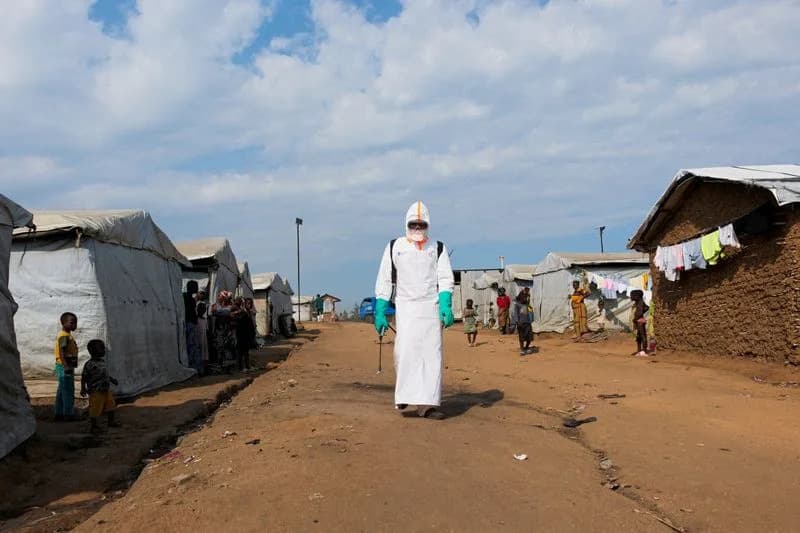
Uganda closed the Mpondwe border on May 28 after an Ebola outbreak was declared in eastern Congo, halting commercial traffic and leaving perishable goods — including plantains and imported fish — stranded. Local authorities in Kasese have tightened controls to limit cross-border movement amid fears of contagion, though the WHO discourages blanket border closures. Congo has confirmed 452 cases and 82 deaths, and the outbreak involves the Bundibugyo strain, for which current vaccines and treatments are ineffective; Uganda has reported 19 linked cases.
Uganda Closes Mpondwe Border Amid Ebola Fears, Perishable Trade Left to Rot
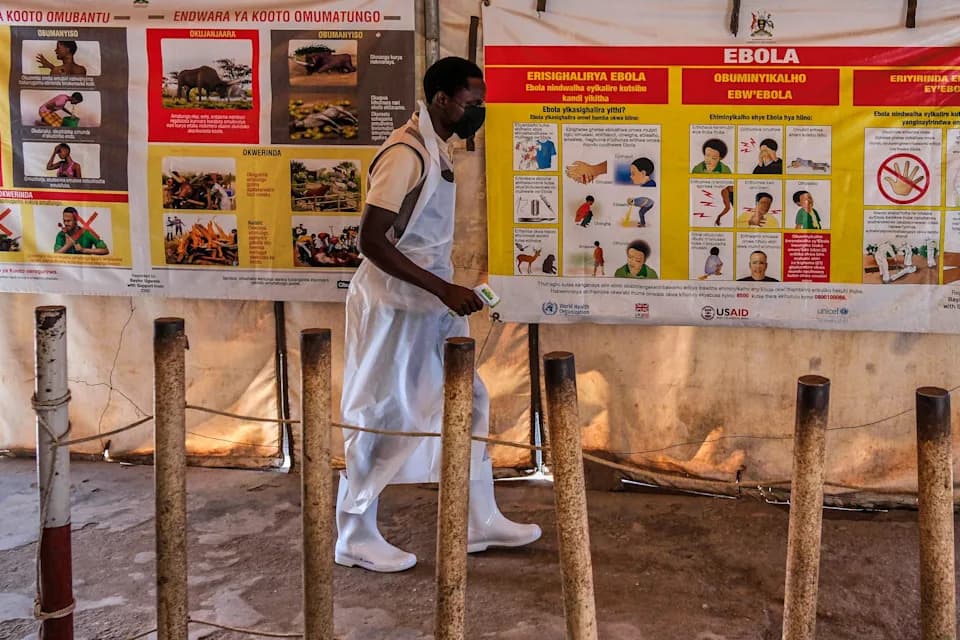
A health worker walks past Ebola warning and instruction posters at a temporary health clinic at the Mpondwe border crossing linking Uganda and the Democratic Republic of the Congo, Thursday, June 4, 2026. (AP Photo/Hajarah Nalwadda)(AP Photo/Hajarah Nalwadda)
At the Mpondwe border crossing between Uganda and the Democratic Republic of Congo, trader Leah Masika watched helplessly as a long convoy of trucks stalled with a shipment of plantains destined for Kampala. The fruit was beginning to leak and rot, and Masika feared the cargo would spoil within hours if vehicles were not allowed to move.
Ugandan authorities closed the Mpondwe crossing on May 28, roughly two weeks after officials in eastern Congo declared an Ebola outbreak in Ituri province. Exceptions were permitted only for emergency, humanitarian, security, cargo or outbreak-response movements. In recent days, local officials in the Kasese district tightened enforcement as Congo’s outbreak appeared to outpace containment efforts.
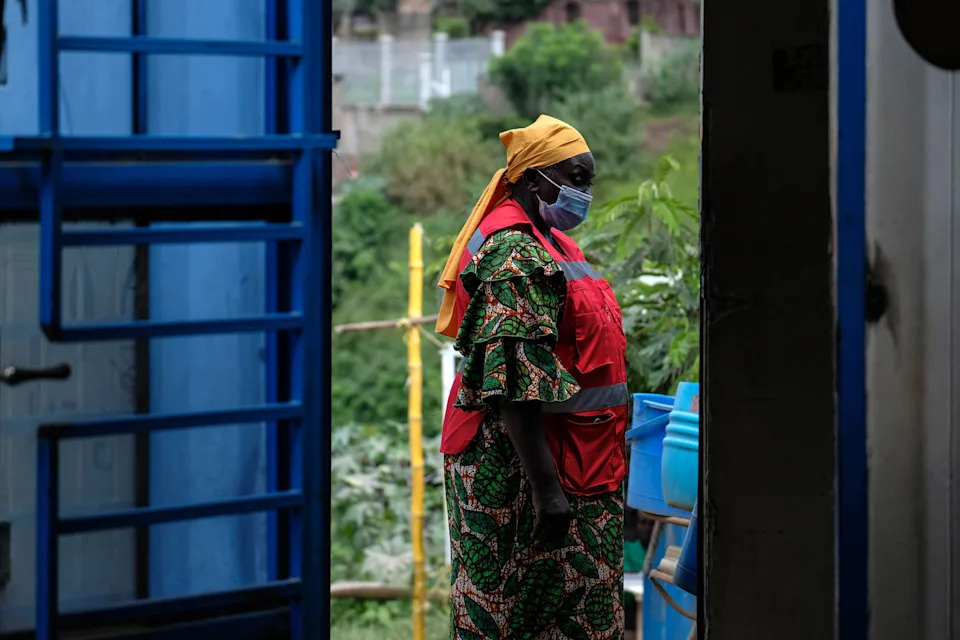
A health worker walks at a temporary health clinic at the Mpondwe border crossing linking Uganda and the Democratic Republic of the Congo, Thursday, June 4, 2026. (AP Photo/Hajarah Nalwadda)(AP Photo/Hajarah Nalwadda)
Long Delays, Rising Losses
Traders and clearing agents at Mpondwe described long queues of trucks — stretching more than a mile on the Ugandan side — and growing losses for perishable goods. Sylvia Asiimwe, a clearing agent, pointed out at least seven trucks carrying fish imported from China bound for Beni and Butembo in North Kivu. She warned that prolonged delays would ruin the cargo and inflict heavy financial damage on traders.
“The fish is going to spoil. So much money,” Asiimwe said.
The Uganda–Congo border is hundreds of miles long and crossed by numerous informal footpaths beyond formal posts. Trade through Mpondwe is normally brisk and rooted in close family and community ties — notably between the Bakonzo in Uganda and the Banande across the border. Mpondwe handled an estimated $131 million in informal exports in 2023, according to the Uganda Bureau of Statistics.
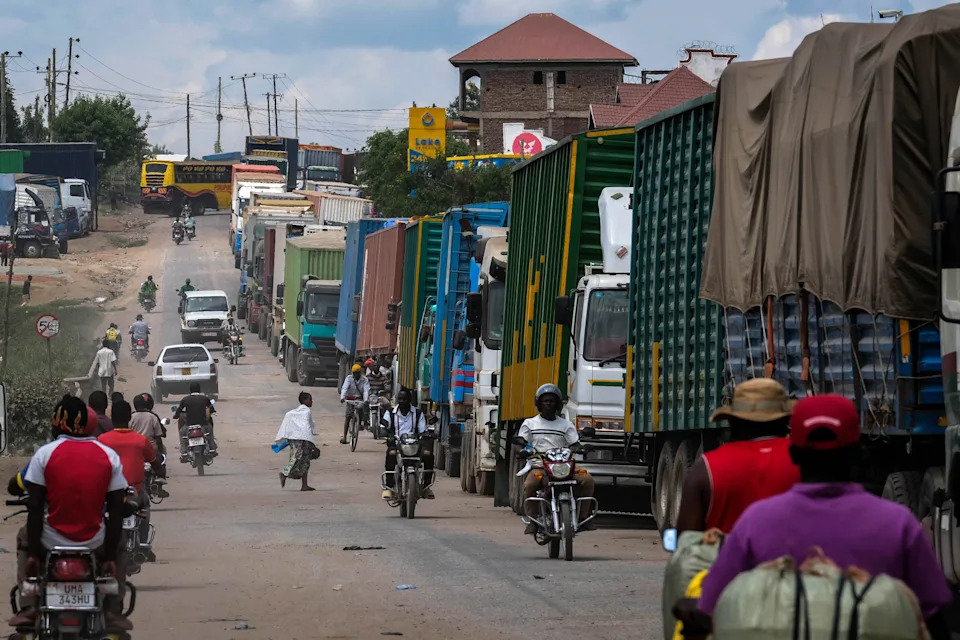
Cargo trucks queue up at the Mpondwe border crossing linking Uganda and the Democratic Republic of the Congo, Thursday, June 4, 2026. (AP Photo/Hajarah Nalwadda)(AP Photo/Hajarah Nalwadda)
Public-Health Concerns and Response
The outbreak in eastern Congo is suspected to have infected more than 1,000 people, though confirmed totals are lower because many suspected victims die without laboratory confirmation. As of the latest reports, Congolese authorities confirmed 452 cases with 82 deaths, and 71 new confirmed cases were reported in a 24-hour period — a sign of active community transmission.
The World Health Organization has declared the outbreak a public health emergency of international concern and generally discourages border closures, while acknowledging that neighboring countries face a high risk of cross-border contagion. Ugandan health authorities, including Arafat Bwambale, a surveillance officer in Kasese, defended tighter controls as a way to limit human mobility that could spread infection.
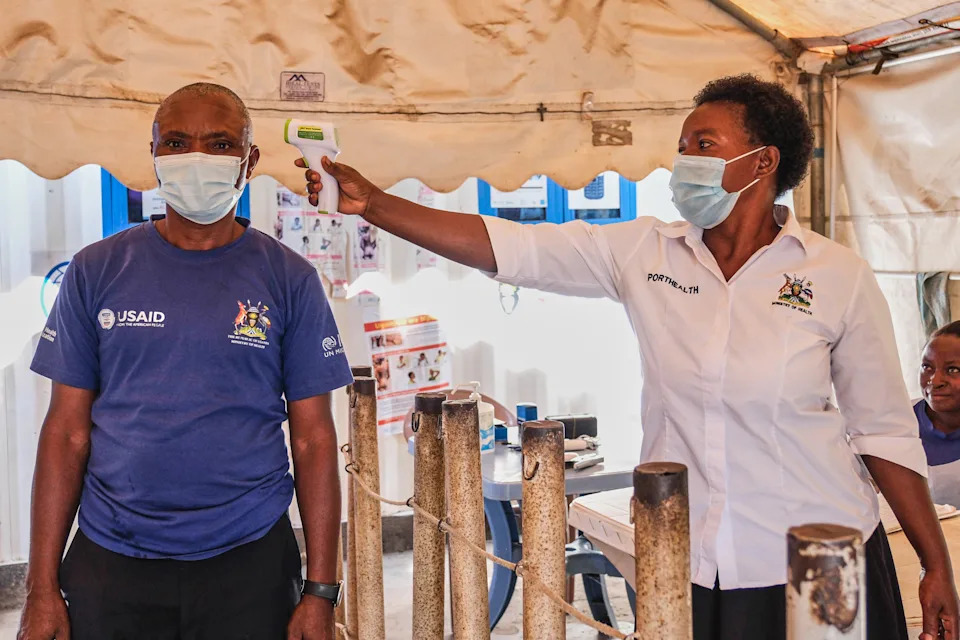
A health worker checks an individual's temperature at a temporary health clinic at the Mpondwe border crossing linking Uganda and the Democratic Republic of the Congo, Thursday, June 4, 2026. (AP Photo/Hajarah Nalwadda)(AP Photo/Hajarah Nalwadda)
Public-health officials warn that the outbreak is driven by the rare Bundibugyo strain of Ebola, for which currently available vaccines and treatments are not effective — heightening concern about cross-border spread. Uganda has confirmed 19 Ebola cases linked to the Congolese outbreak after some Congolese nationals sought treatment in Kampala before the outbreak was identified.
Testing, Isolation and Local Impact
Kasese’s nearest referral hospital has an isolation center and a laboratory capable of returning test results within about six hours. In recent days, 41 samples from the Kasese area tested negative for Ebola. Still, local authorities said they might impose further systematic restrictions on cargo and truck movements, a prospect that alarms traders who depend on Mpondwe as a primary trade route.
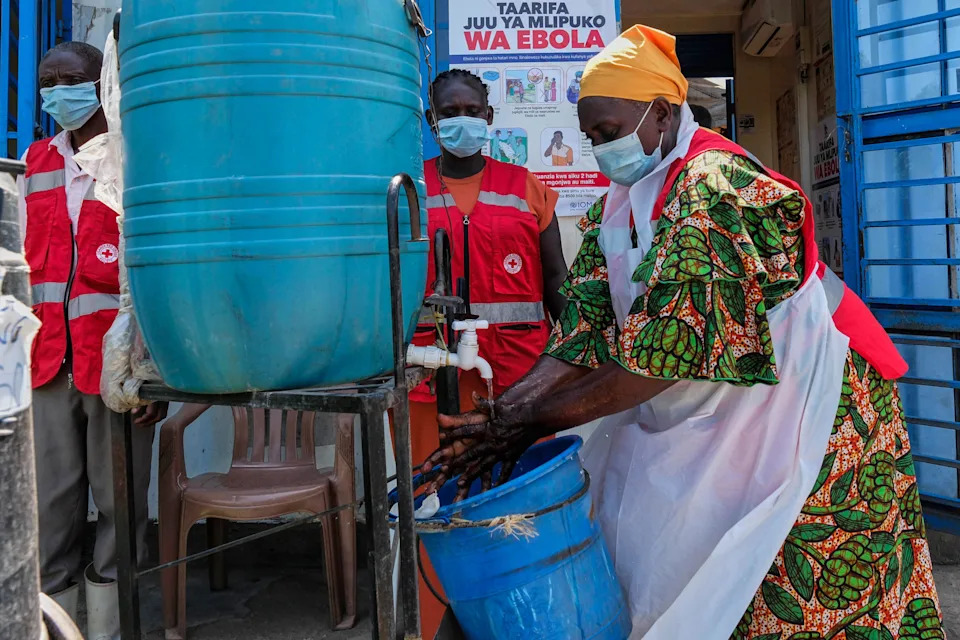
A health worker washes her hands at a temporary health clinic at the Mpondwe border crossing linking Uganda and the Democratic Republic of the Congo, Thursday, June 4, 2026. (AP Photo/Hajarah Nalwadda)(AP Photo/Hajarah Nalwadda)
Many small businesses around the border have already been affected: some shops closed, and casual workers who rely on cross-border trade have lost income. Ismail Mumbere, who sells roadside snacks, said, “The situation is bad… Ebola has wasted our work.”
Masika said she will not order more produce from Congo until the outbreak ends, but she cannot absorb the loss if the consignment already in transit spoils. She estimated the stalled shipment included about 50 bags, each worth roughly $44.
“We are begging them to help us and open (the border),” she said. “We will not go back to Congo.”
Reporting for The Associated Press. The AP receives support for global health and development coverage from philanthropic sources; it retains editorial control of its reporting.
Help us improve.