New York City secured a two-year extension to meet a 2022 state law capping class sizes after a compromise between Mayor Zohran Mamdani, state lawmakers and the UFT. The deadline is now the 2029–30 school year, with caps set at 20 for K–3, 23 for grades 4–8 and 25 for high school. The deal requires 70% compliance next year and 90% by 2028–29, includes pay differentials for teachers in oversized classes, and is expected to reduce the city's budget by roughly $500 million.
Mamdani Backs Two-Year Delay on NYC Class-Size Mandate After Deal With UFT and State Lawmakers
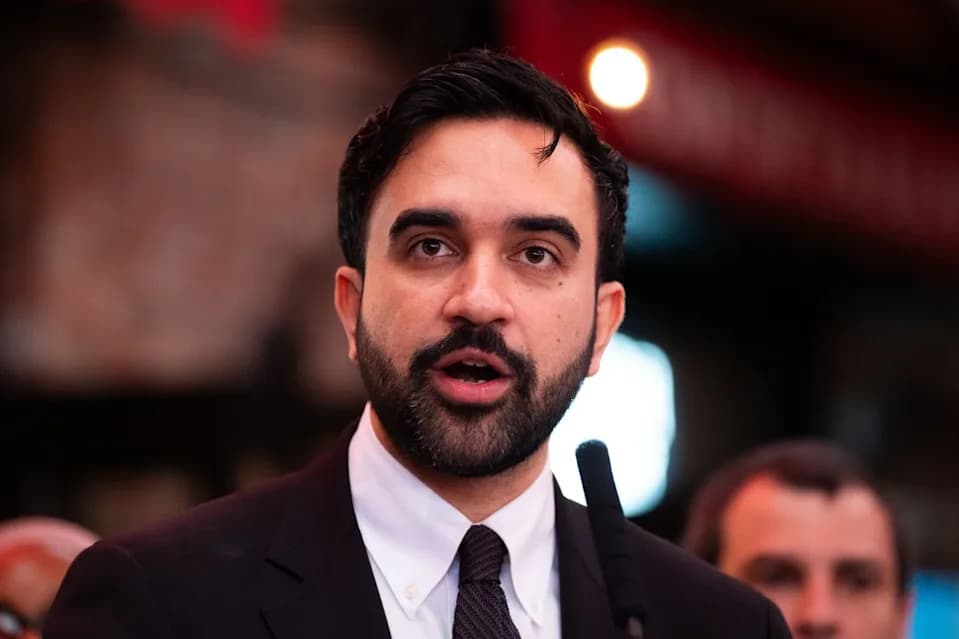
New York Mayor Zohran Mamdani makes a World Cup soccer tournament announcement at Harlem Tavern on May 21, 2026, in New York.
New York City will have two extra years to meet a 2022 state law that requires smaller public school class sizes after Mayor Zohran Mamdani, state lawmakers and the United Federation of Teachers (UFT) struck a compromise. The legislation, unveiled Monday, moves the city’s compliance deadline to the 2029–30 school year and sets staged targets and incentives intended to accelerate progress.
What the Agreement Does
The measure gives the NYC Department of Education until the 2029–30 school year to meet class-size caps: 20 students for kindergarten through third grade, 23 students for grades 4–8, and 25 students for high school classes. As part of the deal, the city must achieve 70 percent compliance by the coming school year and 90 percent by 2028–29. The legislation is set to take effect on July 1 once signed by state lawmakers and Governor Kathy Hochul.
Teacher Pay Differentials and Exemptions
UFT officials negotiated staged pay differentials to ease the transition where caps cannot be met because of space or staffing constraints. Under the agreement, teachers in classes that remain over the cap due to approved "hard-to-staff" or space exemptions will be eligible for a differential of up to $8,500 in 2026–27 and $9,500 in 2027–28. Exemptions will be reviewed each November.
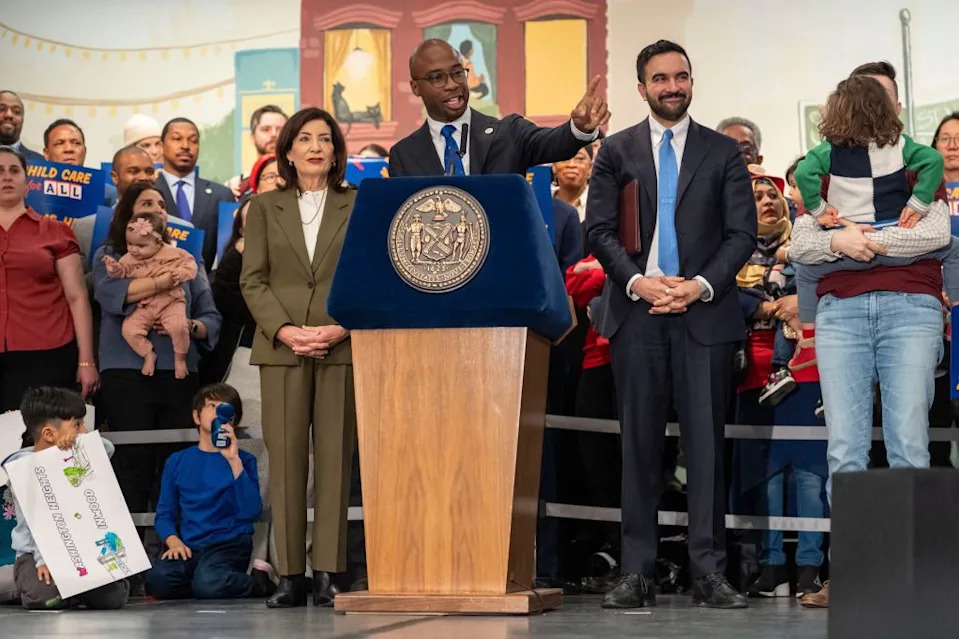
New York City Schools Chancellor Kamar Samuels speaks during a press conference at Sugar Hill Children’s Museum of Art & Storytelling on March 3, 2026, in New York. (AP Photo/Yuki Iwamura)
"We did not want an extension — we want compliance," UFT President Michael Mulgrew said. "But the reality is that New York City, up until now, had not done all that was needed to make this law a reality in every classroom. If giving this new administration two more years gets us a partner committed to building the necessary seats, then it is the fastest way to turn the law into reality."
Costs, Staffing And Space Challenges
Meeting the mandate remains costly and complex: reporting has estimated up to $1.7 billion in added teacher-salary costs and roughly $18 billion in new school construction to fully comply. Mamdani campaigned on reducing class sizes and initially pledged to hire 1,000 teachers per year under a program described as roughly $12 million per year, though city leaders acknowledge the broader fiscal and logistical challenge — including a historic $12 billion city budget shortfall.
Mayor's Response And Next Steps
Mayor Mamdani said he supports smaller classes and intends to implement the law in "good faith," calling the extension a way to reach the caps "in a way that is sustainable and responsible." He thanked Chancellor Kamar Samuels and state partners for negotiating the timeline. State Senator John Liu, author of the original mandate, said the extra time is necessary given recent difficulties recruiting teachers.
"No student should have to compete for their teacher's attention, and no educator should be asked to do the impossible in an overcrowded classroom," Mamdani said. "Smaller class sizes are essential to providing the high-quality public education every child deserves."
Officials estimate the new measure will lower the city's budget by about $500 million when it takes effect, though the long-term fiscal implications depend on hiring progress, facility construction, and how many exemptions are granted. The agreement represents a compromise between the goal of rapid compliance and the practical limits of recruitment, funding and space.
What To Watch: Implementation plans from NYC Public Schools, the November reviews of exemptions, and upcoming budget decisions will determine how quickly and effectively class sizes are reduced.
Help us improve.