CRBC News
Society

China Boosts Childcare Subsidies 10.6% — 99.9 Billion Yuan Allocated as Birth Rate Falls

China Boosts Childcare Subsidies 10.6% — 99.9 Billion Yuan Allocated as Birth Rate Falls
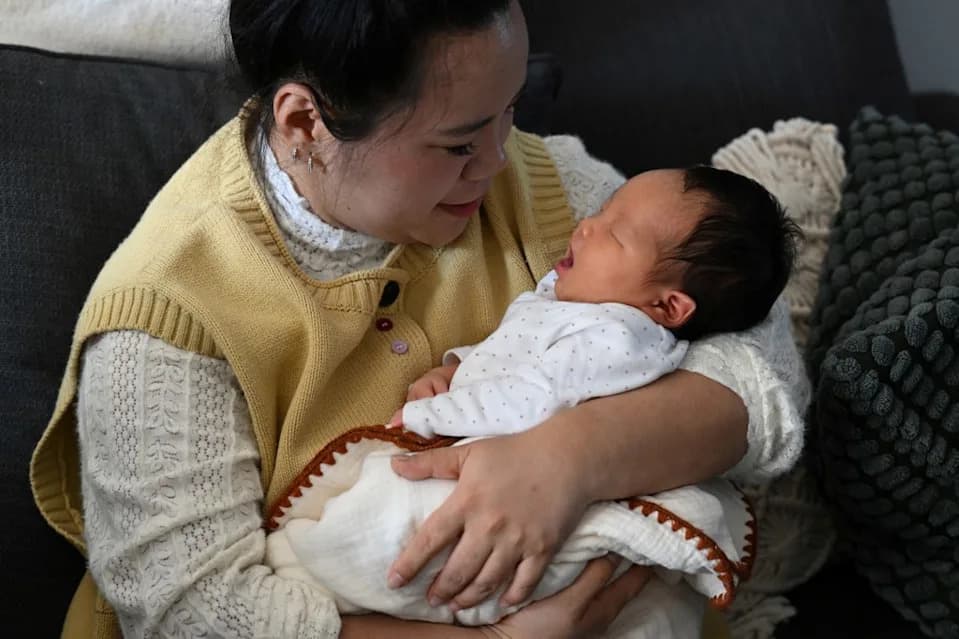
File photo: A woman looks at her newborn baby in Langfang in northern China’s Hebei province on March 6, 2026.

China's Ministry of Finance will allocate 99.9 billion yuan ($13.9bn) to local childcare programs, a 10.6% increase from last year, bringing total childcare subsidies to an estimated 110 billion yuan ($15.3bn).

Officials say distribution of funds has been 'smoothly and orderly.' Analysts note the move comes as China's fertility rate is estimated to have dropped to about 0.97 births per woman in 2025, down from 1.02 in 2024 — far below the 2.1 replacement level.

Policymakers warn that a declining, aging population could slow long-term economic growth, and say more comprehensive measures will be needed alongside subsidies.


China is expanding central government support for childcare as officials confront a rapid decline in births, the Ministry of Finance announced on Tuesday.

The ministry said it will allocate 99.9 billion yuan (about $13.9 billion) to back local programs for young children across provinces and municipalities — a 10.6% increase from last year. It estimates total childcare subsidies will reach roughly 110 billion yuan (about $15.3 billion) in 2025, and said distribution of the funds has proceeded "smoothly and orderly" so far this year.

More than two-thirds of the world's population now live in countries with fertility rates below the 2.1 births-per-woman replacement level. China's fertility rate remains among the lowest globally despite the end of its decades-long one-child policy and a suite of pronatalist measures introduced in recent years.

Official estimates suggest China's fertility fell to about 0.97 births per woman in 2025, down from roughly 1.02 in 2024. Policymakers and analysts warn that a shrinking population and a rapidly aging workforce could weigh on productivity and slow economic growth in the world's second-largest economy.

Why it matters: Increased childcare funding aims to reduce barriers to childrearing — such as childcare costs and availability — but analysts say subsidies are only one part of a broader policy mix needed to reverse long-term demographic trends.

This is a developing story. We will update with additional information from official sources as it becomes available.

Help us improve.

Related Articles

Trending