DHS Secretary Markwayne Mullin says ICE and other federal agencies will be on-site at World Cup venues to counter terrorist threats, not to conduct immigration raids. He identified drones as the top security concern at enclosed stadiums and warned that the FAA’s no-fly zones (3 miles/3,000 ft for stadiums; 1 mile/1,000 ft for FanFests) will be strictly enforced with federal prosecution for violators. Mullin also said visa screenings have already flagged individuals of concern and that the U.S. is coordinating security with local and international partners.
DHS Chief Clarifies ICE’s World Cup Role — Warns Drone Pilots of Federal Prosecution
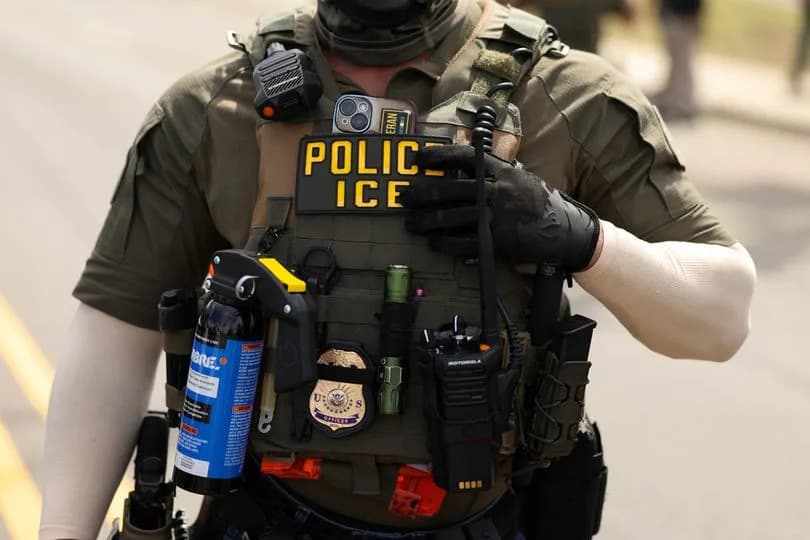
Department of Homeland Security Secretary Markwayne Mullin has discussed the role of Immigration and Customs Enforcement agents at the upcoming FIFA World Cup -Credit:CHARLY TRIBALLEAU / AFP via Getty Images(CHARLY TRIBALLEAU / AFP via Getty Images)
Department of Homeland Security Secretary Markwayne Mullin has laid out the role U.S. Immigration and Customs Enforcement (ICE) will play during this summer’s FIFA World Cup, emphasizing that federal teams will be deployed primarily to counter terror threats rather than to carry out immigration raids.
That stance comes after months of public concern: in February, New Jersey Congresswoman Nellie Pou urged a pause on ICE operations at FIFA events, and in March Amnesty International warned the presence of ICE and other agencies could pose risks to fans and players. Mullin responded that multiple federal, state and local agencies will be on-site working together to protect against security threats.
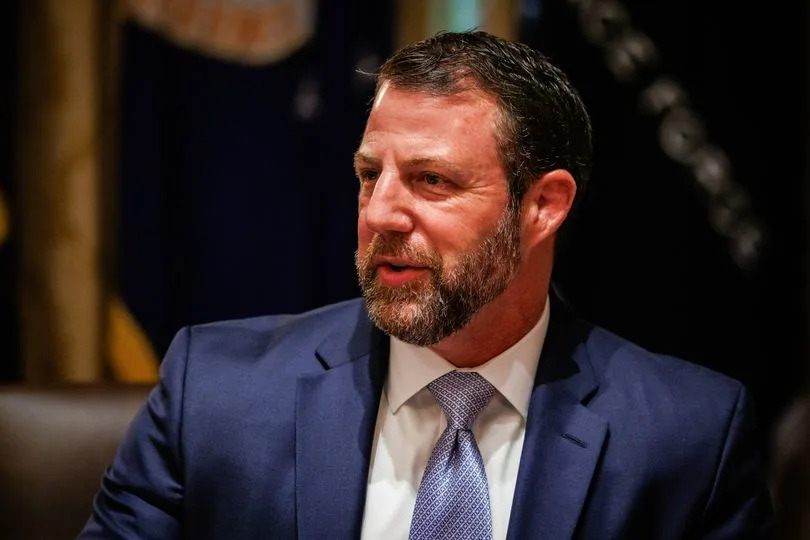
Mullin admitted his biggest concern was drones -Credit:Samuel Corum/Sipa/Bloomberg via Getty Images
“We always flex with all of our federal agencies, and every single one is going to be on site, not for immigration, but for terrorist threats,” Mullin told FOX News. He added that authorities will use tools such as watch-list screening and facial recognition to identify people of concern and that any response could involve various federal, state or local law enforcement partners.
The United States will host 78 of the tournament’s 104 matches across 11 venues. Only four stadiums have fully enclosing roofs; at enclosed venues Mullin identified unmanned aircraft systems — drones — as the biggest threat to spectator safety.
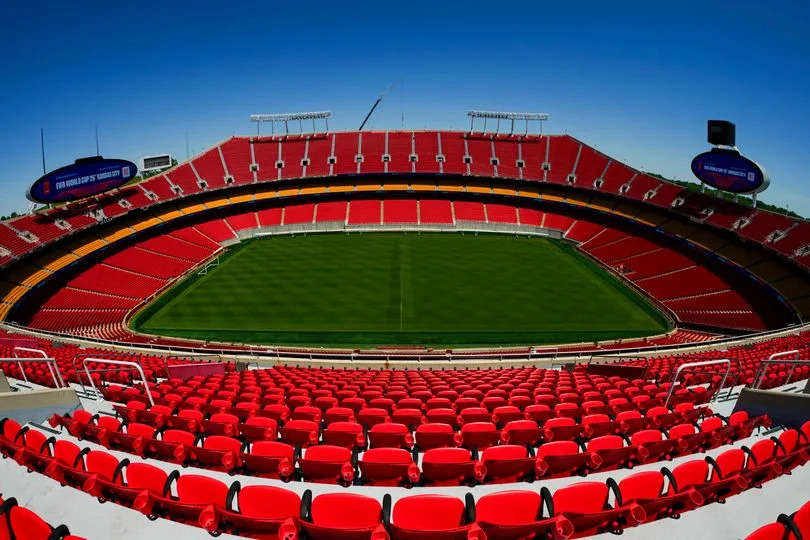
Mullin used Kansas City's Arrowhead Stadium as an example of a venue where drones could be of particular concern -Credit:Jay Biggerstaff/Getty Images
At AT&T Stadium in Arlington, Texas, Mullin warned that even a seemingly harmless prank — such as dropping a bag of flour from a drone — could spark a panic and a deadly stampede in a packed, enclosed arena. He said this is why officials have deployed extensive counter-drone technology.
The Federal Aviation Administration (FAA) has established restricted airspace around World Cup sites: stadiums — three miles out and up to 3,000 feet; FanFests — one mile out and up to 1,000 feet. Mullin stressed that anyone operating a drone in those zones will be pursued by federal authorities and face prosecution.
On international arrivals, Mullin said visa screenings coordinated by the State Department and U.S. Citizenship and Immigration Services (USCIS) have already flagged a number of people with suspected ill intent. He noted that many countries manage allocated ticket distributions and that the U.S. is working with international partners to share security responsibilities.
The U.S. portion of the tournament opens on June 12 at SoFi Stadium in Inglewood, California, when the U.S. Men’s National Team faces Paraguay. The final in the United States is scheduled for July 15 at MetLife Stadium in East Rutherford, New Jersey.
Key takeaway: Federal agencies will prioritize counterterrorism and public-safety measures — including aggressive anti-drone enforcement — while critics continue to call for limits on immigration-focused operations at sporting events.
Help us improve.