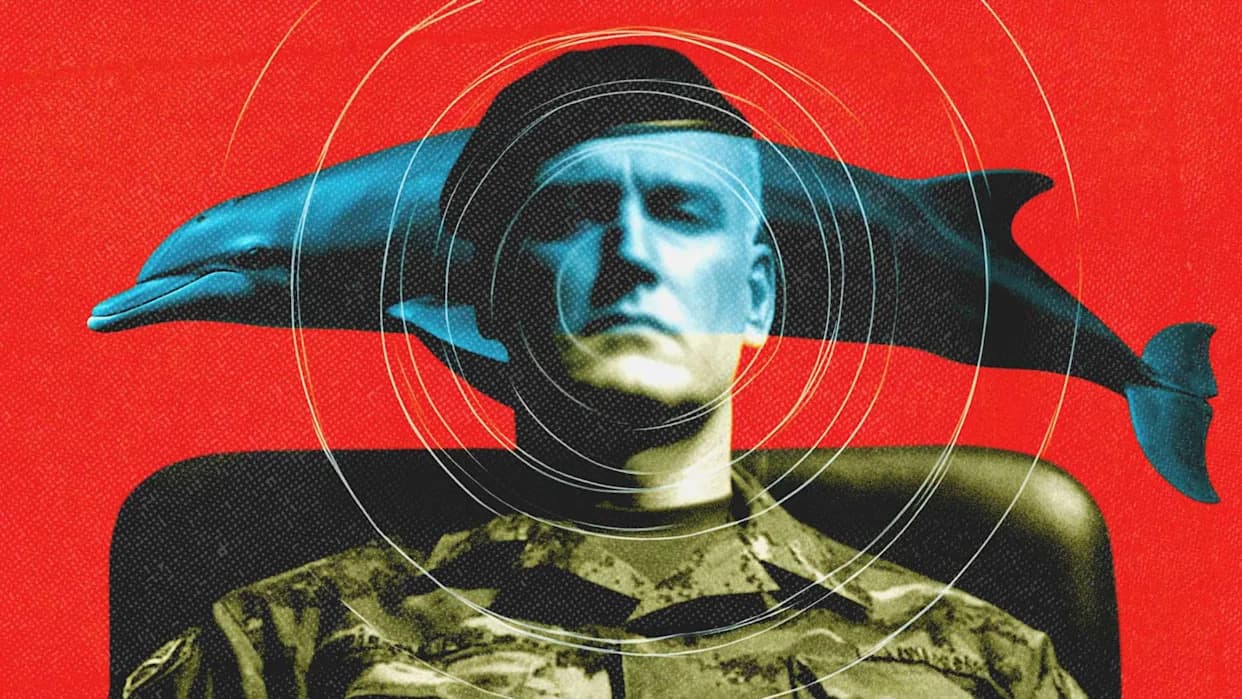
The Cold War spurred both Soviet and American experiments in paranormal techniques, from alleged telepathic control of animals to remote viewing programs. Early Soviet efforts in the 1920s under Gleb Bokii and Alexander Barchenko fed later curiosity and anxiety on both sides of the Iron Curtain. U.S. efforts culminated in the CIA-backed Stargate Project and Project Grill Flame, which returned mixed and largely inconclusive results. Many striking anecdotes survive, but rigorous documentary evidence that such methods yielded consistent military value is limited.
Psychic Soldiers, Dolphin Drones, and the Cold War's Paranormal Arms Race
Psychic Soldiers, Mind Readers, and Dolphin Drones: The Cold War's Weird Paranormal History
In February 2019 an article in Armeiiskii Sbornik, the Russian Ministry of Defense's official magazine, revived extraordinary claims that Soviet and Russian forces experimented with psychic techniques—from remote control of dolphins to disrupting broadcasts and allegedly crashing computers with mental powers. The story connects early Soviet occult experiments in the 1920s to later Cold War and post-Soviet programs on both sides of the Iron Curtain.
Origins: Bokii, Barchenko and the 1920s
Gleb Bokii, head of a Special Section of the Soviet secret police, and his collaborator Alexander Barchenko are said to have opened a covert laboratory at 21 Kuznetsky Most in Moscow in 1924. According to accounts collected by historians, they explored hypnotism, mind-reading and other fringe practices. Their activities—part laboratory, part esoteric circle—also included alleged communal gatherings and plans for an expedition to Tibet to seek the mythical kingdom of Shambhala, a theme recounted in Andrei Znamenski's Red Shambhala: Magic, Prophecy, and Geopolitics in the Heart of Asia.
How the Oddities Spread
Stories of Soviet psychic research circulated beyond Russia. In 1950 journalist and CIA operative Edward Hunter popularized the term "brainwashing," linking Soviet interrogation techniques to Chinese communist methods. Decades later, fears that the Soviets were pursuing parapsychology prompted U.S. agencies to explore similar avenues.
U.S. Responses: Stargate and Grill Flame
At Stanford Research Institute in the early 1970s, physicist and engineer Hal Puthoff and colleagues ran parapsychology experiments that, according to participants, drew CIA interest and funding. This work evolved into the covert Stargate Project, which investigated "remote viewing"—claims that people could describe distant or hidden targets via extrasensory perception.
Official reviews were mixed. A 1983 Defense Intelligence Agency assessment described Stargate's data as "highly variable" and often inaccurate. Later analysis under Project Grill Flame produced ambiguous language—some documents asserted that remote viewing was "a real phenomenon" and warned of potential foreign advances, while other evaluations remained skeptical.
Anecdotes, Claims and the Evidence Gap
Numerous anecdotes have fueled public fascination: a story relayed by former President Jimmy Carter about a psychic who provided coordinates to locate a crashed aircraft; Puthoff's claims that remote viewers detected a Soviet Typhoon-class submarine; and assertions that psychics were used during hostage crises. On the Russian side, figures such as Nikolai Patrushev have recounted KGB-linked psychic stories—most famously an account that a psychic named Georgy Rogozin read the thoughts of Madeleine Albright from a photograph. Many such claims remain poorly documented or contested.
Why This Happened
Historians and commentators point to the chaotic political environments that encouraged unconventional thinking. Early Soviet ideological experimentation, the geopolitical paranoia of the Cold War, and the post-Soviet spiritual resurgence in the 1980s and 1990s created fertile ground for fringe research. Whether out of genuine curiosity, strategic precaution, or institutional paranoia, both superpowers invested attention and sometimes money into investigating paranormal claims.
What We Can Conclude
Concrete, reproducible evidence that psychic techniques produced reliable military advantage remains elusive. Official U.S. reviews expressed serious doubts, and primary Soviet documentation is often scarce or classified. Nonetheless, the episode is an instructive case of how fear, ideology and the drive for strategic advantage can lead governments to pursue unconventional—and sometimes astonishing—lines of inquiry.
Sources and further reading: Andrei Znamenski, Red Shambhala; reports on the Stargate Project and DIA assessments; contemporary reporting in Armeiiskii Sbornik and Kommersant.
Help us improve.