Daraxonrasib, an experimental oral KRAS inhibitor, nearly doubled median survival in a 500-patient randomized trial for previously treated metastatic pancreatic cancer (13.2 vs. 6.7 months) and produced fewer severe side effects. Results were published in the New England Journal of Medicine and presented at ASCO. The FDA has signaled expedited review and allowed an expanded access program while researchers plan studies in earlier disease stages and combination approaches.
Experimental Pill Daraxonrasib Nearly Doubles Survival in Advanced Pancreatic Cancer
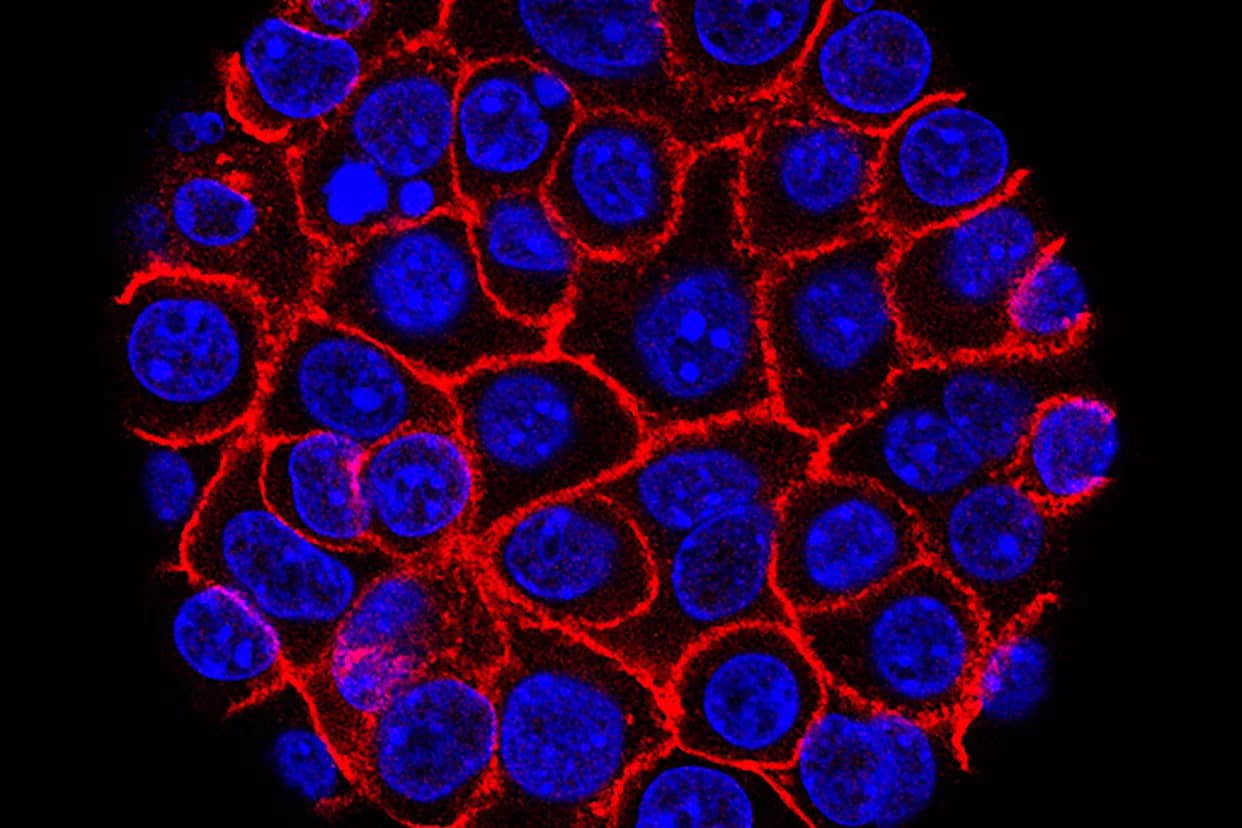
FILE - This undated microscope image from USC via the NIH shows pancreatic cancer cells, nuclei in blue, growing as a sphere encased in membranes, red. (Min Yu/Eli and Edythe Broad Center for Regenerative Medicine and Stem Cell Research at USC, USC Norris Comprehensive Cancer Center, File)(USC via NIH via AP)
Researchers report that daraxonrasib, an oral investigational drug, significantly extended survival for people with metastatic pancreatic cancer that progressed after prior therapies. The randomized 500-patient trial showed a median overall survival of 13.2 months with daraxonrasib versus 6.7 months with additional chemotherapy, and the results were published in the New England Journal of Medicine and presented at the American Society of Clinical Oncology.
Trial Results and Clinical Impact
In the phase 3 study of 500 patients, those assigned to daraxonrasib lived a median of 13.2 months compared with 6.7 months for patients who received further chemotherapy. Patients on the pill also experienced fewer severe adverse events overall, reported less pain, and described improved quality of life as some tumors shrank. Many participants were still receiving daraxonrasib when the analysis was locked, suggesting the survival difference may increase with longer follow-up.
How Daraxonrasib Works
Daraxonrasib targets mutant members of the RAS family — particularly KRAS — which drive tumor growth in the majority of pancreatic cancers. The drug uses a 'molecular-glue' approach to bind multiple KRAS subtypes, addressing a target that was long considered 'undruggable'. Investigators plan additional analyses to determine whether benefit varies by specific KRAS mutations and to test the drug earlier in the disease course or in combination with other therapies.
Safety, Access, and Next Steps
The most commonly reported treatment-limiting side effects were skin rash (which can sometimes be severe) and mouth sores. Revolution Medicines funded the study. The U.S. Food and Drug Administration has indicated it will expedite review of daraxonrasib and has authorized an expanded access program for qualifying patients while the formal approval process continues.
'While not curing the cancer, it is a very large step forward,' said Dr. Zev Wainberg (UCLA), a study leader. Presenters at ASCO noted that the magnitude of benefit is striking and called for testing daraxonrasib earlier and in combination regimens.
Why This Matters
Pancreatic cancer remains one of the most lethal cancers because it is often detected after it has spread. The American Cancer Society estimates roughly 67,000 new U.S. cases and more than 52,000 deaths this year, with a five-year overall survival of about 13%. A well-tolerated oral drug that meaningfully prolongs life and improves quality of life would represent a major advance in care and spur further research into KRAS-directed therapies.
Investigators will continue to follow participants, evaluate subtype-specific responses, and explore whether daraxonrasib can help more patients become eligible for surgery or achieve longer-lasting remissions when used in combination with other treatments.
Help us improve.