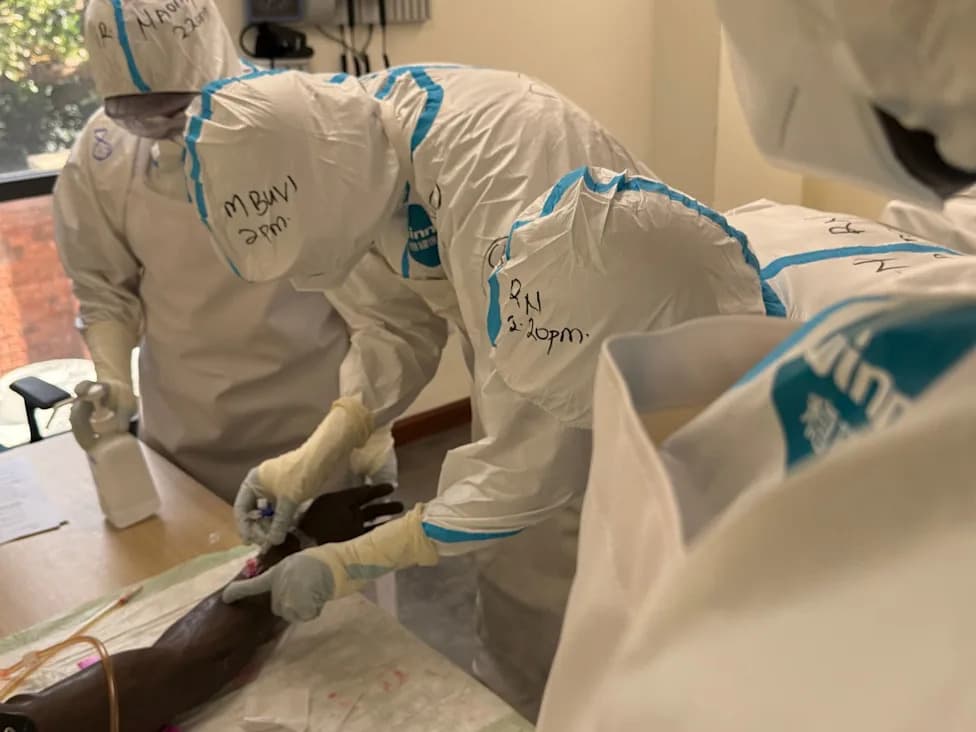
The Bundibugyo Ebola outbreak in eastern DRC has produced about 1,000 cases and hundreds of deaths since WHO declared a public health emergency in mid-May. Conflict and high population movement in the mining region are accelerating spread and complicating response efforts. A U.S. plan to quarantine exposed Americans in Kenya has been temporarily suspended by a Kenyan court, and at least one U.S. clinician was evacuated to Germany for treatment. There is no approved vaccine or specific treatment for Bundibugyo, though two candidates are under consideration and not yet ready for human trials.
Rapid Spread of Bundibugyo Ebola in Eastern DRC Sparks Global Alarm and Diplomatic Controversy
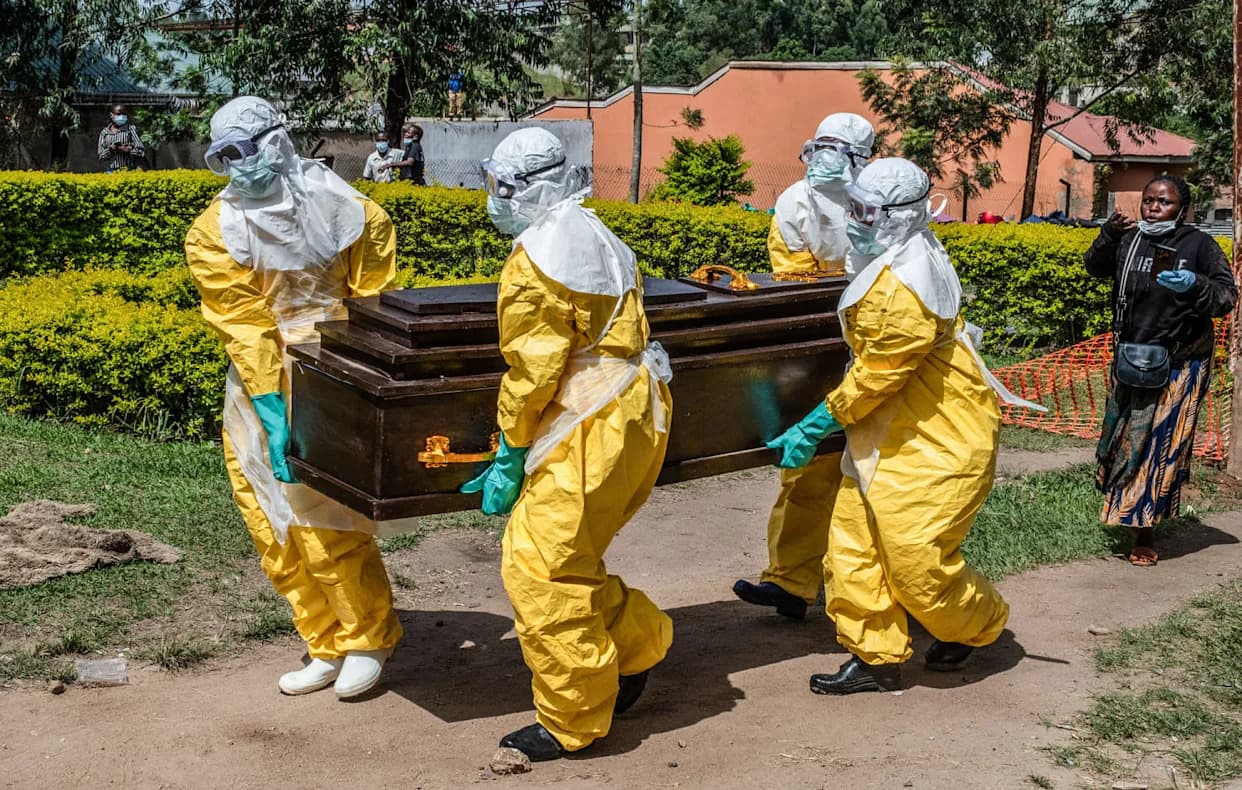
Red Cross workers carry a coffin containing the body of Dr. Tibenderana Katho Blaise, who worked at the Centre Medical Evangelique and died of Ebola virus, in Bunia, Democratic Republic of the Congo, on Tuesday. (Stringer / Reuters)
The Ebola outbreak continuing in eastern Democratic Republic of the Congo (DRC) has alarmed international public health officials because of its rapid spread through a remote but densely populated mining region.
Since the World Health Organization declared the situation a public health emergency in mid-May, roughly 1,000 suspected and confirmed cases and hundreds of deaths have been attributed to the Bundibugyo species of the virus.
International response and controversy
Global health teams are racing to contain the epidemic, but controversy has arisen over the U.S. administration's plan to place Americans exposed to the virus in a quarantine facility in Kenya, a country that currently reports no Ebola cases. A Kenyan court issued a temporary suspension of that plan, and U.S. officials say they are coordinating with Kenyan authorities and other partners to assess options. White House officials also indicated that Americans who become ill may be taken to medical centers in Europe rather than repatriated to the United States. One American surgeon who contracted Ebola while treating patients in Ituri province was evacuated to Germany for care.
Why the outbreak is worrying
WHO Director-General Tedros Adhanom Ghebreyesus has warned that the outbreak's "speed and scale" raise concern about spread to new areas or countries. Contributing factors include intensified local conflict, population movement around mining sites, and limited access for response teams in some affected zones.
How Bundibugyo Ebola behaves
Ebola is not a long-range airborne virus. Transmission occurs through direct contact with blood, saliva, vomit, urine and other bodily fluids, or via contaminated surfaces. Handling the bodies of those who died from the disease carries a high risk of transmission.
The virus causes hemorrhagic fever by attacking blood vessels and damaging vital organs as it multiplies in the body. Early symptoms typically include fever, headache, sore throat, fatigue and muscle aches; later stages can involve bleeding and multi-organ failure.
Treatment, vaccines and species background
There is no approved vaccine or targeted antiviral therapy specifically for the Bundibugyo species. The World Health Organization reports two vaccine candidates under consideration, but neither is ready for human trials. The U.S. Centers for Disease Control and Prevention recognizes four Ebola species known to cause illness in people; Bundibugyo was first identified in western Uganda less than 20 years ago and this is only the third outbreak attributed to that species. Experts suspect African fruit bats may act as a natural reservoir.
Context from past epidemics
The deadliest recent Ebola epidemic occurred in 2014 across Guinea, Sierra Leone and Liberia, caused by the Zaire species. That outbreak killed more than 11,300 people and took nearly two years to bring under control—an important reminder of how severe Ebola epidemics can become if not contained quickly.
Key priorities remain rapid case detection, safe patient care, protective measures for health workers and communities, culturally sensitive burial practices, and coordinated international support to contain spread.
Help us improve.