Rep. Haley Stevens gave conflicting answers about the Senate filibuster during a Michigan Democratic debate, saying both that it “must go” and that it should be used to block certain bills. Her comments mischaracterized how last year’s tax law bypassed the filibuster via the budget reconciliation process, prompting criticism from commentators on both sides. Stevens’ campaign clarified she supports eliminating the filibuster to advance priorities such as codifying abortion rights and raising the minimum wage. The competitive Michigan primary is Aug. 4, with the eventual nominee likely to face Republican Mike Rogers in November.
Haley Stevens’ Campaign Clarifies Filibuster Stance After Confusing Debate Exchange

Rep. Haley Stevens (D-MI) speaks in front of the Capitol on May 6. (Tom Williams / Getty Images)(Tom Williams)
Rep. Haley Stevens (D-Mich.) faced scrutiny after giving seemingly contradictory answers about the Senate’s 60-vote filibuster rule during a wide-ranging Democratic primary debate at the Mackinac Policy Conference.
At one point Stevens said, “The filibuster must go so that we can codify health care,” then later added, “We should use the filibuster to not allow the big ugly bill to pass that increased our debt,” a reference to the 2017 tax legislation pushed by former President Donald Trump.
What She Said — And What Was Misstated
When pressed by moderator Stephen Henderson to clarify whether she wanted to eliminate the filibuster or use it selectively, Stevens said, “I said I want to remove the filibuster.” She expanded that removing it would have allowed Democrats to vote down last year’s tax bill. That characterization drew corrections from observers: the tax law in question was enacted using the budget reconciliation process, which is exempt from the filibuster and does not require 60 votes.
Fact: Reconciliation is a procedural tool that lets certain budget-related bills pass the Senate with a simple majority (51 votes). It is the mechanism Republicans used last year to pass the tax bill without Democratic support.
Reactions And Responses
Stevens’ debate comments prompted criticism from both sides of the aisle. Former Senate Democratic aide Tré Easton tweeted that basic knowledge of Senate rules is “table stakes” for senators, while GOP operative Matt Whitlock called the exchange a “brutal moment.” The National Republican Senatorial Committee said Stevens’ remarks revealed an inability to articulate a basic procedural point.
Stevens’ campaign spokeswoman Caitlin Legacki pushed back, saying Stevens has been consistent in supporting elimination of the filibuster to advance priorities she says would benefit Michigan families — including codifying abortion rights and raising the minimum wage. Legacki also argued that the filibuster indirectly contributed to Republicans’ use of reconciliation to pursue tax cuts that, in her view, required offsets that harmed health care funding for Michiganders.
Where Other Candidates Stand
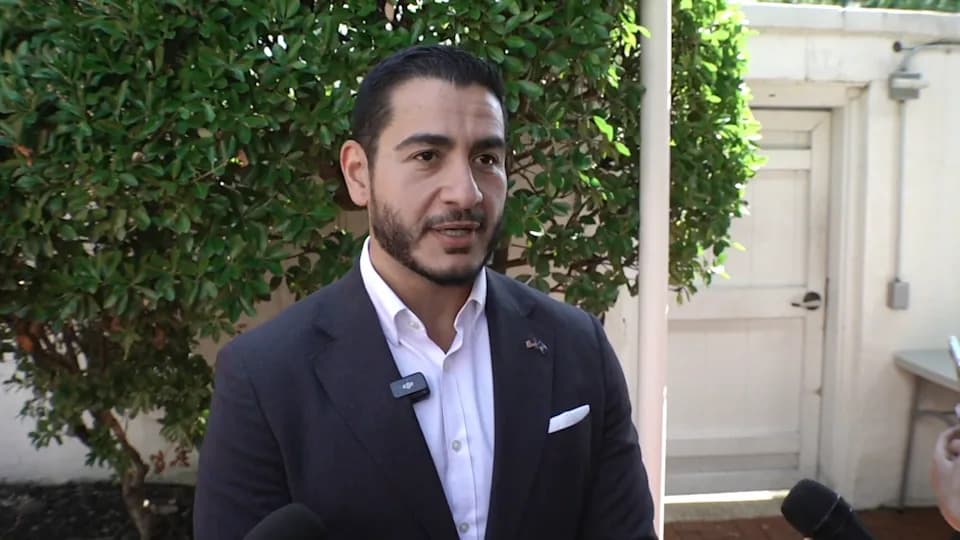
Both of Stevens’ primary rivals reiterated calls to abolish the 60-vote rule. Abdul El-Sayed said the filibuster allows senators in safe seats to avoid accountability and has “become the place where all legislation goes to die.” State Sen. Mallory McMorrow likewise argued that ending the filibuster would hold lawmakers accountable and prevent Democrats from protecting bad Republican bills by default.
Why It Matters
The Michigan Democratic primary is Aug. 4. Polls show a competitive three-way race, and the nominee is expected to face Republican former Rep. Mike Rogers in November for an open U.S. Senate seat, after Sen. Gary Peters (D-Mich.) announced he would not run.
This debate exchange underscores how procedural knowledge — and clear communication about it — can become a campaign flashpoint in a competitive primary where control of turnout and messaging matters to the general election stakes.
Originally published on NBCNews.com.
Help us improve.