
The Bundibugyo strain of Ebola has caused about 900 suspected cases and 220 suspected deaths in the DRC since 15 May, while Uganda has confirmed five cases and one death. Governments have imposed measures including flight suspensions to Bunia, border closures and entry bans or quarantines by countries such as Canada, The Bahamas and the US. WHO has raised the DRC national risk to very high and is expanding response operations; ICAO recommends exit screening and cautions against blanket border closures.
Ebola Travel Restrictions Grow as Bundibugyo Outbreak Spreads in DRC and Uganda
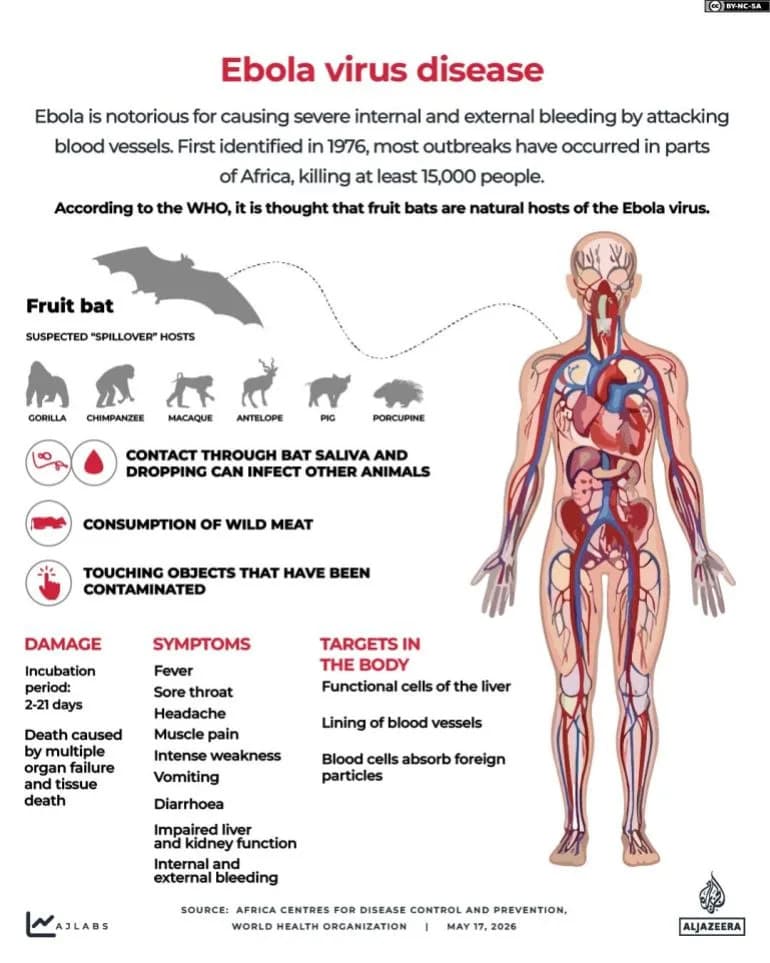
Interactive_Ebola_May17_2026-1779019439
The recent outbreak of the rare Bundibugyo (BVD) strain of Ebola in the Democratic Republic of the Congo (DRC) and Uganda has prompted a wave of travel restrictions and border measures as governments seek to limit transmission.
Outbreak Overview
The World Health Organization (WHO) has recorded about 900 suspected cases and 220 suspected deaths in the DRC since the outbreak was declared on 15 May. Uganda has confirmed five cases and one death. Last week WHO raised the national risk level for the DRC from high to very high, while maintaining a low global risk assessment.
Local Measures in Affected Countries
In the DRC, the Ministry of Transport and Communications suspended all commercial flights to and from Bunia—one of 11 affected health zones. Exceptions for humanitarian, medical and emergency flights may be permitted with coordination and special approval from aviation and health authorities.
Uganda has restricted movement to and from the DRC by suspending direct flights and halting bus and boat border crossings for four weeks. Weekly markets in border districts have been paused. Freight and deliveries of essential goods and food continue to be allowed to mitigate humanitarian and supply-chain impacts.
International Travel Restrictions
Several countries beyond the immediate region have introduced temporary entry bans, quarantine rules or enhanced screening:
- Canada announced a 90-day entry ban on residents from the DRC, Uganda and South Sudan, and requires travellers who have recently been in affected areas to quarantine for 21 days from 30 May.
- The Bahamas imposed a 30-day entry restriction on travellers from those countries, subject to review.
- The United States banned non-citizens who travelled to the DRC, Uganda or South Sudan in the previous 21 days, later extending the restriction to U.S. lawful permanent residents. U.S. citizens returning from affected areas were directed to arrive via selected airports with enhanced screening: IAD (Washington Dulles), ATL (Atlanta), and IAH (Houston) for specified arrival dates.
- Jordan and Bahrain suspended entry for travellers arriving from the DRC and/or Uganda and South Sudan for 30 days from announcement dates.
- India, Thailand and Mexico have increased screening at major international airports. Thailand is allowing arrivals from the DRC and Uganda only through Suvarnabhumi Airport (Bangkok) after arrival testing.
The Wall Street Journal reported plans by the U.S. administration to deploy public health officers to Kenya to staff a potential quarantine facility for Americans at high risk of exposure or who test positive.
About the Bundibugyo Strain
Bundibugyo is a rare, highly fatal strain of the Ebola virus that causes severe viral haemorrhagic fever. Transmission occurs through close contact with the blood or bodily fluids of infected people or deceased patients, and via contaminated objects. Limiting direct contact and strengthening infection control are therefore central to containment.
Response Efforts and Guidance
WHO Director-General Tedros Adhanom Ghebreyesus said response activities include contact tracing, establishing treatment centres and reinforcing infection prevention and control. He warned that delayed detection has left responders "playing catch-up with a very fast-moving epidemic," but added:
"We know this virus, and we know how to stop it. We have stopped every previous Ebola outbreak, and we will stop this one, too."
The United Nations urged airlines and governments to follow International Civil Aviation Organization (ICAO) protocols developed during the COVID-19 pandemic, such as electronic health declarations and contactless border procedures. ICAO said international flights are safe for now and recommended that countries prioritise exit screening of departing passengers from affected areas rather than blanket border closures or widespread entry screening—while also screening anyone with unexplained fever or symptoms consistent with BVD at international airports.
Health authorities and governments are balancing public-health protection with keeping essential goods and services moving, and are monitoring the situation closely as WHO scales up support in affected areas.
Help us improve.





















