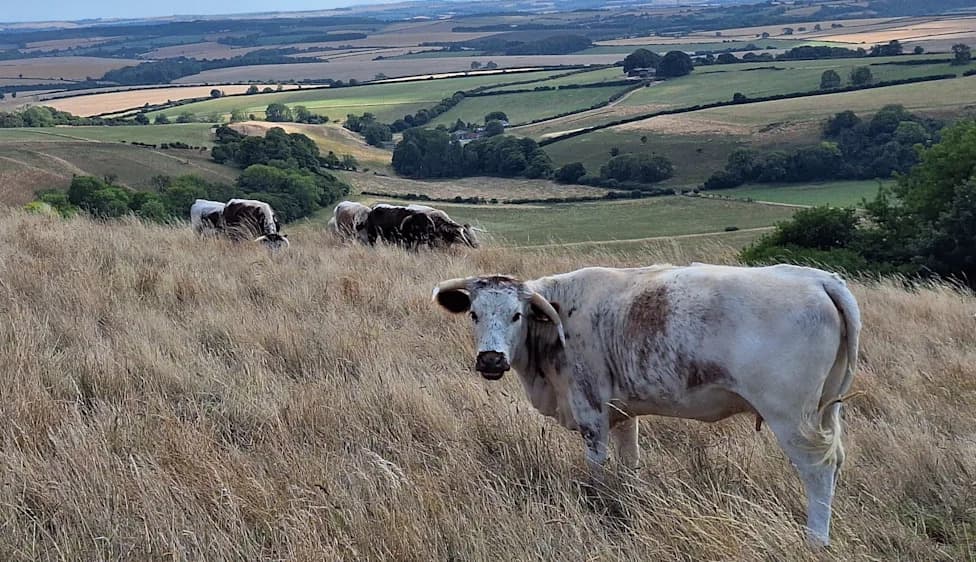
The National Trust is carrying out a major rechalking of the 55-metre Cerne Abbas Giant after wetter winters and damp conditions have dulled the landmark's white outline. Around 300 staff and volunteers will hand-pack roughly 17 tonnes of fresh chalk over up to 15 days; the last full makeover was seven years ago. The Trust says changing weather patterns may require more frequent maintenance, while newly acquired land will help protect the wider landscape and rare species. Scientific studies suggest the figure dates to the late Saxon period, though debate about its original meaning continues.
Cerne Abbas Giant Gets Major Rechalking as Wetter Weather Fades Its Chalk Outline
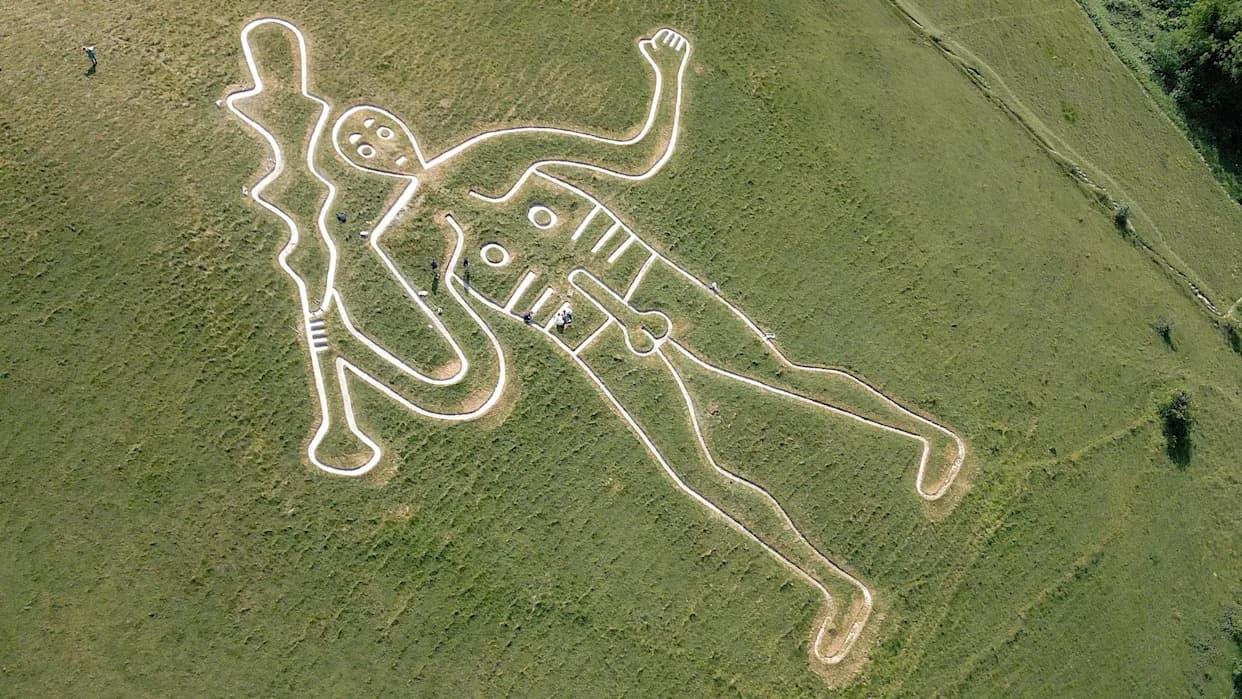
Wetter weather is "dulling" the Giant's outline [BBC/Kevin Church]
The 55-metre Cerne Abbas Giant — the naked, club-wielding chalk figure cut into a Dorset hillside — is being given a major rechalking after wetter winters and damper conditions have dulled his once-crisp white outline.
Why The Work Is Needed
Members of the National Trust say heavier winter rain is washing material from the slope more quickly, while milder, damp spells encourage algae and grass growth that leave the figure looking greener and less distinct between maintenance cycles. The Trust is cautious about attributing changes at a single site directly to climate change, but notes the Met Office expects a continuing pattern of warmer, wetter winters and hotter, drier summers across the UK.
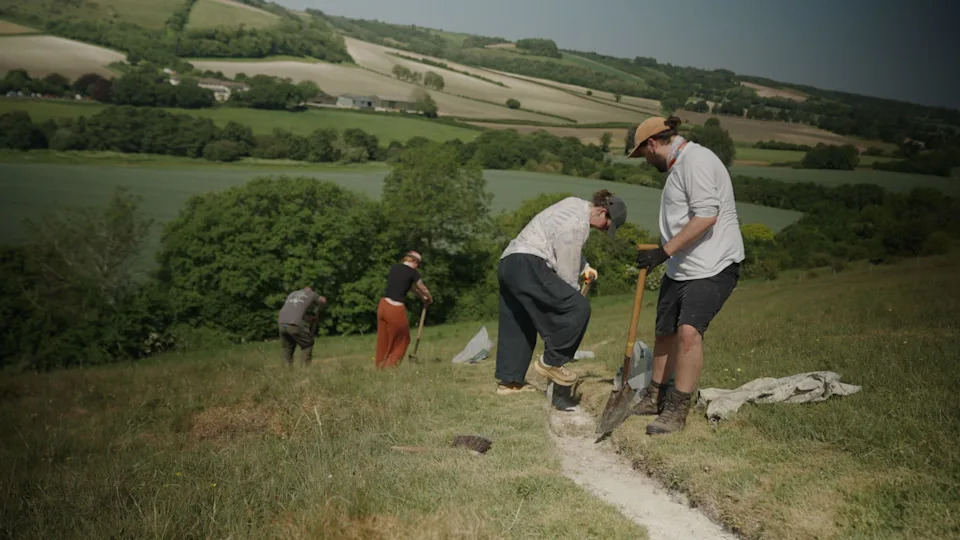
Volunteers help keep the outline clear by rechalking the figure [BBC/ Kevin Church]
"It's one of these things we cannot really prove," says National Trust ranger Luke Dawson. "It is more just observation of what we are seeing up there."
The Rechalking Operation
The Trust expects the hand-packed rechalking to take up to 15 days. Around 300 staff and volunteers will carry roughly 17 tonnes of fresh chalk up the steep hillside — which in places has a gradient of about one in three — carefully digging out old material before hand-packing new chalk into the Giant's outline. The technique has changed little over generations; between full chalkings the Trust uses sheep to keep grass short and protect the figure from encroaching vegetation.
The last full rechalking was carried out just seven years ago, but the Trust now says the figure may need more frequent attention to retain its defining features.
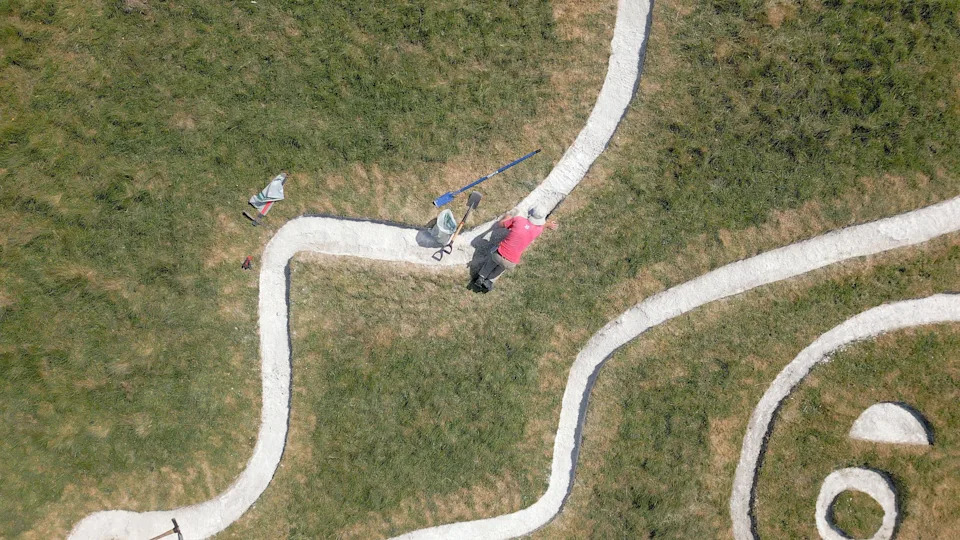
The process of rechalking by hand has not changed for generations [BBC/ Kevin Church]
Landscape Protection And Archaeology
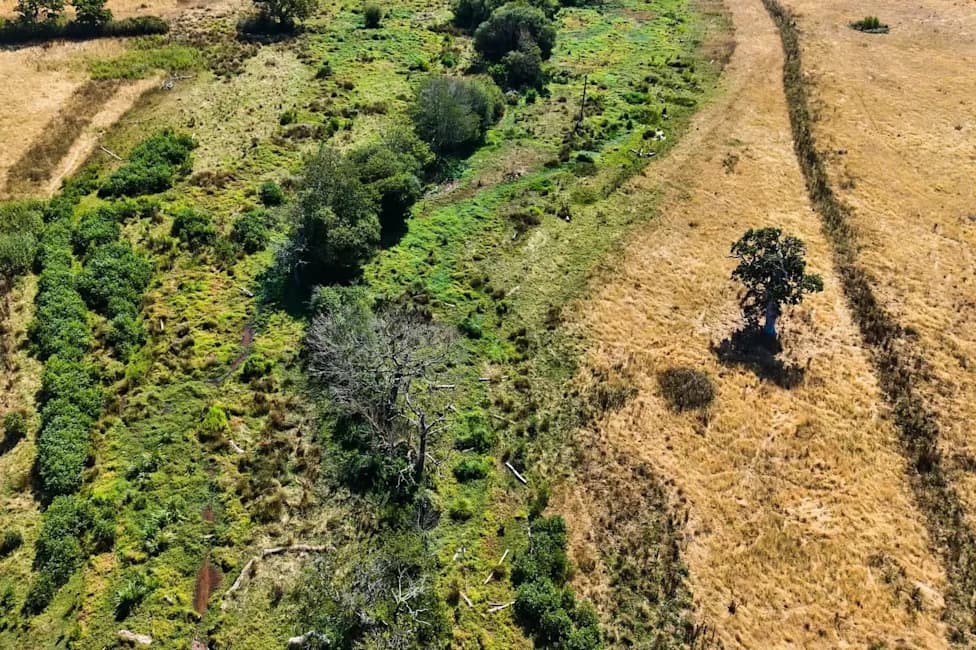
This work follows a public fundraising campaign that helped the National Trust raise £330,000 to acquire an additional 138 hectares (341 acres) of land around the Giant. The newly protected area includes species-rich chalk grassland, archaeological deposits and habitat for rare wildlife such as the endangered Duke of Burgundy butterfly. The purchase will allow the Trust to manage the wider landscape — improving access, restoring habitats and supporting research.
Origins And Debate
The Giant's origins and meaning have been debated for centuries. Scientific sediment analysis published by the National Trust in 2021 suggests the figure was probably first cut in the late Saxon period (roughly 700–1100 AD), later than the prehistoric or Roman dates once proposed. In 2024, researchers at the University of Oxford argued the figure was carved to represent Hercules and may have served as a meeting point for West Saxon armies; they also suggested monks at nearby Cerne Abbey later reinterpreted him as Saint Eadwold.
Local volunteers and visitors — including Chole Baugh and Joe Ford, who won a National Trust lottery place on the project — say the physically demanding work is a reminder of the many generations who have maintained the Giant's visibility.
Practical Notes: The rechalking operation is physically strenuous and will be carried out in variable weather; the Trust aims to complete the outline carefully to protect both the figure and the surrounding habitat.
Help us improve.