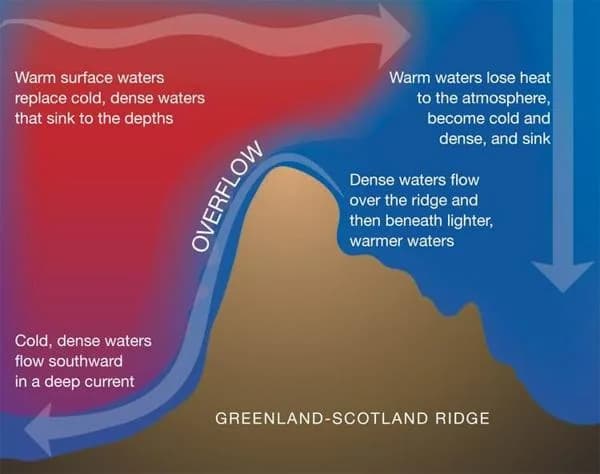
Two researchers used computer simulations to show that a barrier across the Bering Strait could, in theory, reduce Pacific freshwater entering the Arctic and help preserve the Atlantic Meridional Overturning Circulation (AMOC). The models suggest such a dam might maintain Atlantic salinity and support the AMOC — but only if built before substantial weakening occurs. The idea is a proof of concept and raises huge engineering, ecological and geopolitical challenges; most experts stress cutting emissions over large-scale geoengineering.
Scientists Propose 50‑Mile Dam Across the Bering Strait to Protect a Key Ocean Current
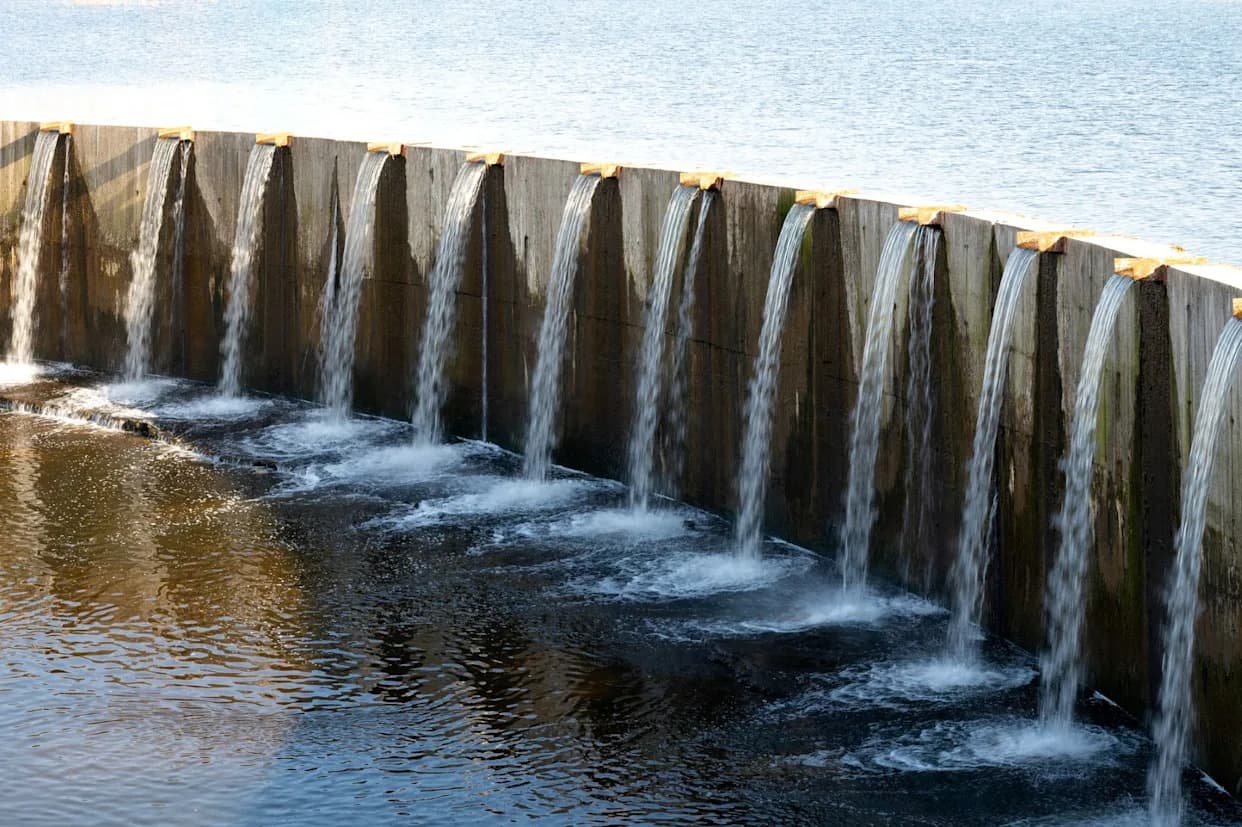
Photo Credit: iStock
A proposal to build a barrier more than 50 miles long across the Bering Strait — the narrow passage between Alaska and Siberia — has been advanced as a theoretical way to help preserve one of Earth’s most important ocean circulation systems.
The idea appears in a modeling study published in Science Advances. Researchers Jelle Soons (Utrecht University) and Henk A. Dijkstra used numerical simulations to test whether blocking or restricting the flow through the Bering Strait could reduce the inflow of relatively fresh Pacific water into the Arctic and Atlantic, thereby helping to maintain Atlantic salinity and stabilizing the Atlantic Meridional Overturning Circulation (AMOC).
Why the AMOC Matters
The AMOC is a major component of the global ocean conveyor belt: it carries warm surface waters northward and returns colder, deeper waters southward. This circulation influences climate and weather across Europe, the tropics and the U.S. East Coast. Continued warming and changing freshwater inputs could weaken the AMOC or, in a worst-case scenario, trigger a large and rapid change with wide-reaching consequences.
What the Models Show
According to the simulations, a barrier across the Bering Strait could reduce freshwater transport into the Arctic and help maintain higher Atlantic salinity, which in turn could support the AMOC’s stability. Crucially, the models indicate that timing matters: building the barrier while the AMOC is still relatively strong could help preserve it, whereas attempting construction after the circulation has already weakened substantially might worsen the decline.
Major Caveats and Consequences
The authors describe the proposal as a proof of concept, not an imminent engineering plan. The study does not address the immense practical, legal and diplomatic challenges of building a transnational dam. Potential consequences include disrupted marine migration routes, impacts on major shipping lanes, and geopolitical tensions between the United States and Russia. If the AMOC were to fail or weaken dramatically, likely effects include cooler conditions in parts of Europe, shifted tropical rainfall patterns, and higher sea levels along portions of the U.S. East Coast.
"The Met Office does not advocate geoengineering solutions to climate change, which can often bring dramatic and unintended consequences," a U.K. Met Office spokesperson said. "Fighting to stave off every fraction of a degree rise of global temperature is the more sustainable and pragmatic approach."
Many climate scientists emphasize that reducing greenhouse gas emissions and limiting future warming remains the most practical and least risky strategy to avoid reaching dangerous tipping points in ocean and climate systems.
Soons called the dam concept a possible last-resort measure in a worst-case scenario, underscoring that it is meant to illustrate what might be technically possible rather than to propose an immediate construction project.
Help us improve.