Senegal’s President Bassirou Diomaye Faye has dismissed Prime Minister Ousmane Sonko and dissolved the government after months of tension over how to handle a deepening debt crisis. The IMF estimates debt reached about 132% of GDP at end-2024 following disclosure of roughly $13 billion in previously hidden liabilities, leading to suspension of a $1.8 billion loan facility. Faye’s move clarifies who will lead negotiations but risks mobilizing Sonko’s popular base. Additional fiscal pressures include a potential $2 billion overrun in the 2026 fuel subsidy bill if oil hits $115/barrel.
Senegal President Bassirou Diomaye Faye Fires Prime Minister Ousmane Sonko, Dissolves Government Amid Debt Standoff
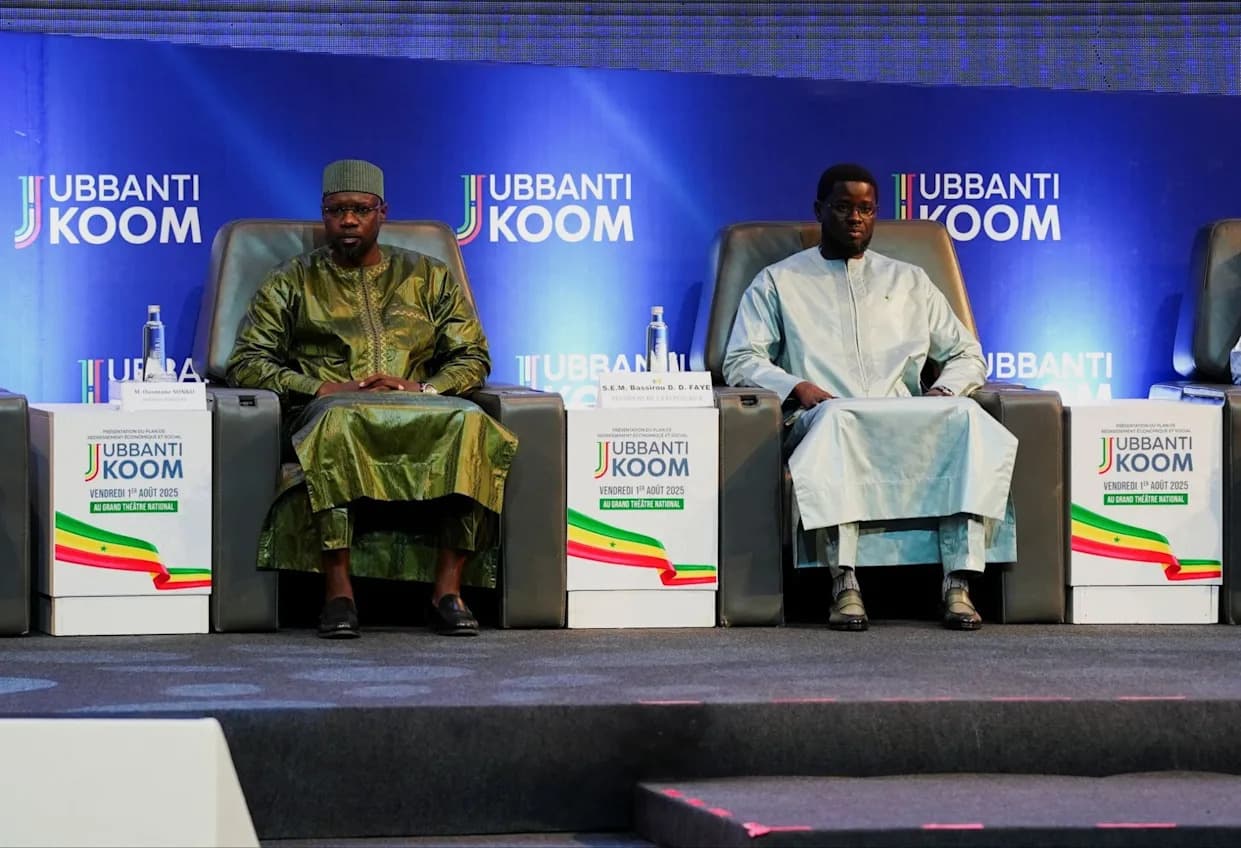
Senegal’s President Bassirou Diomaye Faye has dismissed Prime Minister Ousmane Sonko and dissolved the government, a dramatic move that clarifies who will lead negotiations over a deepening debt crisis but risks sparking political unrest.
The decision, announced late on Friday, follows months of mounting tensions between the two leaders. The International Monetary Fund (IMF) estimates Senegal’s public debt reached about 132% of GDP at the end of 2024 after authorities disclosed previously hidden liabilities now put at roughly $13 billion. That revelation prompted the IMF to suspend a $1.8 billion loan facility to the country.
When Faye won the April 2024 presidential election, many analysts said his victory was built on the popularity of Sonko — the founder of the Pastef movement and Faye’s former mentor — who had been barred from contesting the race after a defamation conviction and subsequently backed Faye.
Differences over economic strategy and the balance of power between the presidency and the premiership steadily widened after the election. For months the two men effectively operated parallel centres of influence inside government, producing mixed signals on fiscal policy and negotiations with the IMF.
Main Policy Rift
The clearest clash concerned the IMF’s recommendation that Senegal consider formal debt restructuring. Sonko publicly rejected entering a formal IMF programme, arguing that Senegal could meet its obligations without such measures. Faye signalled a more pragmatic stance, saying he would explore “potential pathways toward a solution” and indicated he would personally lead talks with the Fund.
By dissolving the cabinet, Faye removes a key source of ambiguity about who will set policy and steer debt talks. He can now appoint ministers aligned with his agenda and make decisions without the risk of being undercut by a rival inside government.
However, the move is politically risky. Sonko retains strong grassroots support and could mobilize protests or other pressure tactics. There was no immediate sign Sonko planned such a campaign; after his dismissal he posted on social media that he would "sleep with a light heart." Still, the potential for street-level confrontation or broader political instability is real.
Fiscal Headwinds
Beyond the hidden liabilities, Senegal faces other fiscal pressures. The former finance minister warned that the country’s fuel subsidy bill could exceed its 2026 budget allocation by as much as $2 billion if oil prices rose to $115 per barrel as a consequence of the Iran war — a scenario that would further complicate budget planning.
Outlook: The dissolution clarifies formal authority in the short term, but the government’s ability to stabilize public finances and secure international support now depends on how Faye rebuilds his cabinet and whether he can defuse or contain popular opposition.
Help us improve.