France's public debt has climbed to a record €3.596 trillion (about 119% of GDP), raising fiscal concerns ahead of the 2027 presidential election. Proposals range from spending cuts backed by the government to a controversial plan from Jean‑Luc Mélenchon to freeze ECB‑held French bonds, which the ECB says would violate EU rules. Interest costs are rising — expected to reach roughly €77 billion annually — and rating agencies have highlighted the deteriorating fiscal outlook even as Fitch keeps an A+ rating.
France’s Record Public Debt (119% of GDP) Looms Large Over 2027 Election
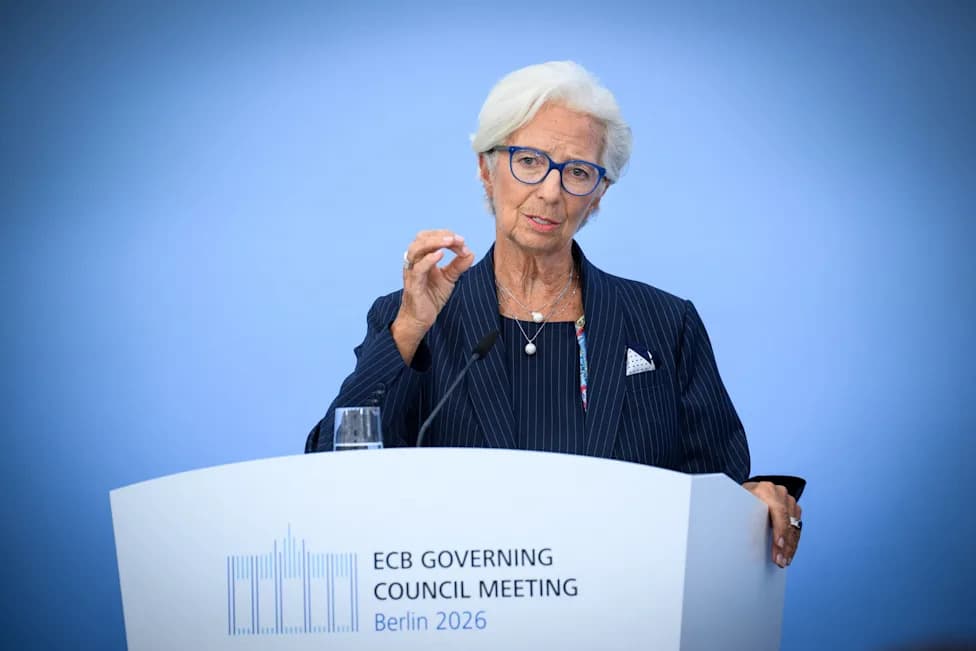
Christine Lagarde, President of the European Central Bank, address the media during a press conference following the ECB Governing Council's off-site meeting at the Deutsche Bundesbank's conference center in Berlin, Germany, Thursday, Sept. 10, 2026. (Bernd von Jutrczenka/dpa via AP)(Bernd von Jutrczenka/DPA via AP)
France's public debt has risen to an unprecedented level during President Emmanuel Macron's two terms, reaching €3.596 trillion — roughly 119% of gross domestic product — and emerging as a central issue ahead of the 2027 presidential election.
Why Debt Matters Now
With social tensions high and voters focused on the economy, candidates across the political spectrum face growing pressure to lay out credible plans to rein in public finances. Prime Minister Sébastien Lecornu, preparing the government's 2027 draft budget, has proposed cutting public spending to reduce the deficit — a move that has prompted pushback from both left- and right-leaning parties.

French far-left leader Jean-Luc Melenchon, candidate at the presidential election arrives to give a speech during the annual Braderie in Lille, northern France, Saturday, Sept. 5, 2026. (AP Photo/Jean-Francois Badias)(AP Photo/Jean-Francois Badias)
Contested Remedies and Legal Limits
One of the most controversial proposals comes from radical-left candidate Jean‑Luc Mélenchon, who has suggested effectively freezing or canceling French government bonds held by the European Central Bank to free resources for public investment. Mélenchon describes the move as transforming those securities into perpetual debt with low or zero interest, which he equates with cancellation.
“Freezing this debt means transforming it into perpetual debt — that is, debt with no repayment deadline and a low or zero interest rate,” Mélenchon said. “Freezing it is therefore effectively the same as canceling it.”
European Central Bank President Christine Lagarde has rejected that idea, calling it a clear breach of EU treaty rules that prohibit central-bank financing of governments. She warned that such a move could destroy confidence and leave France paying much higher borrowing costs—or being shut out of markets—when it next seeks funding.
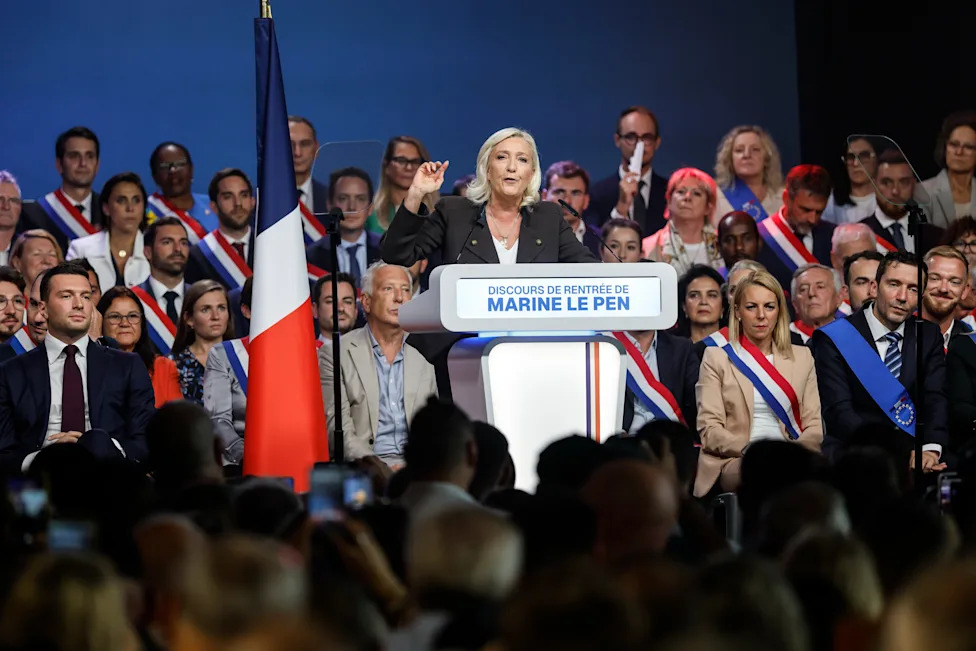
French far-right leader Marine Le Pen delivers her speech, Sunday, Sept.13, 2026 in Henin-Beaumont, northern France. (AP Photo/Jean-Francois Badias)(AP Photo/Jean-Francois Badias)
“It's not because you repeat something that doesn't make any sense — either legally, technically, or financially — that it becomes something valid,” Lagarde said at a Sept. 10 news conference.
Scale And Context
France remains a major industrial economy — roughly the world’s seventh-largest — but its debt trajectory has accelerated in recent years. Public debt was 97.9% of GDP in 2019, jumped to about 114% in 2020 amid pandemic-related spending, and stood at 119% at the end of June 2026, according to France's National Institute of Statistics and Economic Studies (INSEE).
Rising global interest rates and the energy shock following Russia’s large-scale invasion of Ukraine in 2022 added to fiscal pressures. To protect households and businesses from energy-price spikes, the French government deployed sizeable subsidies and support measures, boosting the deficit.
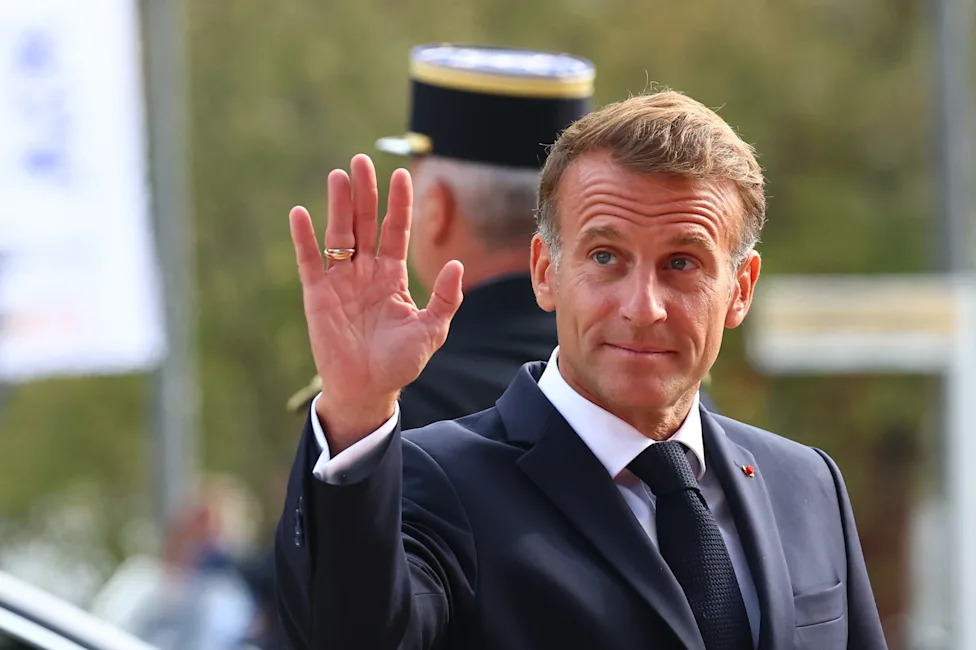
French president Emmanuel Macron waves to the media before a meeting at the Roots of Europe for Peace and Unity with Pope Leo XIV, Monday, Sept. 28, 2026, in Metz. (AP Photo/Antonin Utz)(AP Photo/Antonin Utz)
Costs And Credit Ratings
Interest costs on debt have become a major budget item: debt servicing represents roughly 7% of the state budget, with annual interest costs expected to reach about €77 billion. That is money that cannot be used for schools, pensions, healthcare or other public priorities.
Credit-rating agencies have taken note. Scope downgraded France’s long-term rating in September, citing a deteriorating fiscal outlook and limited progress on reforms. By contrast, Fitch in August affirmed France’s sovereign rating at A+ with a stable outlook, citing the country’s large, diversified economy, a solid banking sector and a broad investor base.
Who Holds France’s Debt?
France’s economy ministry reports that holdings are broadly diversified: about one-quarter held by French investors, one-quarter by the Banque de France (purchased under ECB monetary policy operations), one-quarter by other euro-area investors, and one-quarter by investors outside the euro area. Major holders include insurers, banks, central banks and pension funds, especially in countries that rely on funded pension systems.
Political Stakes Ahead
The fiscal outlook is poised to be a defining element of the 2027 campaign. Candidates from the left and right are offering contrasting remedies — from spending cuts and structural reforms to measures that seek to preserve or expand public investment — while the public weighs the trade-offs between social protections and fiscal sustainability.
As debate intensifies, policymakers will need to balance short-term political priorities with the long-term goal of preserving market confidence and keeping borrowing costs manageable. How each candidate frames credible and legally feasible solutions to the debt problem could be decisive with voters and markets alike.
Help us improve.