New uranium–thorium dates on calcite encrusting a butchered rib from Lingjing (central China) indicate some stone tools there were made about 146,000 years ago, during a cold glacial interval rather than a previously assumed warm period. The Lingjing assemblage—nearly 15,000 mainly-quartz artifacts—shows planned core preparation and controlled flake removal, suggesting advanced technical skill. The tools may have been made by a proposed archaic hominin, Homo juluensis, and link East Asian tool traditions to Middle Paleolithic technologies elsewhere, implying innovation can be driven by environmental stress.
Advanced Stone Technology From a Harsh Ice Age Rewrites Human Innovation in East Asia

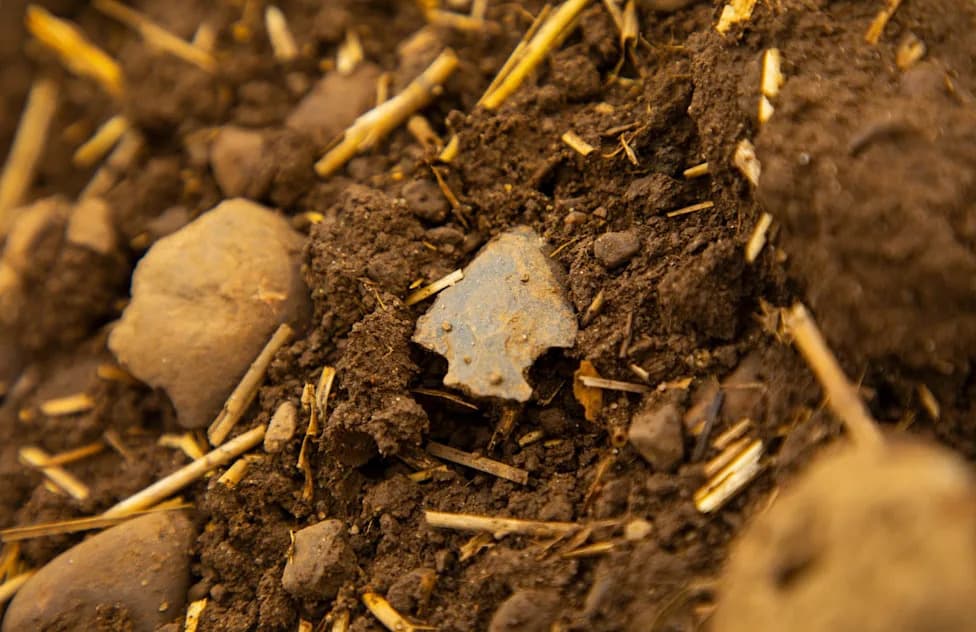
(ansap/iStock/Getty Images Plus)
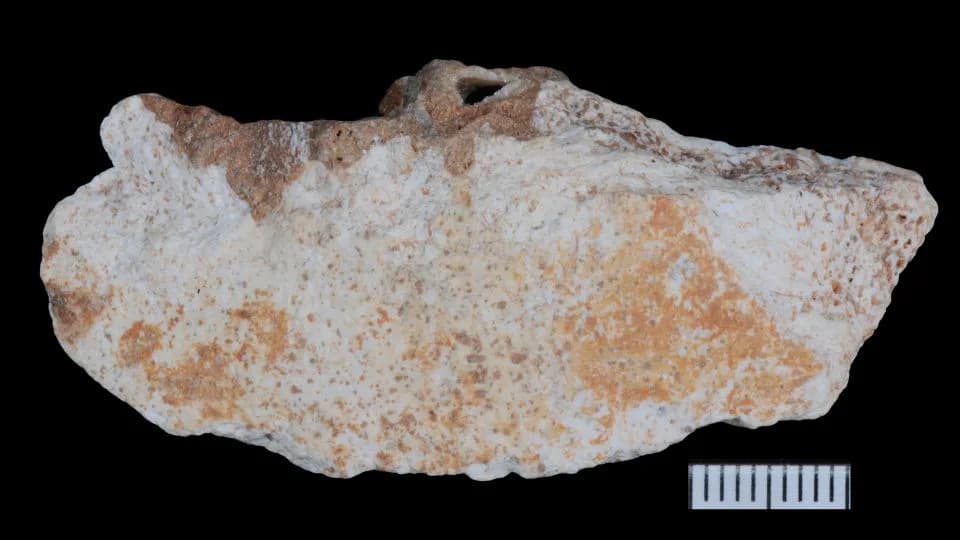
A newly analyzed crystal-studded rib from the Lingjing site in central China suggests that an archaic human relative developed sophisticated stone-tool technology to survive severe glacial conditions roughly 146,000 years ago. The finding shifts some artifacts at Lingjing back by about 20,000 years and reframes when—and why—complex toolmaking emerged in East Asia.
Revising the Timeline: Uranium–Thorium Dating of Calcite
Researchers re-dated calcite encrusting a butchered rib of a deer-like animal using uranium–thorium methods. Calcite commonly incorporates uranium, which decays to thorium at a predictable rate. The new measurements indicate that some artifacts previously thought to be about 126,000 years old actually date to around 146,000 years ago—during a cold glacial interval rather than a warm interglacial period.
What the Tools Reveal
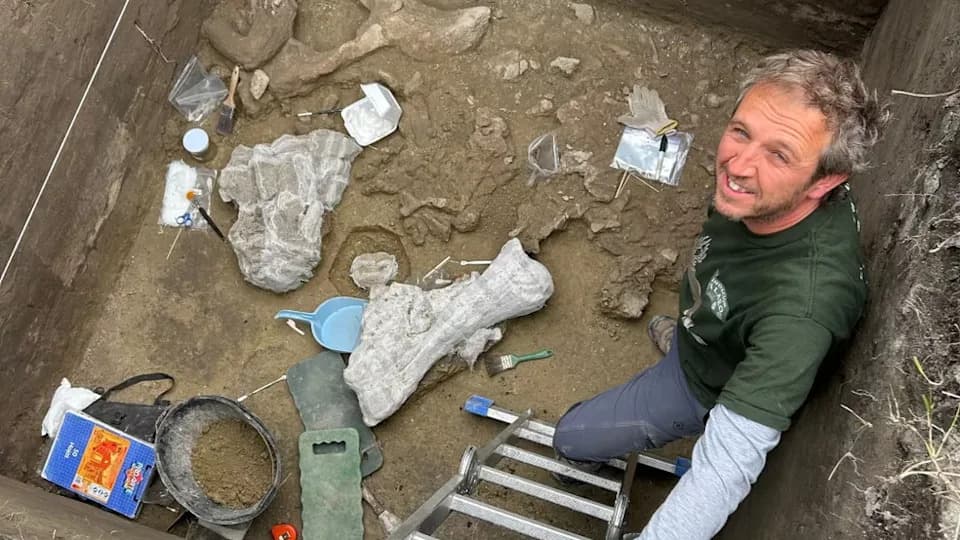
Excavations at Lingjing have recovered nearly 15,000 mainly-quartz artifacts from multiple layers. At first glance many appear as simple flakes, but detailed analysis shows deliberate core preparation, angle preservation, and controlled flake removal—skills that require planning, precision, and an understanding of fracture mechanics.

Subscribe to ScienceAlert's free fact-checked newsletter
“This was not casual flake production, but a technology that required planning, precision, and a deep understanding of stone properties and fracture mechanics,” says Yuchao Zhao of Shandong University.
The assemblage was likely used at the spring-fed site primarily for butchery. The makers are possibly the newly proposed archaic hominin referred to as Homo juluensis, a group known from eastern Asia that combined a relatively large brain with a mosaic of anatomical traits.
Broader Significance
The Lingjing toolkit shows important conceptual parallels to Middle Paleolithic technologies known from Neanderthals in Europe and contemporaneous traditions in Africa. This suggests that advanced technological thinking was not confined to western Eurasia and may have arisen independently or through cultural transmission across regions.
The researchers also note a correlation between the spread of this type of complex flake technology across roughly 100 Paleolithic sites in China and an increase in morphological mosaicism among archaic human groups—possibly reflecting biological change, population interaction, or hybridization alongside cultural innovation.
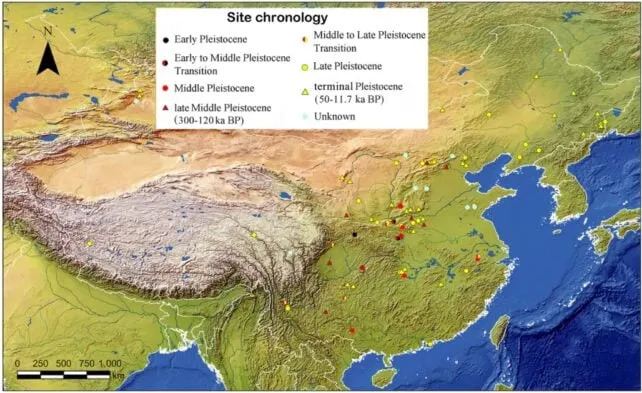
Paleolithic sites in China. (Zhao, et al.,J. Hum. Evol., 2026)
Adaptation Under Stress
Because some of these tools now fall within a harsh glacial interval, the discovery challenges the assumption that innovation primarily flourishes in benign conditions. Instead, it supports the idea that environmental pressure can stimulate technological creativity as groups adapt to new challenges.
“Finding out that these stone tools were made during a harsh ice age tells a different story,” Zhao adds. “Hard times can force us to adapt.”
The full study appears in the Journal of Human Evolution.
Help us improve.