Humans can’t see ultraviolet (UV) light because our eye’s lens blocks most UV to protect the retina and preserve long-term visual clarity. Cumulative UV exposure damages lens tissue and contributes to cataracts, while short-wavelength scattering reduces image contrast. Some animals (birds, bees, fish, reptiles) evolved UV-sensitive photoreceptors that shape foraging and mating behavior. Rarely, people without a natural lens (aphakia) may perceive near-UV, demonstrating residual retinal sensitivity.
Why Humans Can’t See Ultraviolet Light — The Evolutionary Trade-Off Behind Our Filtered Vision
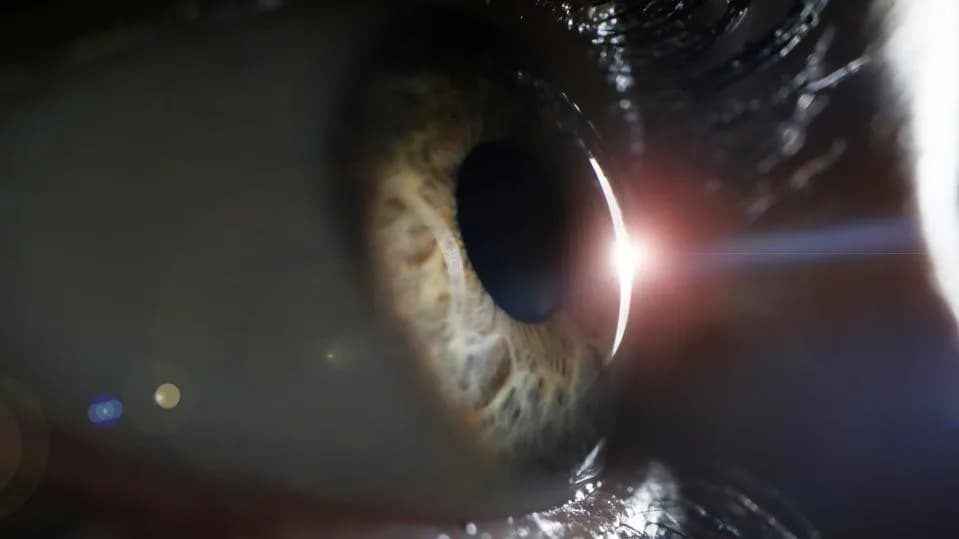
Humans can only see less than 1% of the electromagnetic spectrum. Here’s why evolution may have intentionally hidden ultraviolet light from us.getty
Humans perceive only a tiny slice of the electromagnetic spectrum — under 1% — and ultraviolet (UV) wavelengths sit just beyond the violet end of what we call visible light. Although UV is invisible to most people, many animals exploit it for navigation, communication and foraging. Understanding why humans can’t see UV reveals an instructive evolutionary trade-off between extended spectral sensitivity and long-term visual performance.
How Our Eyes Block UV
Although the human retina retains some limited sensitivity to near-UV wavelengths, the main barrier is the eye’s lens. The lens absorbs most incoming UV light, acting like an internal sunscreen that prevents harmful radiation from reaching the retina. This protective filtering helps preserve the clarity of the lens and the health of light-sensitive retinal tissue over decades.
Why Blocking UV Makes Sense Evolutionarily
Several lines of evidence and reasoning help explain why losing UV sensitivity was likely adaptive. A 2011 study in BMC Ophthalmology exposed intact human lenses to UV and visible radiation and found that prolonged, high-dose UV produced scattering lesions and photodarkening—signs of cumulative structural damage. Over years, such damage undermines the lens’s transparency and contributes to cataract formation.
Shorter wavelengths (like UV) also scatter more in air and tissue than longer wavelengths, reducing image contrast and fine visual discrimination. For a long-lived primate that depends on sharp daytime vision—finding food, detecting predators, and reading social cues—preserving image clarity and retinal health likely offered greater fitness benefits than extending spectral range into UV.
Trade-Off With Trichromatic Vision
Humans evolved highly refined trichromatic color vision, tuned to reds, greens and blues, which supports fruit detection, assessment of ripeness, and subtle social signaling (for example, changes in skin tone). That specialization may have provided larger evolutionary returns than maintaining or adding UV sensitivity, again reflecting evolutionary trade-offs rather than a simple ‘‘failure’’ to evolve.
When the Filter Is Removed: Aphakia
One striking exception illuminates what the lens blocks. People born without a lens or who have had it removed (a condition called aphakia) sometimes report perceiving near-UV light. Early cataract-surgery reports compiled by surgeon Robert M. Anderson in Perceptual and Motor Skills described patients seeing new bluish or whitish hues or even pale violet/electric-blue sensations after lens removal. Without the lens’s UV filtering, more near-UV reaches the retina and can stimulate short-wavelength cones.
However, aphakic perception is not evidence of a dedicated UV photoreceptor: human retinas lack the extra UV-tuned photopigment found in many UV-sensitive animals. Instead, residual sensitivity of our short-wavelength cones can be triggered by near-UV under some conditions.
How UV Vision Changes Perception in Other Animals
Many animals use UV in ways humans cannot. Birds, for example, are often tetrachromatic: they have a fourth photoreceptor type sensitive to UV and can perceive distinctions that are literally beyond human conception. A 2013 study in Proceedings of the Royal Society B showed repeated evolutionary shifts between violet-sensitive and UV-sensitive states across avian lineages, underscoring the ecological importance of UV cues for foraging, mate choice, and species recognition.
Bees are another familiar example: research in the Journal of Experimental Biology (2001) documented UV nectar guides—high-contrast floral patterns invisible to us but obvious to pollinators. Even mammals such as reindeer may exploit UV contrast against Arctic snow to detect predators.
What Would Human UV Vision Be Like?
Popular depictions imagine psychedelic landscapes and glowing outlines, but human UV experience would probably be subtler. Because human color perception arises from comparisons among three cone types, adding a true UV channel would require a fundamentally different visual system. Animals that perceive UV often have an extra photoreceptor tuned to those wavelengths; without that, humans would not simply gain a ‘‘new color’’ but a different way of organizing visual information—one we can barely imagine.
Conclusion
UV invisibility in humans is best understood as an adaptive compromise: the lens filters UV to protect long-term optical clarity and retinal health and to preserve high-contrast, precise daytime vision. Other animals have taken different evolutionary paths—some exploit UV extensively—because their ecological needs favored that investment. In short, evolution tuned each species’ visual window to the slice of reality most relevant to its survival.
Help us improve.