Researchers at Cincinnati Children's Hospital report that supplementing indoor light with indigo wavelengths (~435–440 nm) prevented experimentally induced myopia in tree shrews, a near-primate model. The study, published in Cell Reports Medicine, found indigo light "completely suppressed refractive change" and stopped axial elongation. While promising as a scalable prevention idea—for example, by updating lighting in schools—these results are preliminary, and ethical and clinical validation in humans is required. Conflicts of interest, including pending patents and a startup tied to an author, are disclosed.
Indigo Band In Indoor Light May Help Prevent Childhood Myopia, Animal Study Suggests
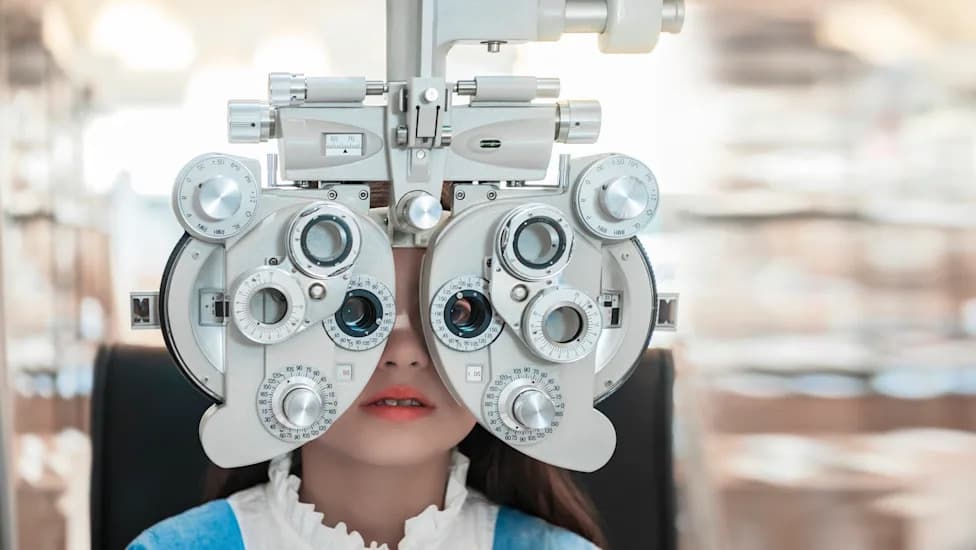
Photo Credit: iStock
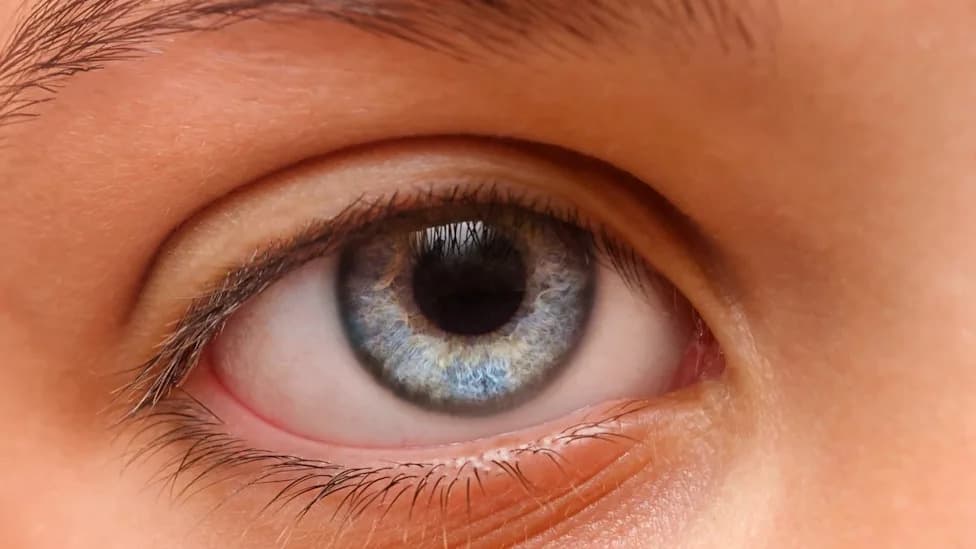
A narrow band of indigo light in the visible spectrum could offer an unexpected strategy to reduce the risk of childhood myopia, according to a new animal study. Researchers at Cincinnati Children's Hospital found that adding indigo wavelengths to indoor lighting prevented experimentally induced nearsightedness in tree shrews, a near-primate model whose eye development resembles humans'.
Study Details
Published in Cell Reports Medicine and reported by Popular Mechanics, the study tracked how different wavelengths passed through tree shrew lenses. Investigators induced myopia by fitting a corrective lens over one eye while leaving the other eye as an internal control. They tested a range of wavelengths and found a clear protective effect in a narrow band around 435–440 nanometers—the indigo portion of visible light.
"Indigo wavelength supplementation completely suppressed refractive change in response to the [myopia-inducing] lens and produced eyes … almost identical to that of controls. Indigo wavelength supplementation also eliminated the exaggerated axial elongation of induced myopia," the authors wrote.
Why Tree Shrews?
Despite their name, tree shrews are classified as near-primates. Their eye-growth mechanisms are more comparable to humans than those of common rodent models, and their eyes can change shape during developmental windows in response to visual cues—making them useful for studying how early visual environments shape later focusing ability.
Implications And Limits
The authors emphasize that this is an animal study and not a direct treatment for humans. Because it would be unethical to induce myopia in children for testing, near-primate results carry extra translational weight but still require careful clinical validation. If replicated in humans, the most feasible intervention would likely be environmental: revising the spectral composition of indoor lighting in places where children spend long hours, such as schools and day-care centers.
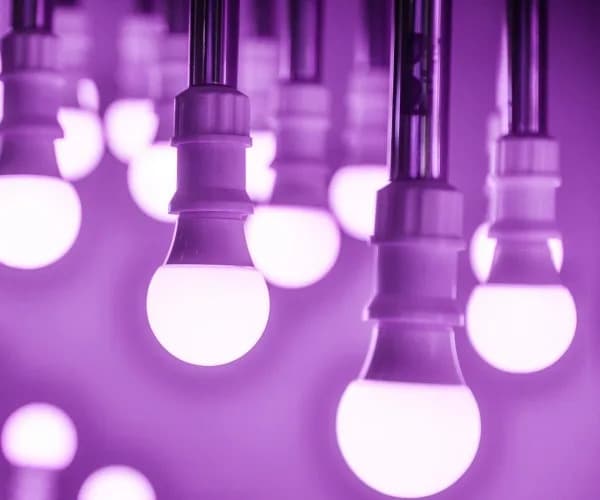
The researchers note that many common artificial light sources—warm-white LEDs and fluorescent lamps—contain relatively little energy in the indigo band. Should human studies confirm the effect, updating lighting standards or developing supplemental fixtures could be a scalable public-health measure.
Conflict Of Interest And Transparency
The paper's declaration of interests discloses that two authors are inventors on pending patents for lighting devices related to the work, and that Rafael Grytz is the founder and CSO of Electric Indigo, a startup planning to pursue myopia prevention technologies based on these findings. Those relationships are relevant context for interpreting and translating the results.
Broader Environmental Context
The authors placed the study in a broader environmental context: shifts in spectral content and artificial illumination affect animal behavior and physiology. Examples cited include disrupted honeybee sleep from nighttime glow, declines in nocturnal insects from excessive outdoor lighting, and acoustic interference with marine mammals from vessel noise. Such examples underline that modern built environments can have measurable biological impacts.
Bottom Line
The Cincinnati Children's study identifies a potentially powerful biological effect of a narrow indigo wavelength band on eye growth in a near-primate model. The finding is promising but preliminary: rigorous human-focused research, safety assessment, and consideration of conflicts of interest are needed before any changes to lighting standards or public-health recommendations are made.
Help us improve.