Glen Jeffery, a neuroscience professor at University College London, warns that blue‑rich LED lighting may damage mitochondria and could have systemic effects, calling it a "public health emergency." Animal studies report reduced mitochondrial activity and metabolic changes after short‑wavelength exposure, but these results do not prove harm in humans. The European Commission's scientific committee says there is no evidence of direct adverse effects from LEDs in normal use but recommends more research into circadian impacts. Jeffery's vision research suggests broader‑spectrum or brief red‑light exposure may improve color‑contrast vision, and he advises balancing LED use with natural sunlight.
UCL Neuroscientist Sounds Alarm on Blue‑Rich LEDs; EU Panel Says More Research Needed
(Dreamstime)
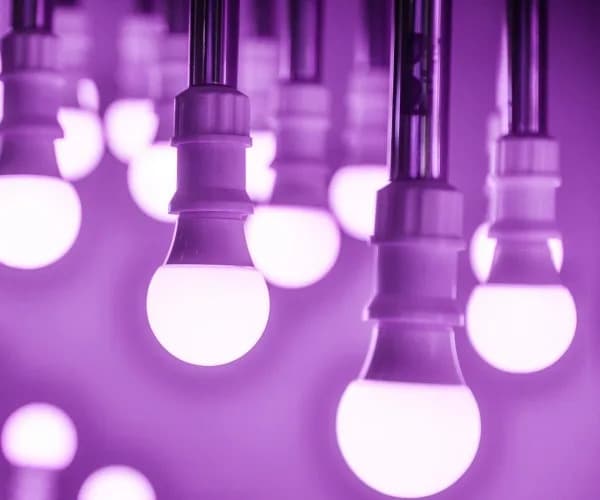
The rapid adoption of energy‑efficient LED bulbs across homes, schools and workplaces has prompted renewed debate about possible health effects. Glen Jeffery, professor of neuroscience at University College London, has warned that blue‑rich LED light may damage mitochondria — the cell's energy generators — and called the issue a "clear and present public health emergency."
What the Research Shows
Jeffery points to animal studies that suggest short‑wavelength (blue) light can affect cellular metabolism. In one mouse study, daily exposure to short‑wavelength blue light was reported to reduce measures of mitochondrial activity by roughly 50%. Other animal research linked blue‑enriched LED lighting to changes in behaviour, metabolism and liver function in mice.
These findings are notable but limited: the experiments were conducted in animals under controlled conditions, and they do not establish that typical household LED exposure causes diabetes or other metabolic disorders in humans.
Expert Views and Caveats
"LED lighting is damaging mitochondria and therefore there is no question you're damaging systemic health," Jeffery told The European. "This is a clear and present public health emergency, and we need to take action."
By contrast, the European Commission's Scientific Committee on Health, Environmental and Emerging Risks concluded that "there is no evidence of direct adverse health effects from LEDs in normal use by the general healthy population." The committee did note that LEDs can cause temporary discomfort for some people and may interfere with circadian rhythms, and it called for more research to determine long‑term impacts.
Vision Studies
Jeffery and colleagues have also investigated effects on vision. In a human study, adults exposed for two weeks to broader‑spectrum tungsten lighting showed improvements in color‑contrast vision, while participants under standard LED lighting did not show the same benefit. Separately, a brief (three‑minute) exposure to red light was reported to improve color‑contrast vision in some participants.
Practical Advice
Given the current evidence, experts recommend a cautious, balanced approach rather than alarm. Jeffery suggests supplementing blue‑rich LEDs with broader‑spectrum light sources (for example, incandescent or halogen where appropriate) and getting regular natural sunlight. More broadly, users concerned about sleep disruption can limit exposure to bright blue light in the evening, use warm‑tint LEDs for nighttime lighting, and follow good sleep hygiene.
Bottom line: Early animal and small human studies raise questions that merit further investigation, but regulatory bodies say there is currently no proven direct harm from normal LED use in healthy people. Continued research and sensible lighting choices can help manage potential risks.
© 2026 Newsmax. All rights reserved.
Help us improve.