
The Hondius cruise sparked a hantavirus outbreak that infected up to 11 people and killed three. An unidentified 30-year-old New York passenger says mandatory quarantine at the National Quarantine Unit in Omaha felt "like a prison" and that he would prefer to isolate at home. Eighteen Americans were placed at the facility for up to 42 days; federal quarantine orders reviewed by NBC News warn that leaving before May 31 could endanger public health and may carry criminal penalties. The CDC defended the facility and praised Nebraska and the University of Nebraska Medical Center for their support.
Hantavirus Cruise Passenger Calls Nebraska Quarantine "Like a Prison" — Says He Wants To Isolate At Home

Nebraska Medicine's Davis Global Center in Omaha, where American passengers from the hantavirus-stricken cruise ship will quarantine. (Rebecca S. Gratz / AP)(Rebecca S. Gratz)
A 30-year-old New York passenger who sailed on the expedition ship Hondius — at the center of a recent hantavirus outbreak — says being required to quarantine at a federal facility in Omaha felt "like a prison" and that he would prefer to complete isolation at home.
What Happened
The Hondius returned to the Netherlands after an 8,500-mile voyage from southern Argentina that health officials say resulted in up to 11 people contracting the Andes strain of hantavirus, a rare form notable for possible person-to-person transmission. Three people who were on the voyage have since died: a Dutch passenger who died on board April 11 (whose body was removed at St. Helena), his wife who died while returning to the Netherlands, and a German national who died May 2.
Quarantine Orders And Passenger Concerns
After being repatriated to the U.S., the 18 Americans from the ship were placed at the National Quarantine Unit in Omaha. The New York passenger told NBC News he and several others were told they would be held at the facility for up to 42 days — the upper bound of the hantavirus incubation period — and that attempts to leave would result in formal quarantine orders.
"I'm held here involuntarily, so in that sense it's a prison term; I mean, it's a perfectly nice prison, but I'm still here involuntarily," the passenger said.
He said officials from the New York State health department initially contacted him about arranging home quarantine, but later CDC staff informed the group on a Zoom call that they could not leave the facility. The passenger requested legal documentation and was later issued two federal quarantine orders, copies of which were reviewed by NBC News and confirmed authentic by the CDC.
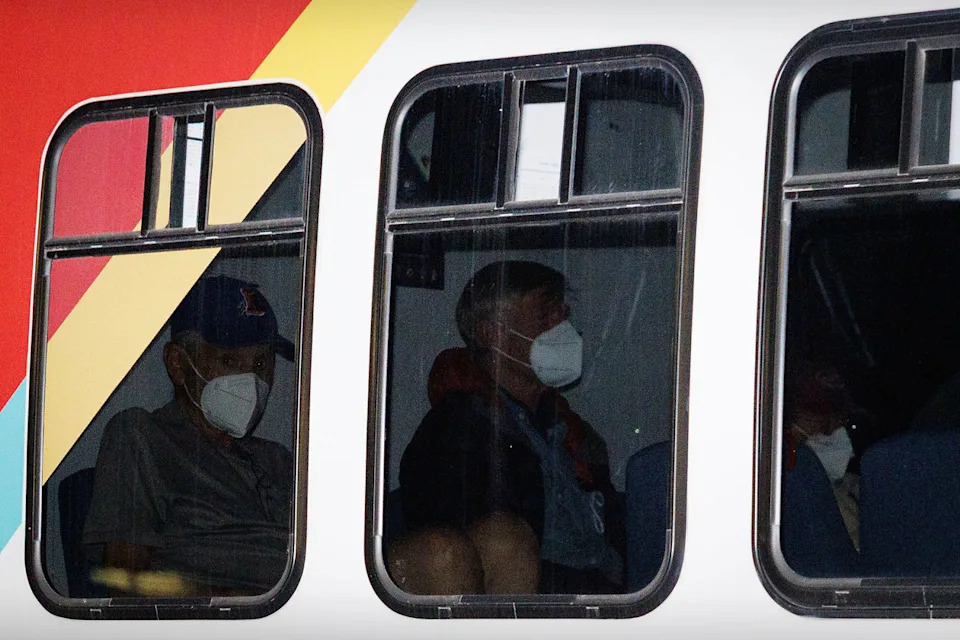
U.S. passengers from the cruise ship MV Hondius arrive at the University of Nebraska Medical Center Davis Global Center, in Omaha, on Monday. (Nikos Frazier / Omaha World-Herald via Getty Images file)(Nikos Frazier)
Legal Rationale And Risks
The quarantine orders state the individual is "most at risk of developing symptoms during the first 21 days of the incubation period," which the documents list as lasting until May 31, and warn that leaving the facility before that date "would potentially endanger the public's health." One order cautions that violating the directive could result in a criminal fine or up to a year in jail. The orders do not explicitly state whether release will be permitted after May 31.
Agency Response
The CDC defended the use of the National Quarantine Unit and cited Dr. David Fitter, incident manager for the agency's hantavirus response, who praised the facility and local partners. In a May 13 statement Dr. Fitter said, "It is a fantastic facility. We really appreciate the state of Nebraska, as well as the University of Nebraska Medical Center for everything they have done. That is a great place for them to be able to do this, but also as we continue to coordinate the best monitoring for them."
Context And Next Steps
The passenger emphasized that he and other Americans at the facility accept the need for quarantine and plan to complete the full 42-day isolation period; their dispute is over whether that isolation must be at the federal facility or can be completed at home under strict conditions. Public health authorities typically limit movement during the incubation period to reduce any risk of community spread when a pathogen has demonstrated potential for person-to-person transmission.
Note: This account reflects information reported to NBC News, including copies of federal quarantine orders reviewed by the outlet and comments from CDC officials.
Help us improve.





















