Major international research confirmed two humpback whales traveled between eastern Australia and Brazil, with one setting a new 15,100 km record. Using 19,283 fluke photos (1984–2025) matched via Happywhale and manually verified, researchers found rare but biologically significant cross-ocean exchanges. The results support the Southern Ocean Exchange hypothesis, point to genetic and cultural impacts, and warn that climate-driven changes in krill and sea ice could increase such movements.
How Two Maverick Humpbacks Rewrote What Scientists Thought About Whale Migration
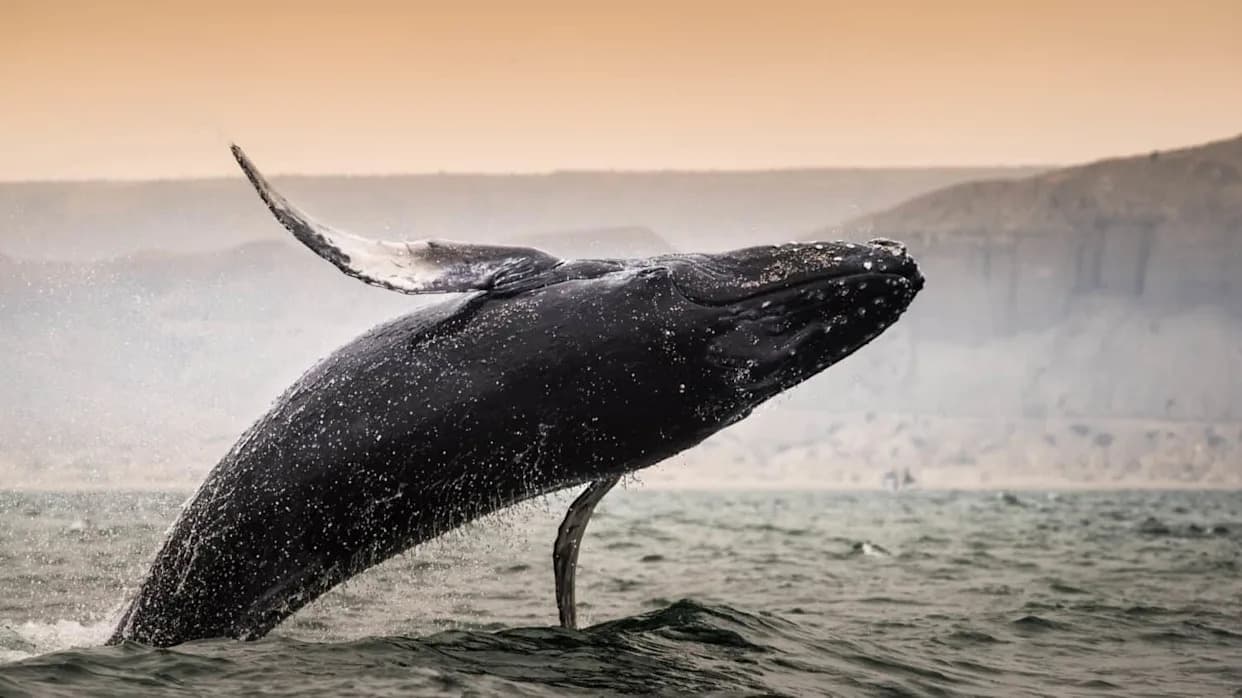
Humpback Whale jump in Los Organos, Piura, Peru.© Christian Vinces/Shutterstock.com
If you’ve ever watched a 40-ton humpback breach during migration season, you know the awe these animals inspire. For decades researchers thought humpbacks followed faithful, region-specific migratory routes between cold feeding grounds and warm breeding waters. A new study shows the ocean still has surprises.
A groundbreaking photographic study published in Royal Society Open Science confirmed that two individual humpback whales traveled between eastern Australia and Brazil—recorded straight-line separations of at least 14,200 km and 15,100 km. One of these sightings sets the longest documented single humpback journey on record.
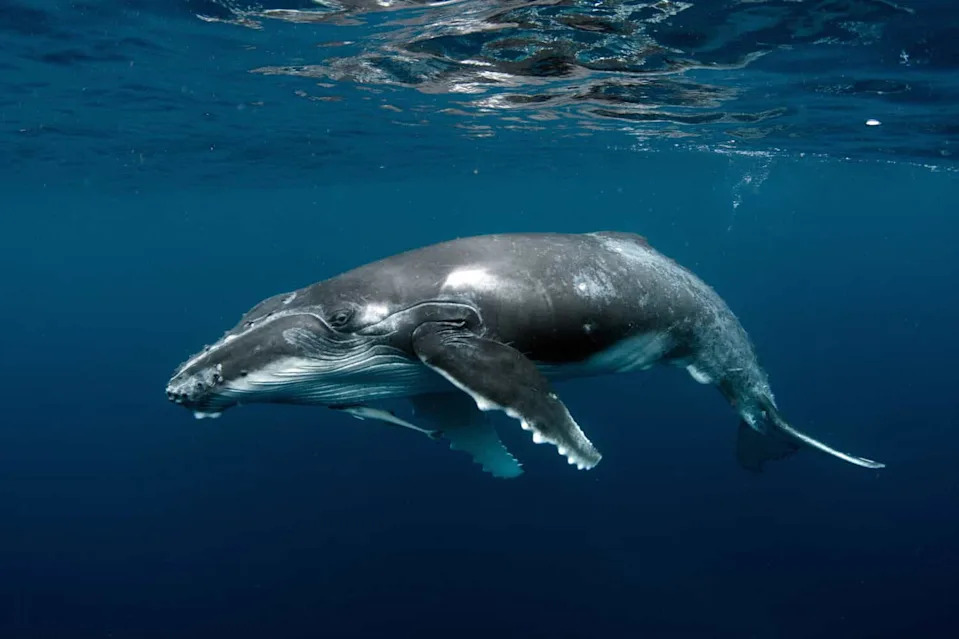
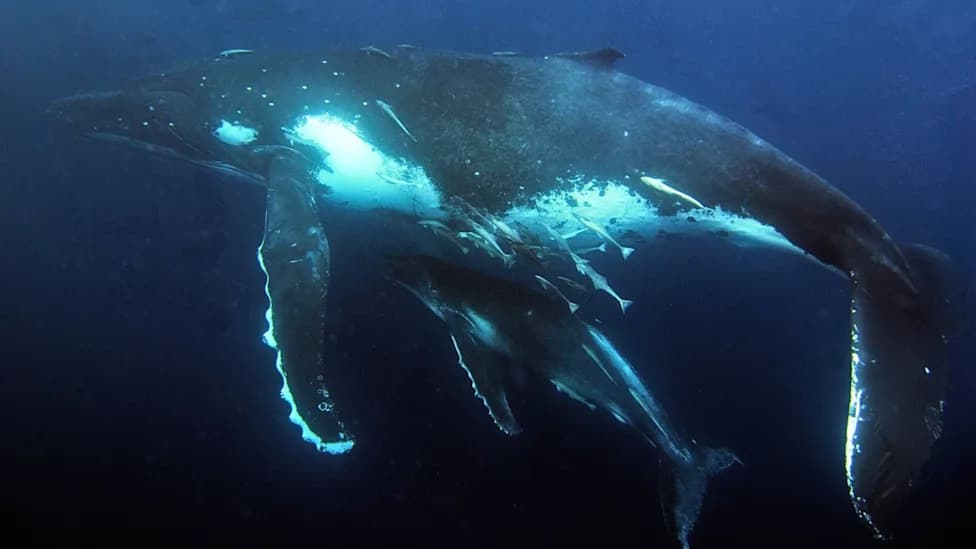
Whale calves are usually about 13 to 16 feet long at birth after an approximately 11-month gestation.©Tomas Kotouc/Shutterstock.com
How the whales were tracked
Instead of short-lived satellite tags, the team relied on long-term photographic records and citizen science. Each humpback’s tail (fluke) carries a distinctive pattern of notches, scars and pigmentation that functions like a lifelong ID. Researchers analyzed 19,283 high-quality fluke photographs collected between 1984 and 2025 across eastern Australia and Latin America. The images were run through the Happywhale automated image-recognition platform and every potential match was then manually verified.
The two long-distance travelers
One whale was first photographed in Hervey Bay, Queensland, in 2007 and again in 2013; it later appeared off São Paulo, Brazil, in 2019, a minimum straight-line separation of about 14,200 km. The second whale was cataloged at Abrolhos Bank, Bahia, Brazil, in September 2003 among a group of adults and was photographed alone in Hervey Bay in September 2025—22 years and one month later—yielding a confirmed separation of 15,100 km. Because only start and end photos exist, the true distances traveled were almost certainly much greater as the whales navigated complex Southern Hemisphere currents.
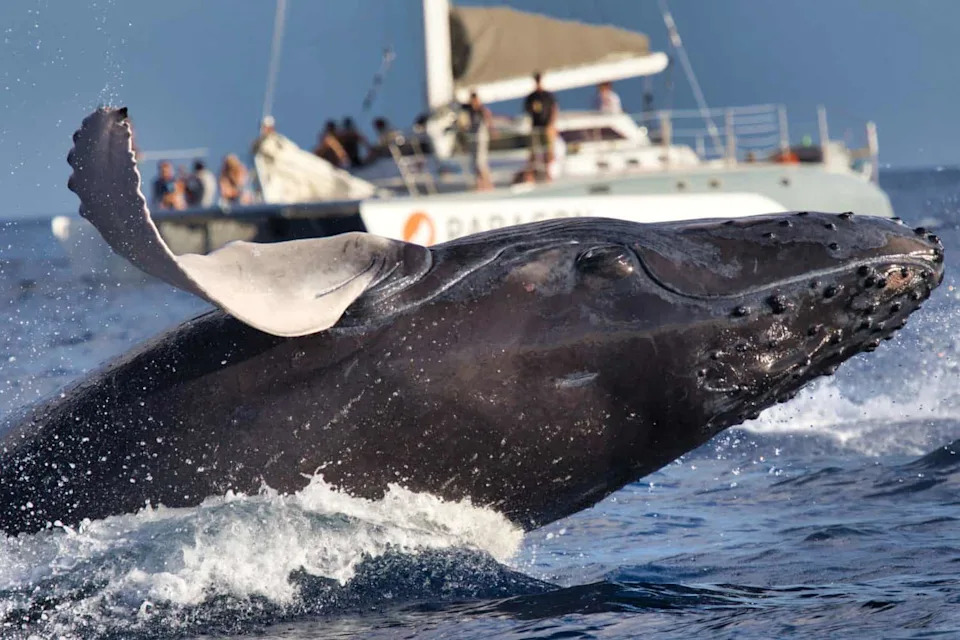
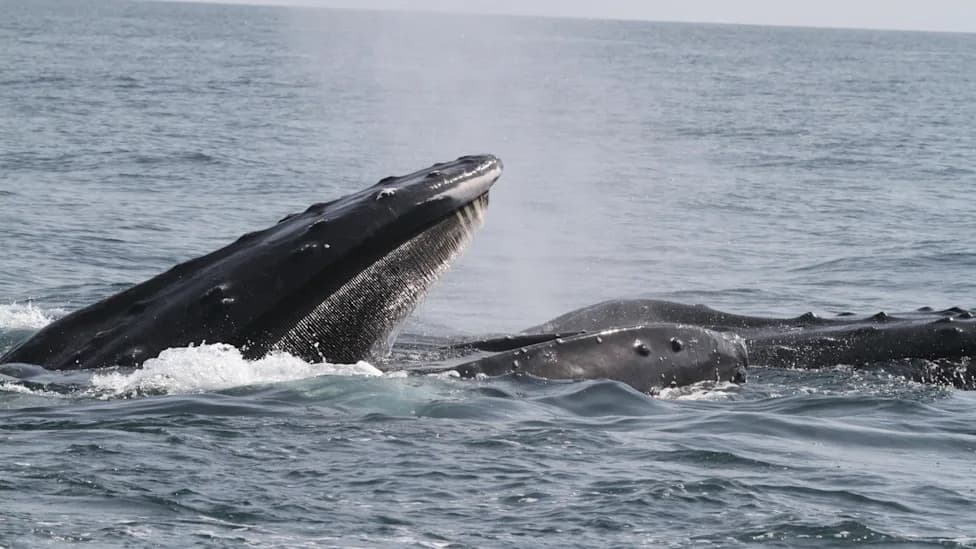
Adult humpbacks are enormous, reaching about 60 feet long and weighing up to roughly 40 tons.©Manuel Balesteri/Shutterstock.com
Why this matters
Humpbacks typically show strong site fidelity: Australian whales usually return to Australian breeding grounds; Brazilian whales return to Brazil. These exceptional crossings lend substantial support to the "Southern Ocean Exchange" hypothesis: individuals from different feeding populations may mix in Antarctic feeding areas and then follow a new social group back to a non-native breeding ground.
Even if such exchanges are rare—these two records represent roughly 0.01% of the image dataset—they can have outsized biological importance. A single migrant that breeds in a new population can introduce genetic diversity, helping to prevent inbreeding and boosting evolutionary resilience. These whales may also ferry cultural traits such as new song variants between ocean basins, acting as cultural ambassadors.
The climate wildcard
The authors note a sobering driver: the Southern Ocean is changing rapidly. Shifts in sea ice and the distribution of Antarctic krill—the humpbacks’ primary prey—could force whales to travel farther, alter foraging behavior, or remain longer in feeding grounds. As prey patterns shift, cross-ocean movements that once were rare anomalies may become more common or even adaptive.
“This discovery is a reminder that our population boundaries are models, not laws of nature,” the study emphasizes. Long-term monitoring and citizen science made these extraordinary records possible.
Next time you look out at the sea, remember that somewhere below the waves a whale might be navigating an epic, lonely voyage of 15,000+ kilometers—redrawing the maps of animal movement and reminding us how much there still is to learn.
Help us improve.