A federal judge has blocked the U.S. Treasury from enforcing sanctions against U.N. Special Rapporteur Francesca Albanese, finding her family likely to prevail on a First Amendment claim. Judge Richard Leon concluded the sanctions targeted Albanese's speech—nonbinding recommendations to the International Criminal Court—and cited political statements by Secretary of State Marco Rubio as evidence of punitive intent. The ruling leaves other constitutional claims unresolved and could be appealed, but it highlights judicial concerns about broad, extraterritorial use of sanctions to punish expression.
Federal Judge Blocks U.S. Treasury From Enforcing Sanctions, Citing First Amendment Concerns
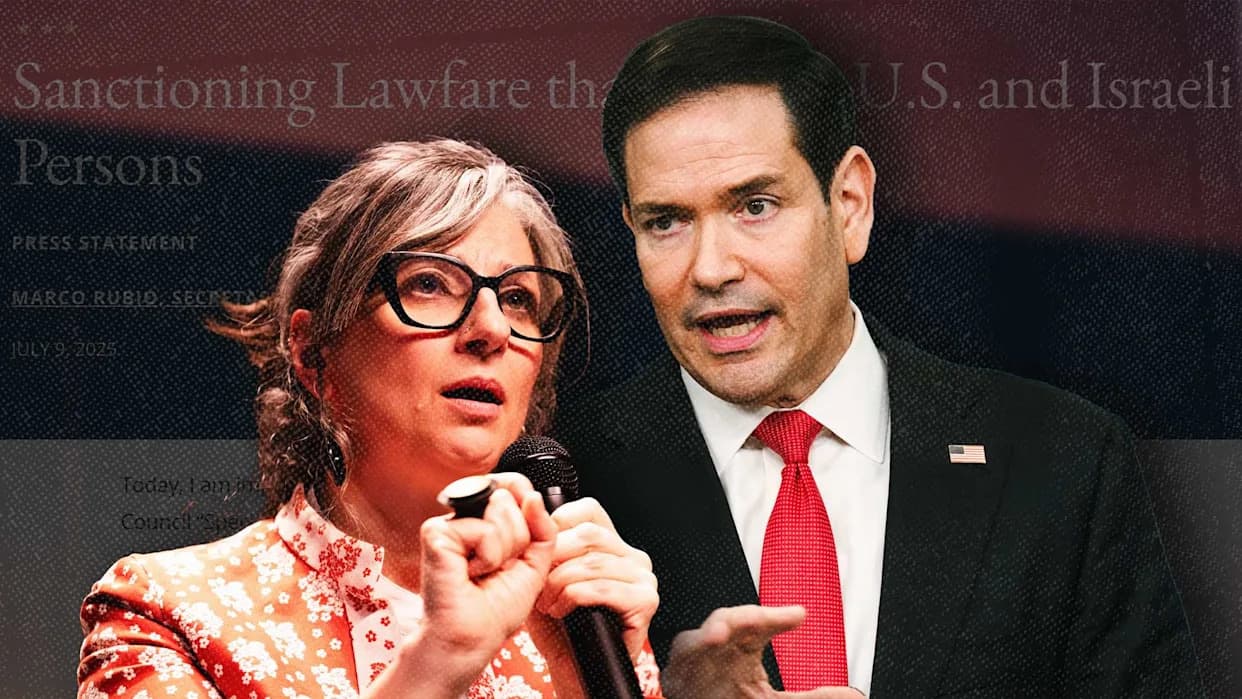
Judge Stops U.S. Treasury From Sanctioning Someone's Speech
A federal judge has temporarily barred the U.S. Department of the Treasury from enforcing sanctions against U.N. Special Rapporteur Francesca Albanese, finding that her family is likely to succeed on a First Amendment claim. The decision centers on whether the government can use sanctions to punish speech—specifically, Albanese's recommendations to the International Criminal Court (ICC).
Key Ruling
U.S. District Judge Richard Leon issued the order, stressing that Albanese "has done nothing more than speak" and that her recommendations to the ICC "are nothing more than her opinion." He pointed to public statements by Secretary of State Marco Rubio—in which Rubio accused Albanese of "unabashed antisemitism…support for terrorism, and open contempt for the United States, Israel, and the West"—as evidence that the sanctions were intended to punish expressive conduct rather than regulate non-speech behavior.
"Albanese has done nothing more than speak! It is undisputed that her recommendations have no binding effect on the [International Criminal Court's] actions—they are nothing more than her opinion," Judge Richard Leon wrote.
Practical Consequences
The sanctions have had immediate and wide-ranging effects. Albanese says the measures left her life in a "rollercoaster": a Washington apartment was seized, access to a jointly held bank account and insurance plan was frozen, and Georgetown University disabled her faculty email account, citing federal sanctions law. The measures followed her internationally—hotels denied bookings and foreign banks declined transactions—illustrating the extraterritorial reach and chilling effects of U.S. sanctions.
The State Department also designated Albanese's husband, World Bank economist Massimiliano Cali, resulting in a ban on his visiting the World Bank's Washington headquarters.
Legal Context
Albanese and Cali were sanctioned under Executive Order 14203, which restricts cooperation with the International Criminal Court in The Hague on inquiries into Israeli and U.S. military actions. As a U.N. special rapporteur, Albanese is an unpaid independent expert who can issue recommendations to the U.N. Human Rights Council but has no enforcement power—she can only urge investigations.
The government's lawyers maintained that Executive Order 14203 regulates conduct rather than speech and argued Albanese lacked First Amendment protection because she is not a U.S. citizen and her work occurred mainly abroad. Judge Leon rejected those arguments, noting the government targeted Albanese through actions affecting her substantial ties to the United States: property, affiliations with American institutions, and family connections.
The family's complaint also raised Fourth Amendment claims that the government seized property without due process and Fifth Amendment claims that family relationships were being treated as criminal. The court's order addressed the First Amendment claim and did not resolve those other constitutional issues.
Broader Implications
Leon's ruling may mark the first successful First Amendment challenge against U.S. sanctions law, signaling judicial skepticism about using sanctions to silence critics. There is, however, no certainty the decision will stand: higher courts could reverse it on appeal. The ruling arrives against a backdrop of precedent that both constrains and expands government power over speech and foreign affairs—the Supreme Court in 2010 upheld broad counterterrorism restrictions on certain kinds of assistance to foreign groups (see Holder v. Humanitarian Law Project).
Supporters of the ruling say it protects free expression from being chilled by economic penalties; critics argue it could limit the government's tools for responding to foreign interference or malign actors. Whatever the outcome on appeal, the case raises urgent questions about the reach of U.S. sanctions, extraterritorial enforcement, and the balance between national security and constitutional speech protections.
Source: The original report appeared on Reason.com under the headline "Judge Stops U.S. Treasury From Sanctioning Someone's Speech."
Help us improve.