The ICC faces a credibility crisis after the U.S. on Aug. 18 sanctioned ICC President Tomoko Akane and senior lawyer Abdoulaye Seye under Executive Order 14203, joining 13 current or former ICC personnel targeted by Washington. The Assembly of States Parties removed former prosecutor Karim Khan on July 24 for alleged misconduct, while long-running controversies involving past prosecutors — notably Luis Moreno Ocampo and Fatou Bensouda — have deepened doubts about impartiality. With modest convictions over 25 years and rising geopolitical pressure, the article argues that the ICC must be reformed or states should pursue alternatives such as domestic prosecutions or ad hoc tribunals.
ICC at a Crossroads: Reform, Credibility, and the Case for Alternatives
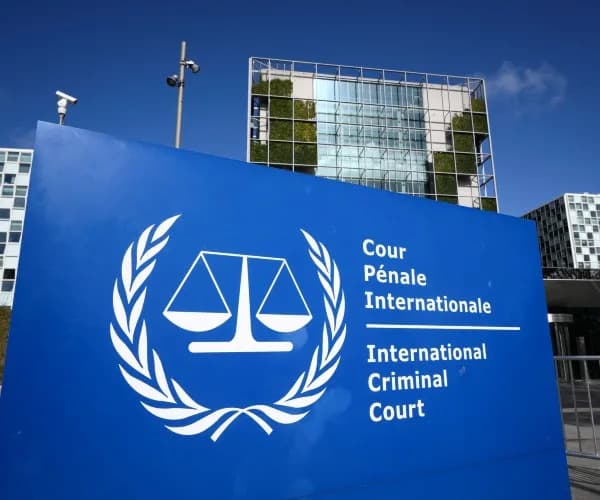
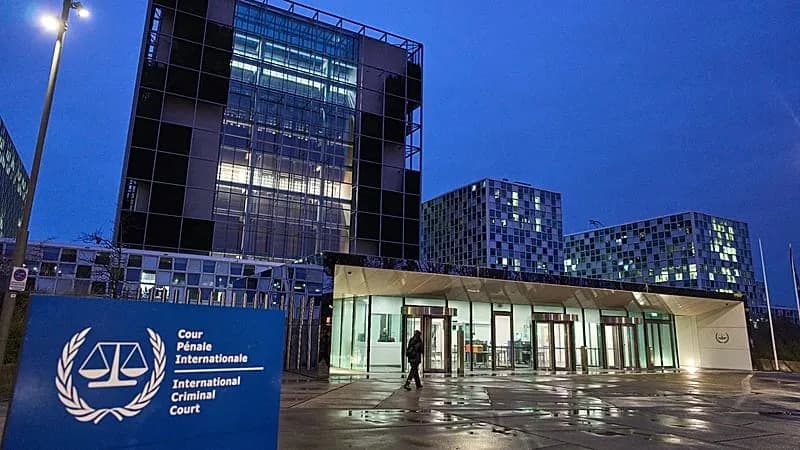
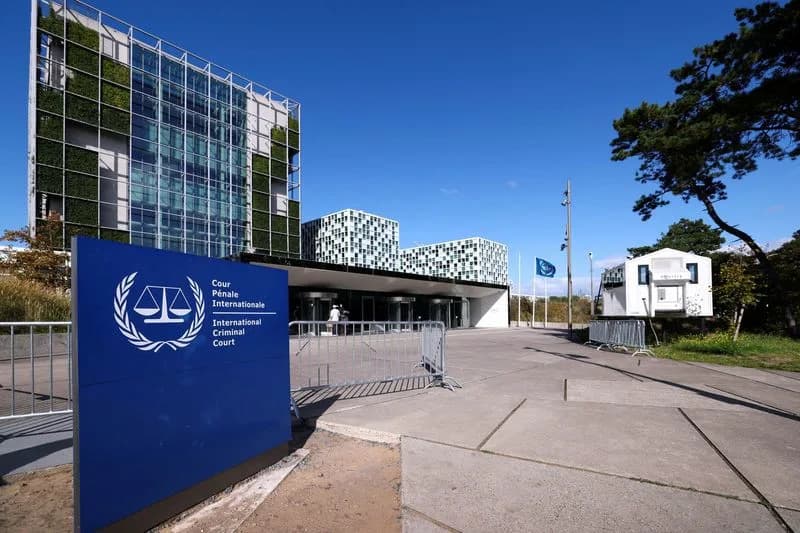
A view shows the exterior and the logo of the International Criminal Court (ICC) in The Hague - March 28, 2026. (John Thys/AFP via Getty Images)
A photograph shows the exterior and emblem of the International Criminal Court (ICC) in The Hague — March 28, 2026.
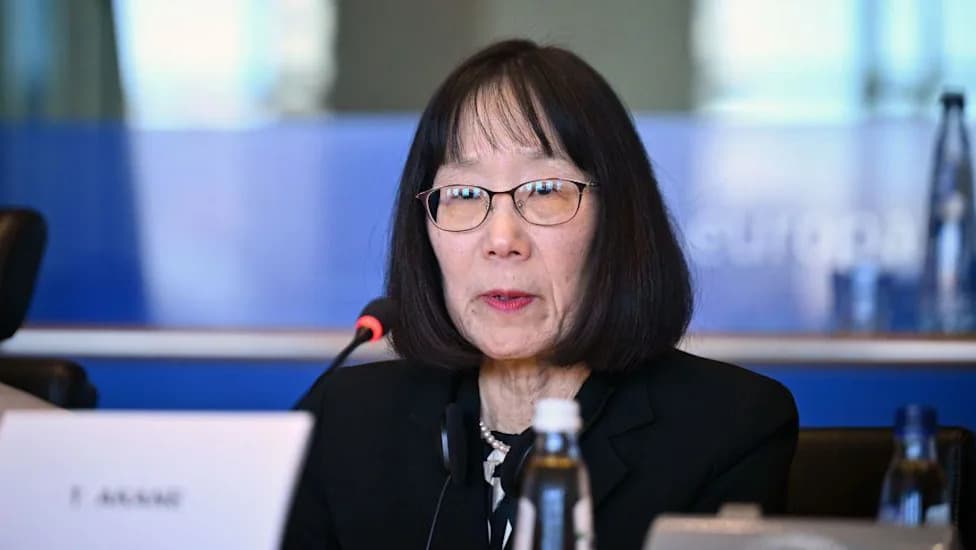
On Aug. 18, the Trump administration announced sanctions against Judge Tomoko Akane, the ICC's president, and senior trial lawyer Abdoulaye Seye under Executive Order 14203. The measures freeze assets subject to U.S. jurisdiction and bar the named individuals from participation in the American financial system. In an accompanying statement, U.S. Secretary of State Marco Rubio characterized the Court as "a corrupt and fatally politicized supranational court" that has "exceeded its mandate."
Scope of the Sanctions and Institutional Fallout
To date, the United States has sanctioned 13 current or former ICC personnel: nine of the court's 18 judges, both deputy prosecutors, former prosecutor Karim Khan, and senior trial lawyer Abdoulaye Seye. On July 24, the ICC's governing body, the Assembly of States Parties, voted to remove Karim Khan from office after concluding he had committed "serious misconduct and serious breach of duty."
The Court's 2026 budget projections include line items described as "targeted resources for external relations, IT systems and security measures, to ensure that the Court is able to respond rapidly and effectively to evolving risks and scenarios." In practice, that language signals an appeal to States Parties to underwrite a public-relations effort to rebut major criticisms, including those coming from Washington.
Controversies Around ICC Prosecutors
The ICC's reputation has been shaped in large measure by its chief prosecutors; in its history the Court has had only three. Concerns about prosecutorial conduct and impartiality have fueled doubts about institutional credibility.
Fatou Bensouda: Before joining the ICC, Bensouda served in senior legal roles in The Gambia under the Yahya Jammeh government. Critics have questioned her assertions that she was unaware of widespread abuses — including torture, disappearances and unlawful detentions — during that period.
Luis Moreno Ocampo: The Court's first prosecutor, Ocampo, presided over a period when ICC activity was heavily concentrated in Africa, a pattern that prompted perceptions of selective justice despite many cases originating from state or UN referrals. The mishandling of the Kenya cases under Ocampo became emblematic of those institutional failings. After leaving the Court, Ocampo took academic and consulting roles and has been the subject of allegations — reported by Der Spiegel in 2017 — that he owned companies in tax havens while at the ICC and later advised controversial clients. Ocampo acknowledged advising some clients but denied wrongdoing.
Ocampo's later work has also provoked debate. In 2023 he issued an "expert opinion" asserting a reasonable basis to conclude that Azerbaijan's blockade of Karabakh constituted genocide. That conclusion was challenged by Azerbaijan, which retained British international-law expert Rodney Dixon KC to dispute Ocampo's methodology and findings. Separately, Armenia's case against Azerbaijan at the International Court of Justice proceeds under the Convention on the Elimination of All Forms of Racial Discrimination rather than the Genocide Convention.
In 2026, alleged recordings involving Ocampo and his son, Tomás, surfaced in which they purportedly discussed strategies to influence EU institutions and move political levers on Armenian issues, including a claim about efforts to "remove [Nikol] Pashinyan" ahead of national elections. Given the severity of such allegations, forensic verification by competent authorities would be warranted and transparency about findings would be in the public interest.
Performance and Alternatives
Measured against its size and lifespan, the ICC's case outcomes are modest: roughly 13 convictions and four acquittals in nearly 25 years for an institution that employs around 900 people. That tally has contributed to criticism that the Court is underperforming relative to its mandate and resources.
If meaningful reform — strengthening oversight, improving prosecutorial standards, and restoring impartiality — proves unattainable, states have alternative routes to accountability. Domestic courts can prosecute crimes within their jurisdictions; the International Court of Justice can adjudicate state-to-state disputes; and specially tailored ad hoc or hybrid tribunals can be created to address particular mass atrocities. Historical precedents, from Nuremberg to the tribunals for the former Yugoslavia and Rwanda, show that international criminal accountability does not require a single permanent prosecutor.
The choice facing the international community is not between the current ICC and no justice at all. It is between a reformed ICC worthy of trust and alternative mechanisms capable of delivering fair, effective accountability.
Author: Robert Zapesochny is a researcher and writer who focuses on foreign affairs, national security, and presidential history. His work has appeared in multiple outlets.
Help us improve.