i‑Ready is a widely deployed adaptive assessment and instruction platform used by nearly 14 million students, but it has provoked growing backlash from parents, teachers and students who call lessons repetitive, disengaging and time consuming. Critics argue the platform limits teachers’ insight into student thinking and can displace hands‑on instruction, while independent research is mixed and no randomized controlled trial has been run. Curriculum Associates defends i‑Ready with internal research, high renewal rates and planned product changes, even as some large districts audit usage and families pursue opt‑outs.
Inside the Revolt Against i‑Ready: Why Parents, Teachers and Students Are Pushing Back Against a Classroom EdTech Giant
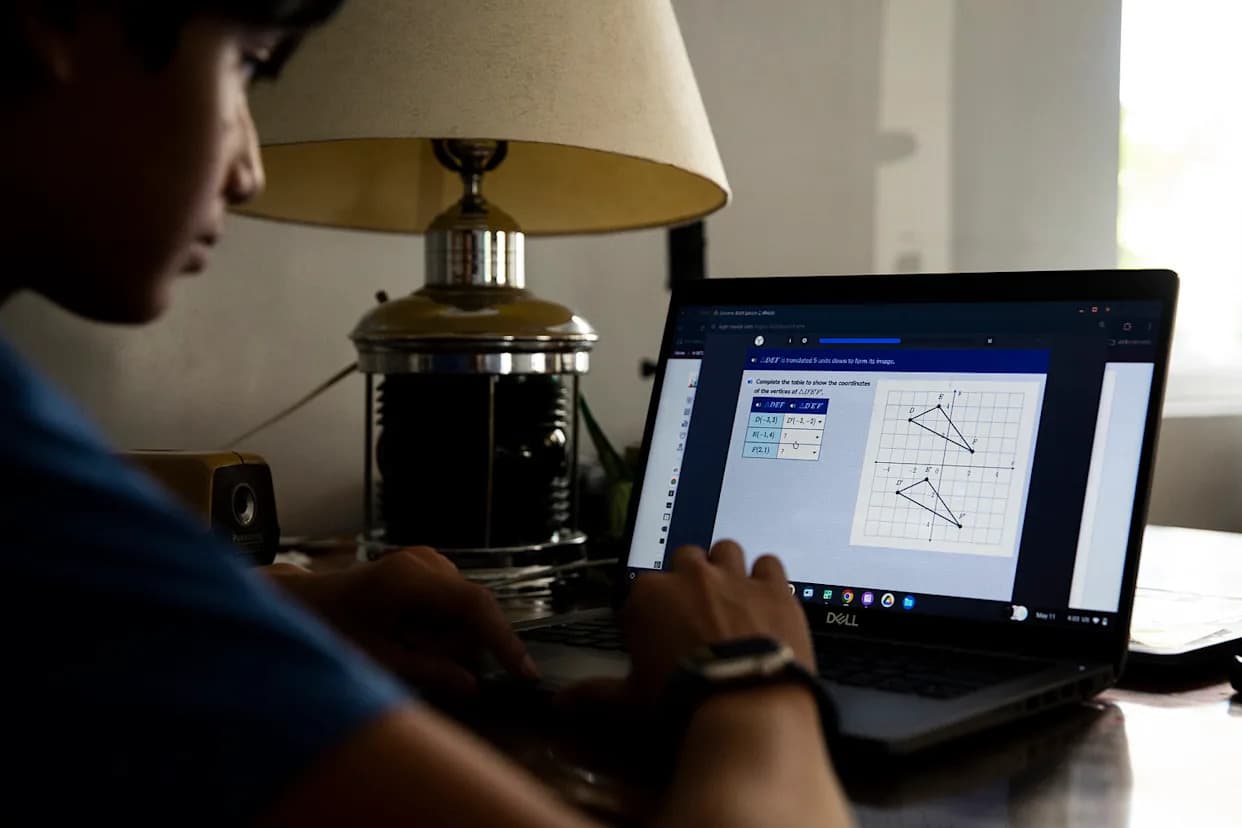
Ward Wooden, 14, demonstrates a math lesson on i-Ready at his family’s home in Studio City, Calif. (Jenna Schoenefeld for NBC News)(Jenna Schoenefeld for NBC News)
i‑Ready, the adaptive assessment and instruction platform from Curriculum Associates, reaches nearly 14 million U.S. students and is used by roughly one‑third of K–12 students nationwide. But its rapid expansion has sparked a broad backlash from parents, teachers and students who say the program is repetitive, disengaging and eats up valuable classroom time.
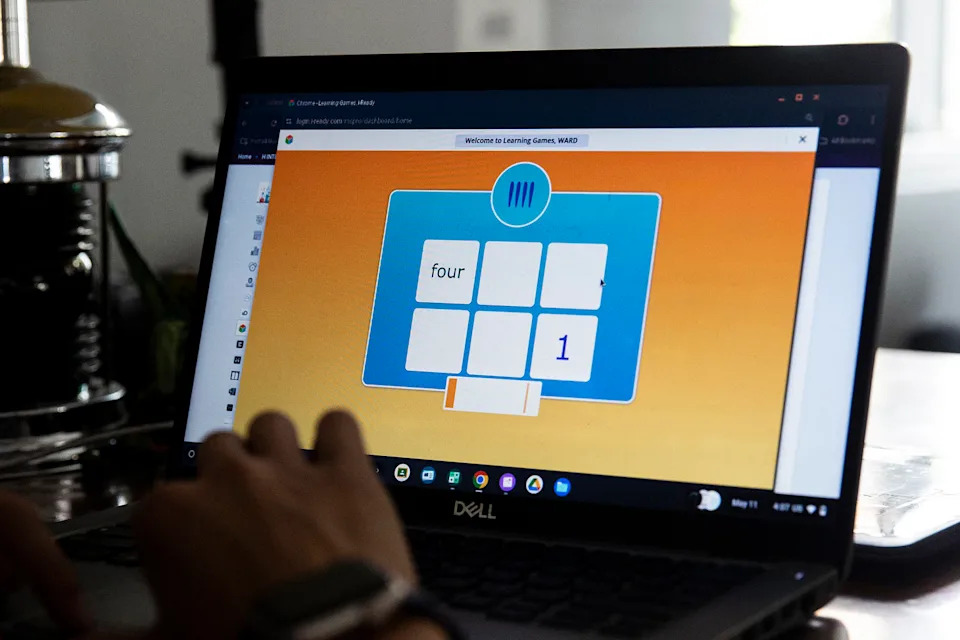
Ward shows how an i-Ready game works on his school-issued Chromebook. (Jenna Schoenefeld for NBC News)(Jenna Schoenefeld for NBC News)
Anecdotes From Classrooms

Parents cheer the passing of a resolution to limit screen time at a recent Los Angeles school board meeting. (Jenna Schoenefeld for NBC News)(Jenna Schoenefeld for NBC News)
From Anchorage to Los Angeles, educators and families describe students becoming frustrated, bored or disengaged. Math tutor Katelynn Petersen in Anchorage says hundreds of children she tutors find the platform “boring and monotonous.” In Rhode Island a speech therapist recounted a child punching a Chromebook screen in frustration at the program’s animations and spoken prompts. In Los Angeles, an eighth grader told reporters, “I’m losing brain cells every time I do a lesson.”

Ward and his friends' frequent complaints about i-Ready prompted his father to research the program. (Jenna Schoenefeld for NBC News)(Jenna Schoenefeld for NBC News)
What i‑Ready Promises

John Allen Wooden has called i-Ready “digital snake oil.” (Jenna Schoenefeld for NBC News)(Jenna Schoenefeld for NBC News)
The platform’s core pitch is diagnostic: adaptive reading and math assessments adjust to student responses and generate individualized lessons so teachers can identify and support struggling students earlier than relying on annual standardized tests alone. The tool also provides color‑coded dashboards, lesson suggestions, curriculum resources and optional professional development for teachers.

Altair Maine, a teacher in North Hollywood, says he loses valuable class time to i-Ready. (Jenna Schoenefeld for NBC News)(Jenna Schoenefeld for NBC News)
Main Criticisms

Former Curriculum Associates CEO Rob Waldron, pictured in 2015, led the company through its creation of i-Ready. (Keith Bedford / Boston Globe via Getty Images file)(Keith Bedford)
Criticisms cluster around several themes: the lessons are repetitive and sometimes infantilizing for older students; audio and animation elements cannot always be skipped; students cannot always review or see explanations for incorrect answers; and significant class time can be devoted to benchmark testing and weekly lessons. Teachers say that limited visibility into students’ problem-solving (for example, inability to see work steps) makes it harder to design targeted, remediation‑focused instruction.

Jonathan Kryk holds a Teacher of the Year award for the 2025-26 school year. (Courtesy Jonathan Kryk)(Courtesy Jonathan Kryk)
Evidence And Research Questions

Parents in Los Angeles pushed the school board to mandate an audit of i-Ready's usefulness in the district. (Jenna Schoenefeld for NBC News)(Jenna Schoenefeld for NBC News)
Independent researchers and analysts say the evidence for i‑Ready’s impact is mixed. Some studies — including research commissioned by Curriculum Associates — show gains in particular districts or subjects, notably math in one Johns Hopkins–affiliated study. But critics note methodological limits, including reliance on the platform’s own assessments and exclusion of students who did not use the product as intended. Curriculum Associates has not run a randomized controlled trial and says it does not plan to because of cost and logistical constraints.

Bridie Lee's son reads a Garfield comic book during an LAUSD board meeting, waiting for his turn to speak in the public comment session. (Jenna Schoenefeld for NBC News)(Jenna Schoenefeld for NBC News)
Business And Scale
Curriculum Associates transformed from a workbook publisher into an edtech company after 2008 and scaled rapidly. Private investors, including a significant stake sold to Berkshire Partners in 2017, helped fuel growth: the company had roughly 2,400 employees and annual revenue near $800 million by late 2024. Large district contracts — for example Anchorage’s $6.75 million, seven‑year deal and Los Angeles’ $20 million, five‑year contract — have made i‑Ready a major presence in U.S. public schools.
District Responses And The Backlash
Some districts and state lawmakers are responding to complaints by auditing use, limiting screen time, or allowing opt‑outs. Los Angeles Unified launched an audit after months of parent and teacher pressure; activists at some schools submitted dozens or hundreds of opt‑out requests. Teachers’ groups and social media communities have also amplified concerns, sharing classroom experiences and calls for change.
Company Response And Product Changes
Curriculum Associates has defended i‑Ready, citing internal and commissioned research, high contract renewal rates and planned product updates. Company leaders say students spend a small share of instructional time on the platform (about 5%, by their estimate) and that benchmark tests will be shorter. At an industry summit the firm previewed a pilot AI read‑aloud feature designed to flag students’ pronunciation difficulties for teacher review.
What’s Next
The debate over i‑Ready reflects larger questions about how districts adopt commercial technology, how educational effectiveness should be measured, and how to balance diagnostics with hands‑on instruction. As more districts audit usage, adjust policies and weigh opt‑outs, administrators, educators and families will continue to press for clearer evidence and better classroom integration when choosing large‑scale edtech tools.
Bottom line: i‑Ready is influential and widely used, but its design, classroom impact and evidence base have provoked a nationwide conversation about the role and limits of large commercial education platforms.
Help us improve.