The Texas A&M team used a two-step protein signaling strategy to trigger partial toe regrowth in mice. First, FGF2 reprogrammed wound fibroblasts to form a blastema-like mass; then BMP2 instructed that tissue to build bones, tendons, ligaments and joint elements. Regenerated digits included essential structures but were sometimes smaller or misshapen. While human application is distant, BMP2 is already used clinically and FGF2 is nearing approval, offering nearer-term benefits for wound repair and scar reduction.
Two Proteins Trigger Partial Toe Regrowth in Mice — A Step Toward Mammal Regeneration
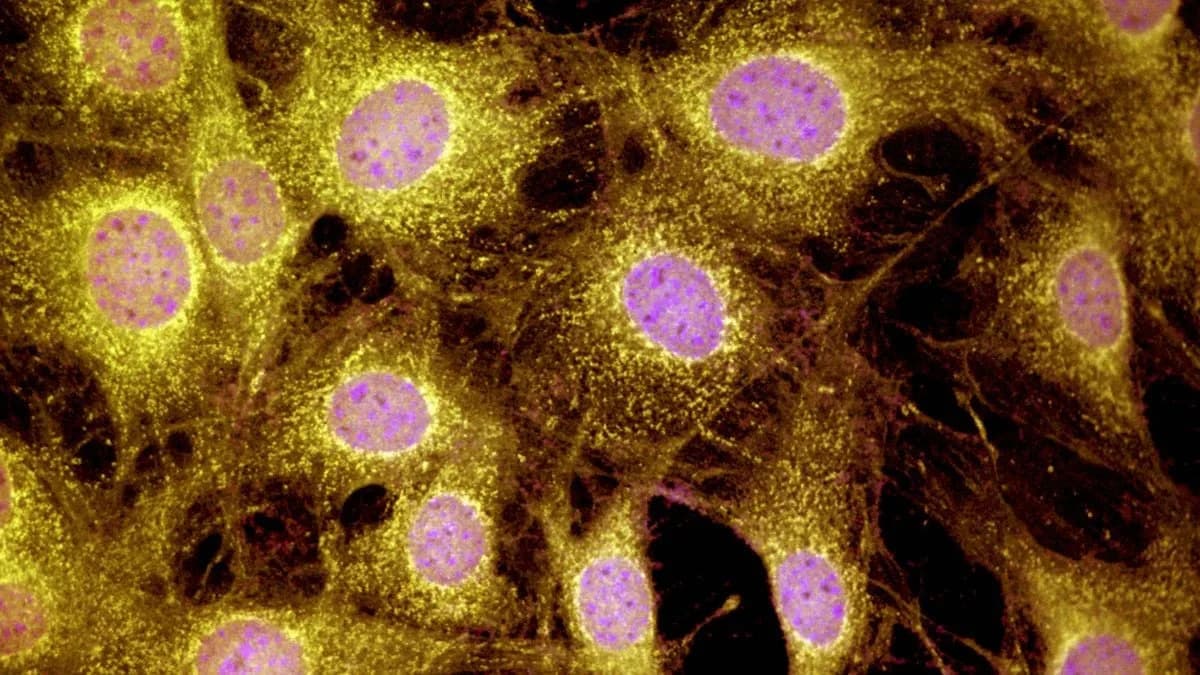
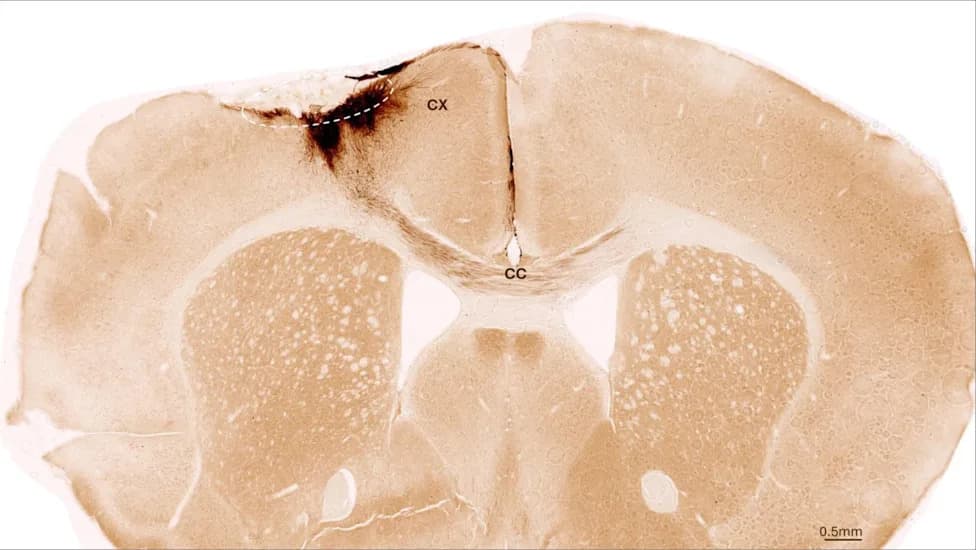
Fibroblasts are a key part of wound healing. (Gopal Murti/Science Photo Library/Getty Images)
Researchers at Texas A&M University have prompted a regenerative tissue response in mice after toe amputation using a two-step protein signaling approach. The treatment produced a blastema-like cell mass and led to regrowth of bones, tendons, ligaments and joint structures. While the new digits were sometimes smaller or misshapen, the experiments produced consistent, reproducible results that suggest mammals may retain latent regenerative capacity.
How the Two-Step Treatment Works
The team first applied fibroblast growth factor 2 (FGF2) to the wound site. FGF2 reprograms local fibroblasts — the cells that normally drive scarring — and primes them to form a blastema-like collection of progenitor cells. Once that blastema-like tissue was present, researchers applied bone morphogenetic protein 2 (BMP2), which supplies developmental instructions that guide the blastema to build skeletal and connective structures.
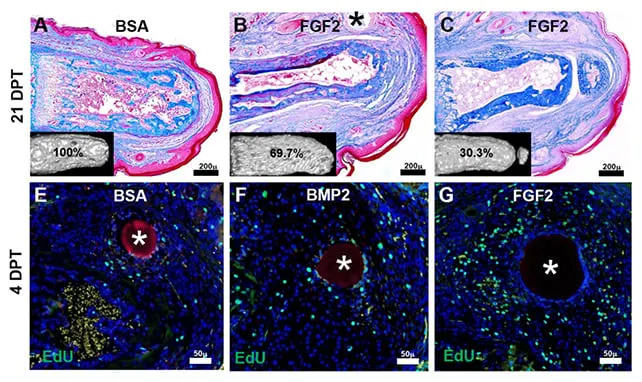
The combination of a protein called FGF2 followed by another, BMP2, was best for extending the digit (top) and forming blastema (bottom) compared to controls (BSA). (Yu et al.,Nat. Commun., 2026)
'This is really a two-step process,' says Ken Muneoka, regenerative biologist at Texas A&M. 'You first shift the cells away from scarring, and then you provide the signals that tell them what to build.'
Results and Limitations
Across dozens of attempts in mice, the combined FGF2-plus-BMP2 treatment restored the major skeletal and connective components of the removed toes — bones, tendons, ligaments and joints. Regenerated digits contained essential structures but were sometimes misshapen or reduced in size. The regrowth was described by the authors as imperfect but encouraging.
This strategy differs from many regenerative approaches that rely on transplanting stem cells. Instead, it activates and redirects resident wound cells, minimizing the need to introduce new cells into the body. An earlier study from the same lab used related protein signaling but omitted FGF2; no blastema formed in that work and only partial tissue regrowth occurred.

Subscribe to ScienceAlert's free fact-checked newsletter
Clinical Implications and Next Steps
There are realistic near-term opportunities as well as long-term challenges. BMP2 is already approved for some reconstructive surgeries, and FGF2 is progressing toward clinical approval; both could plausibly be tested first to improve wound healing and reduce scarring. However, substantial research remains before human trials of limb-regeneration strategies: investigators must clarify the molecular mechanisms, improve the size and shape fidelity of regrown structures, and thoroughly evaluate safety and dosing across species.
As co-author Larry Suva, a veterinary physiologist, put it, activating regeneration in mammals 'changes the way we think about what’s possible' and opens new lines of inquiry. The study is published in Nature Communications.
Help us improve.