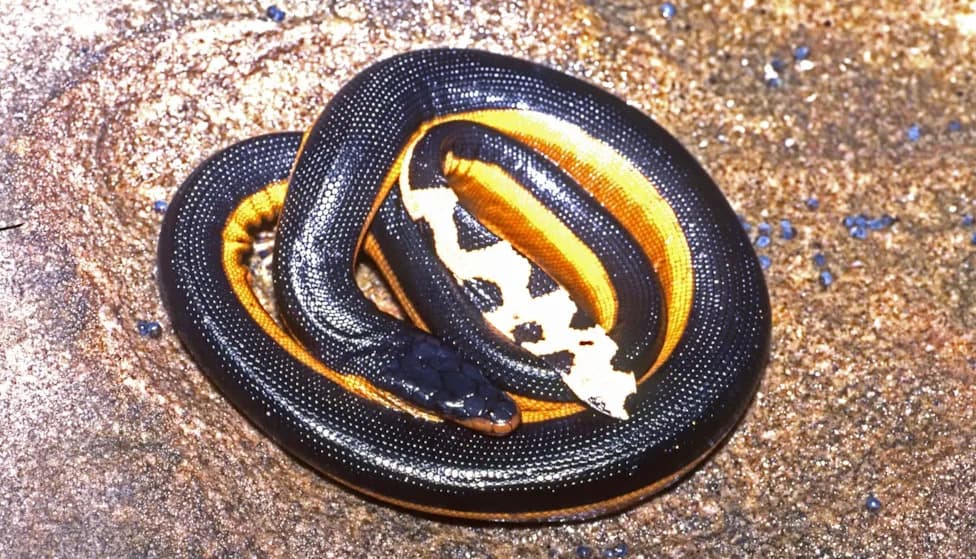
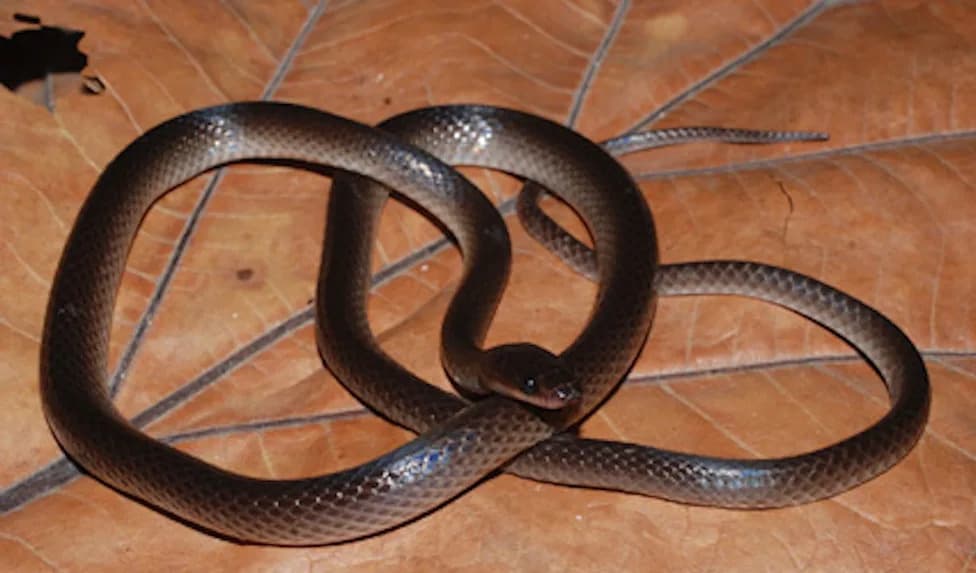
The Ibiza wall lizard (Podarcis pitysensis) displays extraordinary color variation across Ibiza, Formentera and dozens of nearby islets, but is rapidly declining after the invasive horseshoe whip snake likely arrived hidden in olive trees in 2003. Snakes spread and began reducing lizard numbers around 2010; they were declared invasive on Ibiza in 2013. Scientists have collected nearly 2,000 DNA samples, documented local extinctions, observed emerging cautious behavior in some lizard populations, and begun captive breeding (first hatchlings in 2025) while pushing for better snake control.
Can Ibiza’s Kaleidoscope Lizards Survive an Invasion of Horseshoe Whip Snakes?
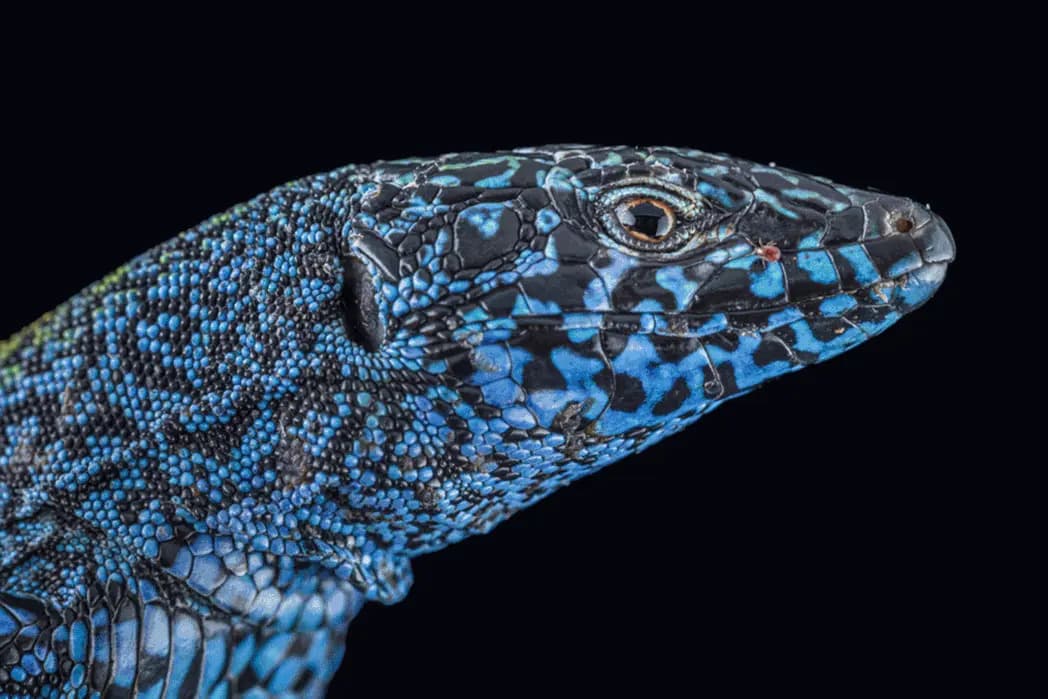
Ibiza wall lizards (Podarcis pitysensis) are found in dozens of colors and patterns in the Balearic Islands, but invasive snakes threaten to obliterate their diverse populations.
Guillem Casbas has a favorite lunch spot on Ibiza’s cliffed coast: a stone bench beneath an olive tree with a view of the sea and the nearby island of Formentera. Small Ibiza wall lizards (Podarcis pitysensis)—green along their backs, blue on the flanks, white on the belly and under three inches long—often approach him there. Casbas, a herpetologist and doctoral student at CREAF, says he offers them bits of tomato and calls them "friends."
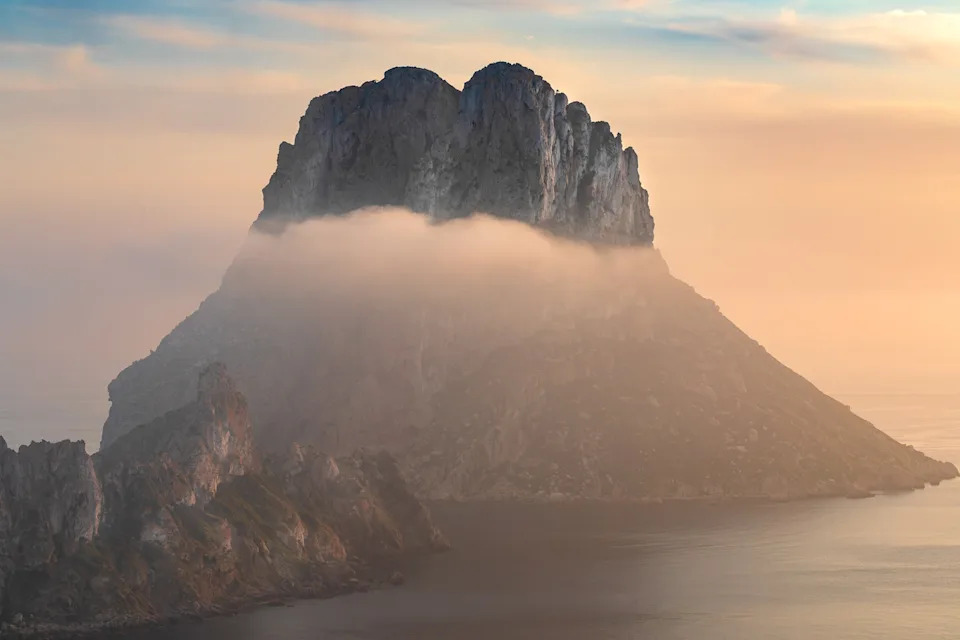
In the Mediterranean Sea, east of mainland Spain, the islet Es Vedrà rises like a natural fortress at 1,000 feet above sea level. It is close to the much flatter islet Es Vedranell. Ibiza wall lizards make homes on tiny islands like these.
A Colorful Island Puzzle
The Ibiza wall lizard is remarkable because isolated populations across Ibiza, Formentera and dozens of surrounding islets display an astonishing range of colors and patterns: greens, blues, indigos, coppers, black morphs and more than two dozen distinct combinations. Such dramatic variation within a single vertebrate species is rare and has long intrigued evolutionary biologists studying how isolation, environment and genetics shape appearance.
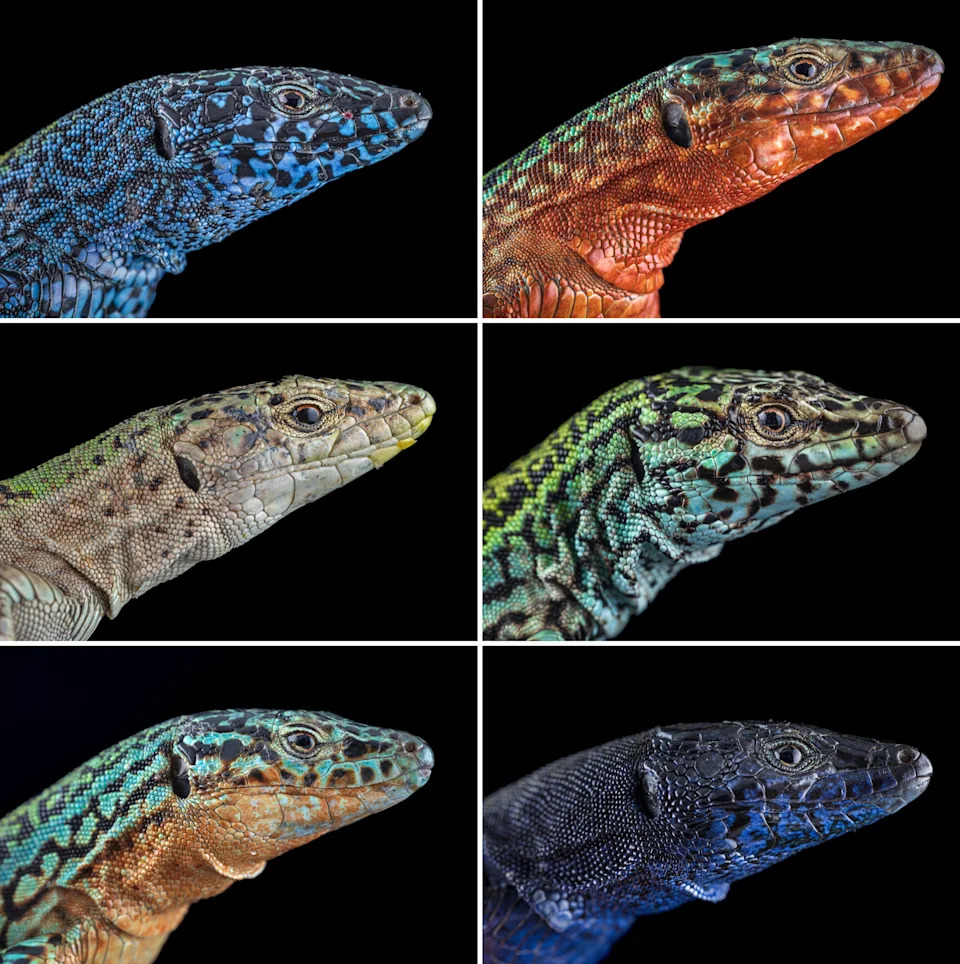
Photographer and biologist Roberto García-Roa has been documenting the diversity of Ibiza wall lizards across dozens of small islands. Top from left: Male from Vedranell Islet; male from Santa Eulalia Islet. Middle from left: male from S'Alga Islet; male from Ses Bosc Islet. Bottom from left: Male from Malví Pla Islet; male from Es Frare Islet.
An Invasive Threat That Appeared Quietly
Scientists trace the arrival of the horseshoe whip snake on Ibiza to the winter of 2003, when olive trees imported from mainland Spain concealed the snakes in trunk crevices. The reptiles likely remained quiescent during transport and became active after arrival. Early sightings were recorded near plant nurseries in San Lorenzo and Santa Eularia.
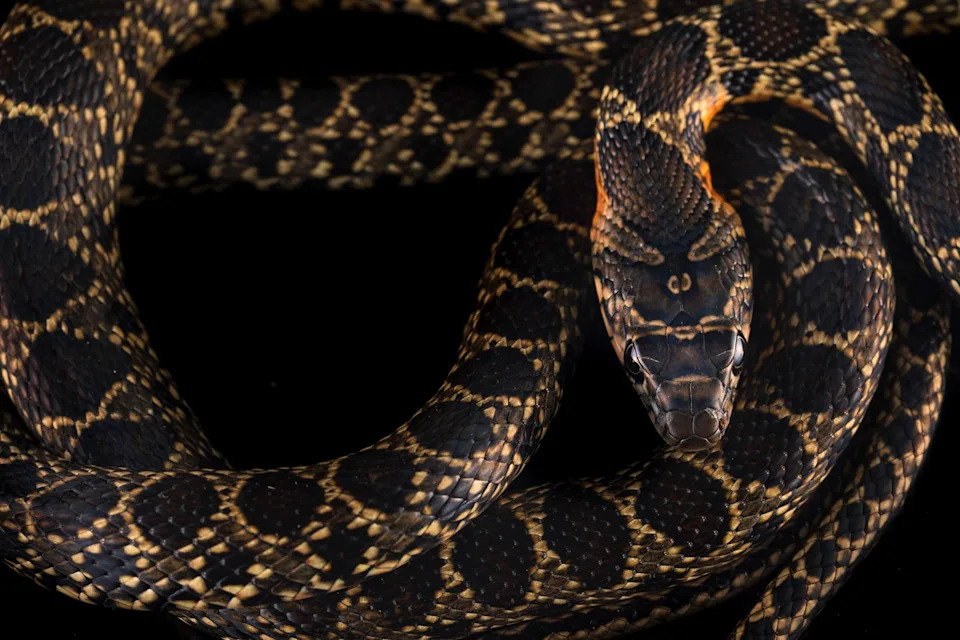
An adult horseshoe whip snake (Hemorrhois hippocrepis), photographed in Ibiza in 2025. This is the main predator of the Ibiza wall lizard on its namesake island.
For several years snake numbers were limited, but by about 2010 island residents and environmental officers began noticing sharp declines in lizard sightings. A complicating factor was legal protection: horseshoe whip snakes had protected status on mainland Spain, and control measures on Ibiza could not be implemented until the species was declared invasive on the island in 2013—by which time snakes had already expanded their range.
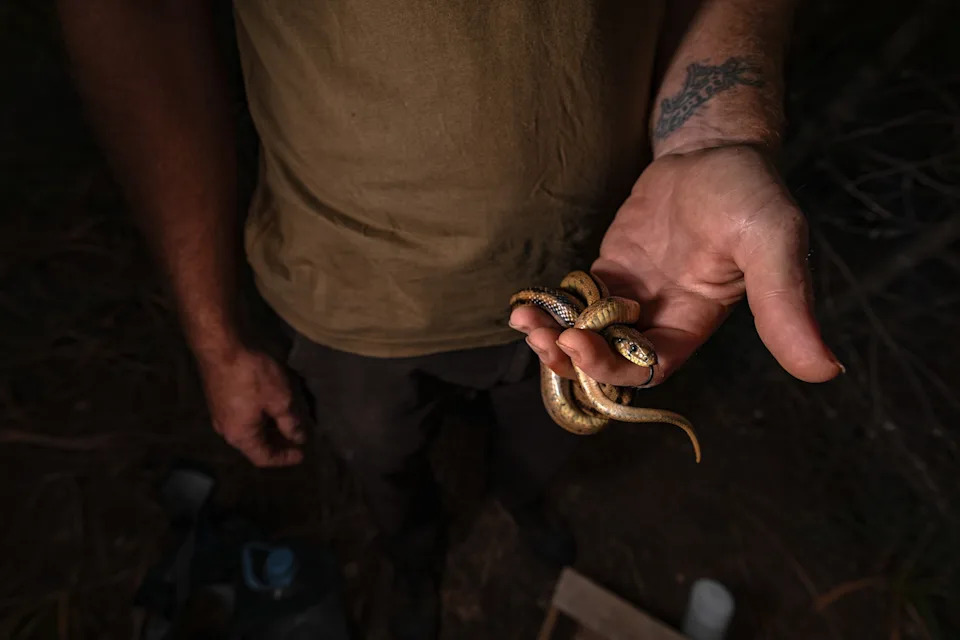
A ranger shows a specimen of the invasive ladder snake (Zamenis scalaris) captured using a trap. Ladder snakes likely arrived to the Balearic Islands in the early 2000s through olive tree importation, and are mainly found on the island of Formentera.Roberto García-Roa
Why These Lizards Matter
Ibiza wall lizards are more than colorful island ornaments. As pollinators, insect predators and seed dispersers, they act as a keystone species in their island ecosystems. Their loss would ripple through local food webs and plant communities.
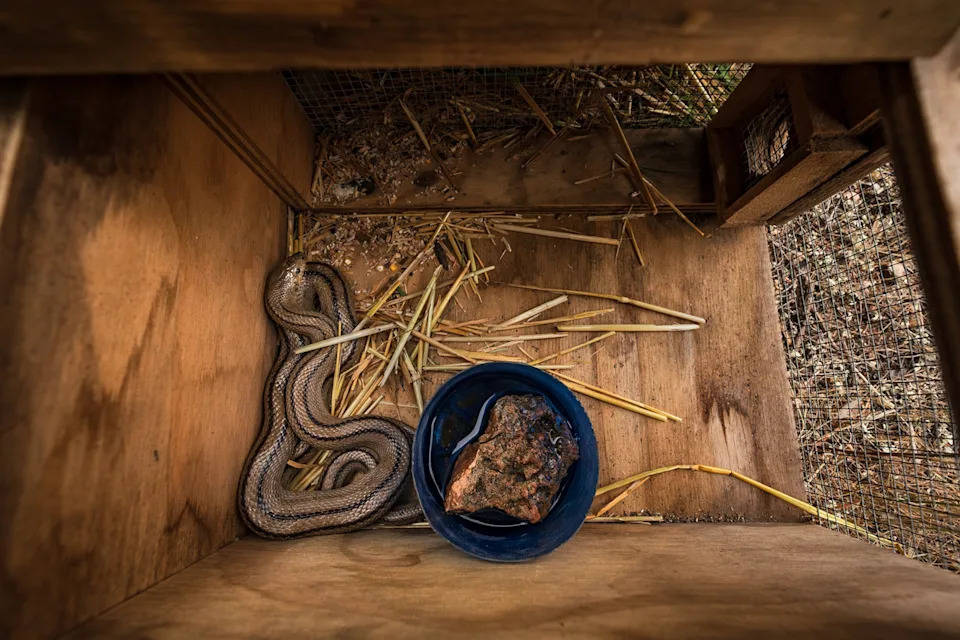
This ladder snake (Zamenis scalaris) was captured in a trap in Formentera. For reasons scientists do not yet understand, ladder snakes have not harmed the Ibiza wall lizard population as much as horseshoe whip snakes.Roberto García-Roa
A Rapid, Alarming Decline
Field researchers report local extinctions on multiple islets. On S’Ora, for example, lizards were recorded in August 2017 but absent by 2018–2019, with no droppings or shed skins found—likely following a recorded swimming snake nearby. A 2021 analysis published in Current Zoology warned that Ibiza’s wall lizards could vanish from the main island within a decade if trends continued.
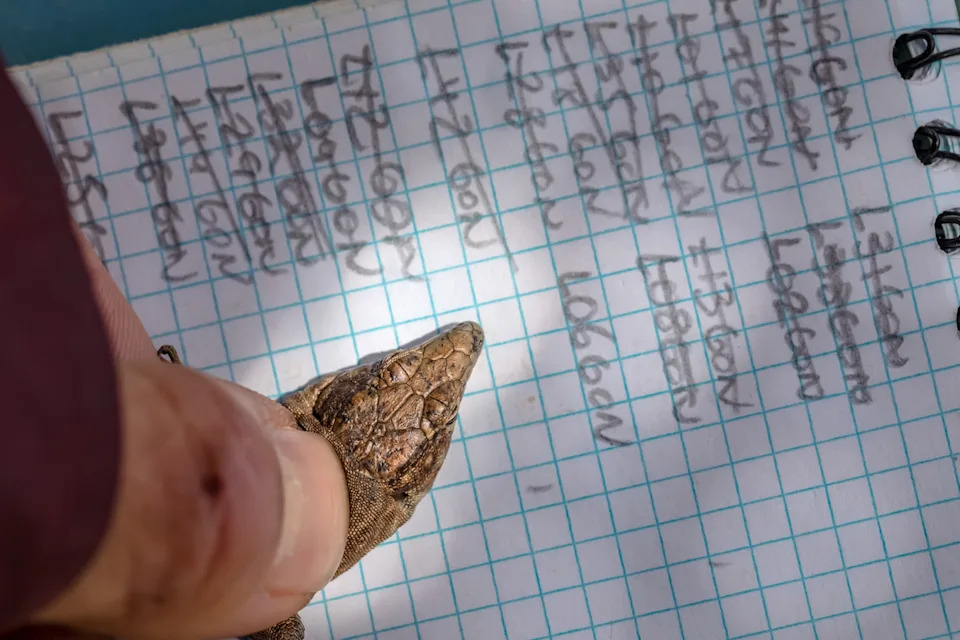
A male Lilford's wall lizard (Podarcis lilfordi) is gently positioned for a top-down photograph of its skull. Researchers use images like this, and specialised software, to extract precise cranial measurements to help characterize lizard populations.
How Snakes Overwhelm Island Populations
Because the lizards evolved for millions of years with few predators, they exhibit "island tameness" and often fail to flee from approaching threats. Horseshoe whip snakes are efficient small-prey predators, and researchers have documented snakes swimming between the main island and offshore islets. Even a single snake reaching a tiny islet can extirpate an entire lizard population.
Scientific Response: Document, Test, and Protect
Researchers have mounted a multi-pronged response: intensive field surveys, genetic sampling, behavioral trials, trapping and captive-breeding. Between 2022 and 2025 scientists photographed populations on dozens of islets and collected nearly 2,000 DNA samples across the Balearics—data that will form the most comprehensive analysis to date of the group’s phenotypic and genomic diversity.
Behavioral experiments by CREAF and collaborators show that lizards from snake-exposed areas tend to be more cautious—spending longer scanning for predators in controlled stone-wall enclosures—suggesting either learning or selection for warier individuals. Whether such behavioral shifts can outpace predation pressure is uncertain.
Conservation Actions Underway
Local residents and scientists are working together. Citizen science reports have helped track snake spread, and improved snake traps—often baited with mice—are deployed in gardens. Researchers are refining trap designs and exploring chemical attractants as alternatives to live bait.
On the captive-breeding front, the first Ibiza wall lizard hatchlings were born at Barcelona Zoo in June 2025, and a program is planned at Bioparc Valencia. Regional authorities aim to expand breeding and rescue efforts, while field teams collect individuals to supply ex situ populations—an emotional and pragmatic effort likened to assembling a "passenger manifest for Noah’s Ark."
What Remains Unknown—and Urgent
Despite large-scale sampling and genomic work, researchers have not yet identified simple genetic rules that produce specific colors and patterns. The consensus is that color variation likely arises from a mix of genetic background and environmental influences, mediated by pigment-cell regulation and complex developmental pathways.
“We are witnessing the extinction of a species’ life—and not only a species, but probably one of the most striking cases of color biodiversity on Earth,” says evolutionary biologist Roberto García-Roa.
The race now is twofold: document and protect the remaining colorful populations, and improve snake management to prevent further extinctions. With continued fieldwork, genetic analysis and community engagement, scientists hope to conserve both the lizards and the extraordinary evolutionary story they represent.
Help us improve.