The Supreme Court allowed a recent decision that removed an important Voting Rights Act protection to take effect earlier than usual, enabling Louisiana Republicans to pursue a new congressional map ahead of the November midterms. The 6‑3 ruling struck down a map that had produced a second Black‑majority U.S. House district after a petition from voters who identified as "non‑African American." Governor Jeff Landry declared a state of emergency and postponed May 16 primaries, prompting lawsuits that allege he exceeded his authority while the ruling's effects proceed.
Supreme Court Lets Voting-Rights Ruling Take Effect Early, Fueling Louisiana Map Change
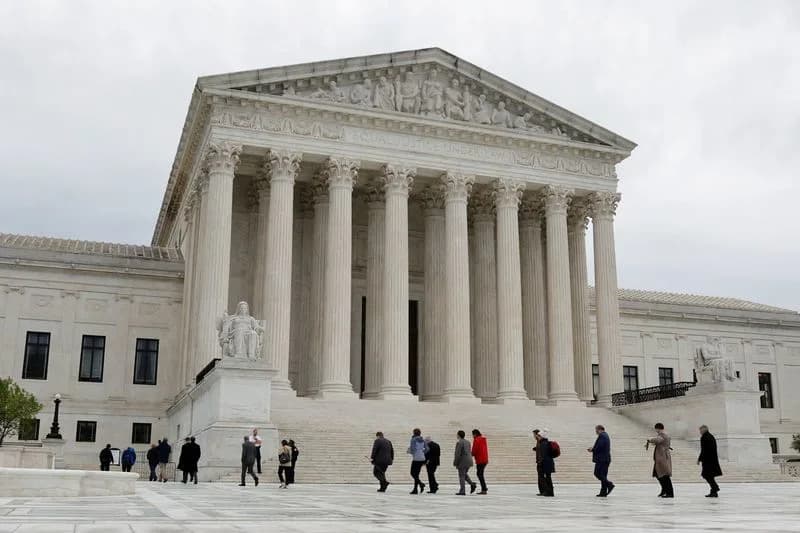
People walk across the plaza of the U.S. Supreme Court building on the first day of the court's new term in Washington, U.S. October 3, 2022. REUTERS/Jonathan Ernst
The U.S. Supreme Court on Monday permitted a recent decision that removed a major protection of the Voting Rights Act to take effect sooner than the court's normal timetable. The move clears the way for Louisiana Republicans to pursue a new congressional map ahead of the November midterm elections.
The order followed a request from a group of Louisiana voters who described themselves in filings as "non‑African American." Their challenge produced a 6‑3 Supreme Court ruling on April 29 that struck down a congressional map that had created a second Black‑majority U.S. House district in Louisiana. The decision invalidated a central Voting Rights Act protection that had been used to block electoral plans likely to dilute minority voting strength.
Normally, the Supreme Court waits 32 days after announcing a decision before issuing the formal judgment to allow the losing side time to request a rehearing. However, the prevailing party may ask the court to issue its judgment more quickly, which the petitioners did in this case — and the justices granted.
Governor Jeff Landry responded to the court's order by declaring a state of emergency and postponing Louisiana's congressional primary elections that had been scheduled for May 16. That decision prompted multiple lawsuits from opponents who argue the governor exceeded his authority because the court's judgment had not yet issued under the normal timetable.
Supporters of the early issuance say the expedited judgment removes legal uncertainty and allows state officials to move forward with redrawing districts. Critics counter that accelerating the ruling shortchanges the usual procedural safeguards and could affect voter access and minority representation ahead of a consequential midterm cycle.
Why it matters: The shift reshapes the legal landscape for challenges to electoral maps and could influence the balance of congressional seats in Louisiana — and potentially beyond — as both parties prepare for November.
(Reporting by John Kruzel)
Help us improve.