Taiwanese President Lai Ching-te made an unannounced visit to Eswatini using an "arrive then announce" approach after a prior trip was blocked by airspace denials. Beijing condemned the visit in harsh terms and praised countries that refused overflight permission. The episode highlights broader U.S.-China tensions over Taiwan, with Washington calling the trip routine and having approved an $11 billion arms package for Taiwan. Taipei fears Taiwan may become a bargaining chip at the upcoming Xi–Trump summit.
Why Lai Ching-te’s 'Arrive Then Announce' Visit to Eswatini Escalated Tensions With Beijing
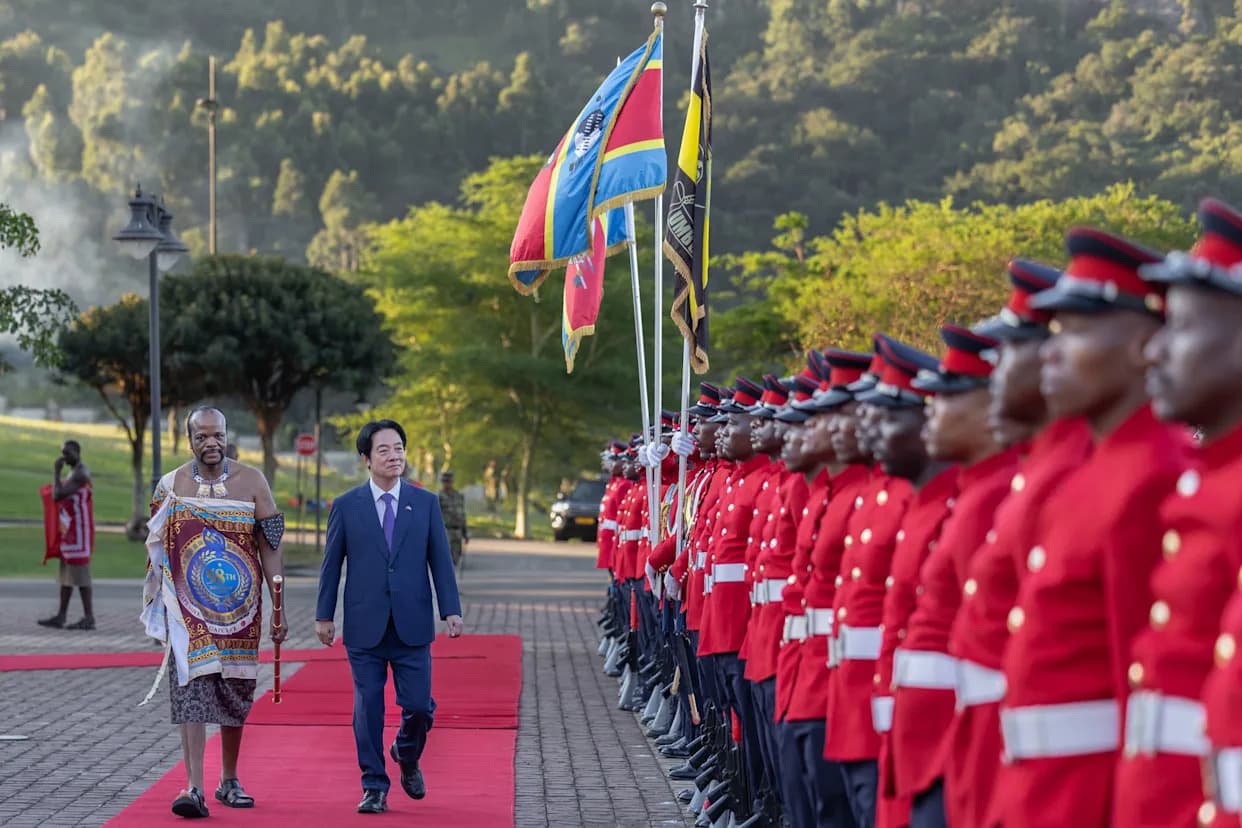
Taiwan's President William Lai Ching-te, second from left, reviews a honor guard with Eswatini King Mswati III in a military welcome ceremony at the Mandvulo International Conference Hall in Eswatini on May 3, 2026. —Taiwan Presidential Office/AP
Taiwanese President Lai Ching-te made an unannounced arrival in Eswatini on Saturday for a diplomatic visit that neither Taipei nor Mbabane publicised in advance. The secretive trip — following an earlier attempt that was blocked — drew a sharp rebuke from Beijing and underscored the diplomatic pressures Taiwan faces from China.
What Happened
Lai used what Taiwan’s diplomats call an “arrive then announce” approach to bypass potential interference. He travelled to Eswatini — one of only 12 countries that maintain formal diplomatic relations with Taiwan — to mark the 40th anniversary of King Mswati III’s accession. Lai’s initial, planned visit last month was cancelled after three African states closed their airspace to his aircraft; Bloomberg also reported that Germany and the Czech Republic denied overflight permission for the trip.
Beijing’s Reaction
China’s foreign ministry condemned Lai’s unannounced visit, calling his conduct “despicable” and, in a strongly worded statement, likening him to a “rat scurrying across the street.” Beijing urged Eswatini and other countries not to support what it described as “Taiwan independence” separatists and praised those that denied the Taiwanese flight passage. Taiwan, in turn, accused Beijing of pressuring governments to refuse overflight rights; China denies coercion while publicly commending the decisions.
“Taiwan will never be deterred by external pressures,” Lai wrote on social media when announcing his arrival. “Our resolve and commitment are underpinned by the understanding that Taiwan will continue to engage with the world — no matter the challenges faced.”
International Fallout
The visit has highlighted broader U.S.-China tensions over Taiwan. A U.S. State Department spokesperson described Lai’s trip as “routine and should not be politicised,” adding that Taiwan is “a trusted and capable partner of the United States and many others” and that such ties deliver benefits to partner countries including Eswatini. The spokesperson also noted that Lai’s predecessor, Tsai Ing-wen, visited Eswatini in 2018 and 2023.
In December, amid rising Chinese military and diplomatic pressure on Taiwan, Washington approved an $11 billion arms package for the island — the largest such U.S. package to date — which many observers saw as part of deterrence efforts against possible coercion by China.
Wider Diplomatic Concerns
Former U.S. President Donald Trump was reported to have said that any action Xi Jinping takes toward Taiwan is “up to him,” comments that fueled concern in Taipei. Separately, the Pentagon has at times redistributed some assets in response to shifting global priorities and regional tensions.
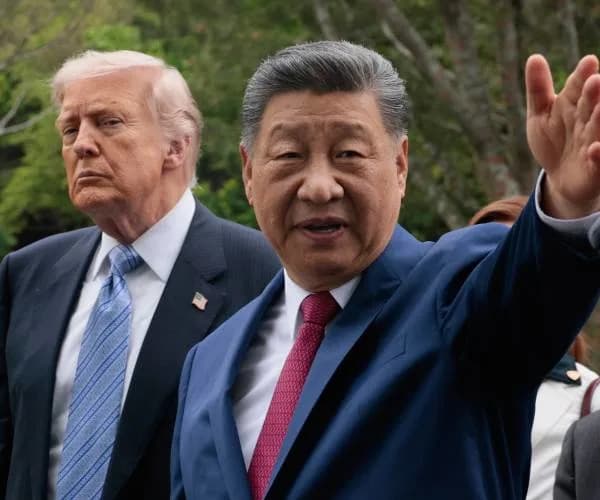
Lai’s visit comes days before a rescheduled summit between President Trump and Chinese President Xi Jinping in Beijing on May 14–15. Taiwanese officials fear that Taiwan could be discussed as part of broader U.S.-China negotiations. “What we are most afraid of is to put Taiwan on the menu of the talk between Xi Jinping and President Trump,” Deputy Foreign Minister Francois Wu told Bloomberg, adding that Taipei wants to avoid becoming a bargaining chip.
China’s Foreign Minister Wang Yi also underscored Beijing’s sensitivity on the issue during a recent call with U.S. Secretary of State Marco Rubio, saying the Taiwan question strikes at China’s core interests and represents a major risk in China-U.S. relations.
The Eswatini trip — and the tactics used to carry it out — illustrate the diplomatic tightrope Taiwan walks as it seeks international space while Beijing presses to isolate the island.
Help us improve.