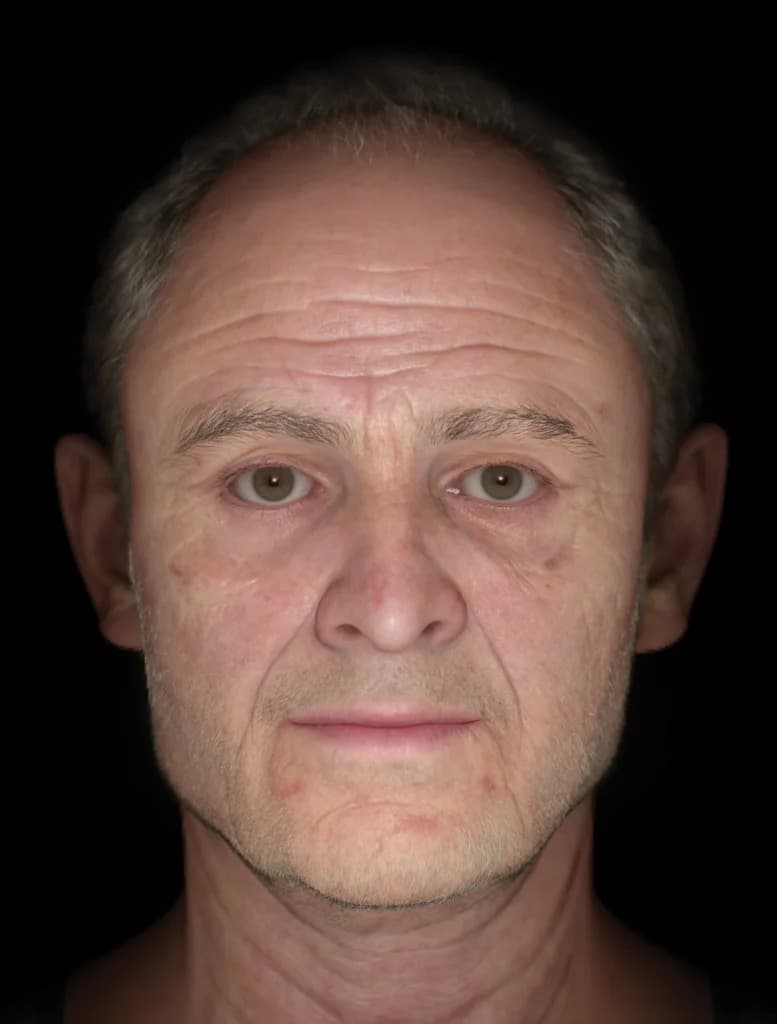
A 1,400‑year‑old double grave at Cherington, Gloucestershire contained a boy of about seven or eight and his older sister, arranged as if she were watching over him. DNA analysis at the Francis Crick Institute confirmed they were full siblings and showed they died almost simultaneously, likely from a fast‑acting infection. The burial, part of a larger cemetery first noted after a 2016 "Princely Burial," and the cluster of juvenile weapon burials raise fresh questions about kinship and social identity in sixth‑century England.
1,400-Year-Old Anglo‑Saxon Double Burial in Gloucestershire Reveals Sibling Tragedy
Time Team Digital
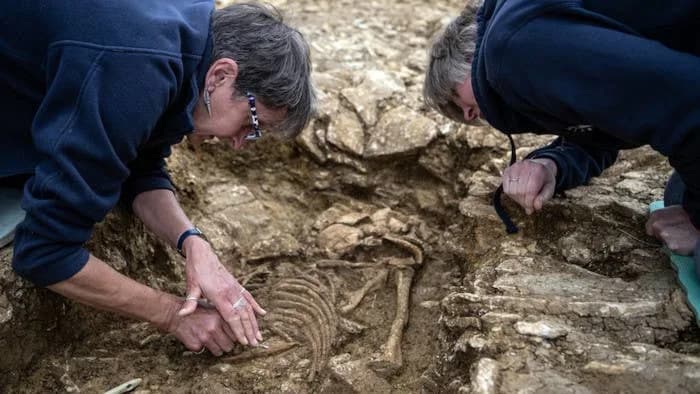
Archaeologists have uncovered a rare 1,400-year-old double burial at Cherington, Gloucestershire, and ancient DNA analysis has confirmed the grave contains a full brother and sister. The discovery offers an unusually intimate glimpse into family life and funerary practice in early Anglo‑Saxon England.
The burial was revealed in a statement to Time Team Digital following a joint excavation by Time Team, Operation Nightingale and Cotswold Archaeology. Inside the grave researchers found a boy of about seven or eight, interred with an iron sword, and an older sister placed beside him and turned to face him, slightly propped up as if watching over him. Archaeologists interpret the arrangement as a deliberate effort to "recreate a scene of care," suggesting the girl was positioned to oversee her younger brother in death.
Ancient DNA sequencing at the Francis Crick Institute established that the two were full siblings and that they died at almost exactly the same time, likely from a rapidly acting infectious disease. Osteoarchaeologist Jaqueline McKinley proposed that the boy may have fallen ill first and that his sister probably contracted the illness while caring for him.
“The boy was laid down and the young teenage girl was laid down next to him,” McKinley explained. “She was turned to face him and I thought she was kind of propped up. To get two of them buried at the same time — this suggests that they both died of probably some kind of infectious disease at the same time.”
Double burials are exceptionally uncommon in Anglo‑Saxon cemeteries, and simultaneous interment of close kin is even rarer. The deliberate positioning of the sister overlooking her brother strengthens the interpretation that she may have contracted the infection while tending to him.
The siblings’ grave sits within a larger cemetery first identified in 2016 after excavators unearthed a richly furnished "Princely Burial" of another young boy accompanied by weapons and high‑status grave goods. Subsequent excavations uncovered further juvenile burials with weapons; the discovery of a second sword helped lead archaeologists to the siblings' grave. The clustering of child warrior burials is prompting new questions about kinship networks, household structure and social identity in sixth‑century England.
Why This Matters
This find is important not only for its rarity, but because DNA and careful excavation together allow researchers to reconstruct relationships, cause-of-death scenarios and mortuary behavior—offering a humanizing glimpse into how families may have cared for one another and remembered the dead in a turbulent period of English history.
Help us improve.