
Republican governors in Alabama and Tennessee have called special legislative sessions to redraw congressional maps after a Supreme Court decision narrowed a Voting Rights Act protection. Alabama seeks to revert to a 2023 map that GOP leaders say could produce seven Republican House members; Tennessee aims to dismantle the majority-Black 9th District in Memphis. The moves have prompted legal challenges and warnings from Democrats and civil-rights leaders that the changes could dilute Black voting power ahead of upcoming elections.
Alabama and Tennessee Call Special Sessions to Redraw Congressional Maps After Supreme Court Ruling
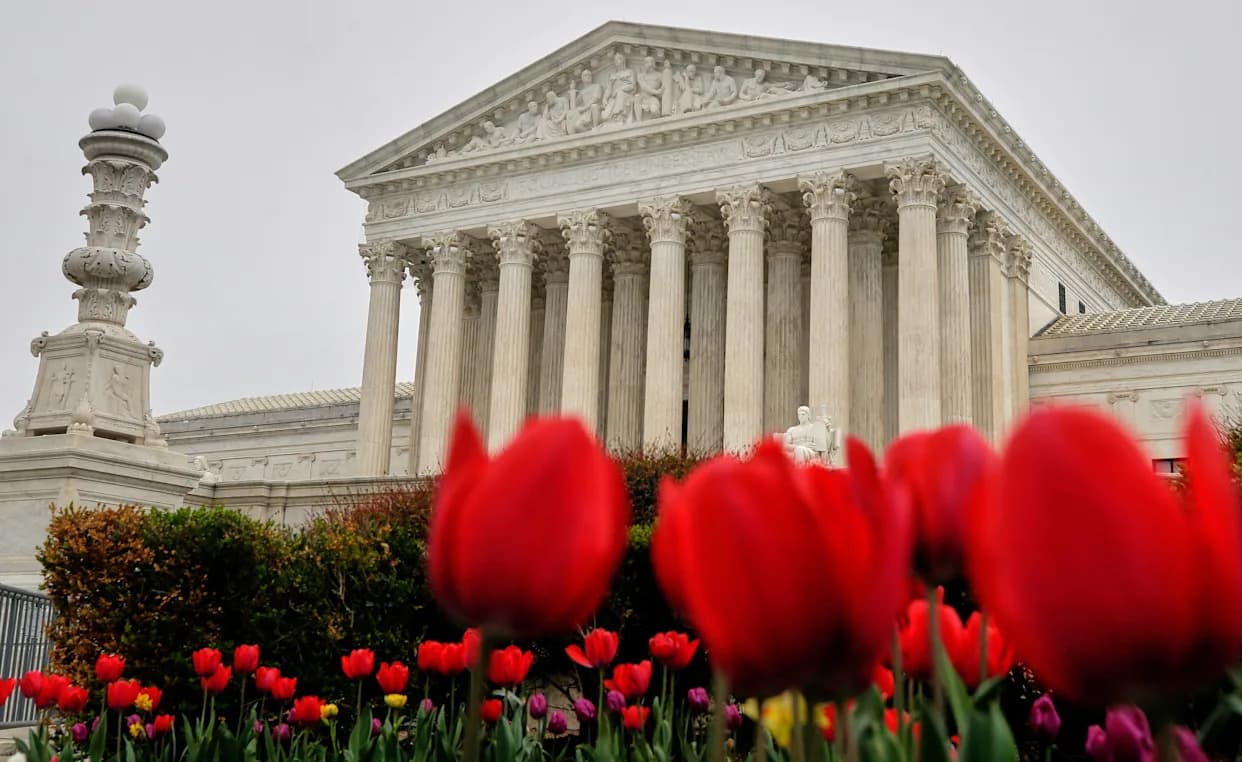
FILE - The U.S. Supreme Court is seen in Washington, Friday, April 3, 2026. (AP Photo/Rahmat Gul, File)(ASSOCIATED PRESS)
Republican governors in Alabama and Tennessee have summoned their state legislatures into special sessions to redraw congressional districts after a recent U.S. Supreme Court decision narrowed a key protection of the Voting Rights Act. The moves set off a political scramble across the South as lawmakers, voters and civil-rights groups prepare for legal fights and possible changes to House representation.
What Governors Are Proposing
Alabama: Gov. Kay Ivey ordered lawmakers back to Montgomery to approve contingency plans that would allow the state to revert to a congressional map drawn by the Legislature in 2023. Republican leaders say the change could help the party win as many as seven of Alabama’s seven U.S. House seats; the current delegation includes two Democrats. State leaders are appealing prior federal court orders that required a court-selected map with a second district containing a substantial Black voting population.
Tennessee: Gov. Bill Lee called a special session for the GOP-controlled Legislature with the goal of dismantling the 9th Congressional District, a majority-Black seat centered on Memphis and the state’s lone Democratic-held House district. Republicans have long sought to disperse the district’s Democratic voters into neighboring districts; the recent court decision may reduce legal obstacles to that plan.
The Trigger: A Supreme Court Ruling
The Supreme Court struck down a Louisiana congressional map that created a majority-Black district, concluding map-drawers relied too heavily on race. That ruling has reverberated through statehouses, giving Republican officials new grounds to consider redraws that could be implemented for the 2026 midterms or, in some cases, sooner.
Broader Reaction And Legal Pushback
Former President Donald Trump publicly urged state legislatures to act, predicting Republicans could gain roughly 20 House seats. Several states moved quickly: Florida approved new districts the same day as the ruling, and Louisiana suspended its May 16 congressional primary while lawmakers consider new lines — a decision that has prompted lawsuits from Democrats and civil-rights groups.
Democrats and civil-rights leaders warned the rulings and subsequent redistricting efforts risk diluting minority voting power. Sen. Raphael Warnock called the developments a rollback of civil-rights gains and likened the tactic to historic Jim Crow-era methods of disenfranchisement.
Alabama officials are appealing court orders that had required a court-drawn map remain in place through the 2030 Census, arguing state lawmakers best understand local districts. Tennessee Democrats point to a 2022 precedent in which the state Supreme Court blocked last-minute redistricting because it was too close to an election and say the courts remain a key check on rapid map changes now.
What Comes Next
Expect a mix of legislative action, suspended primaries and immediate court challenges. Some states may move to redraw maps ahead of upcoming primaries, while others will plan changes for the 2026 cycle. The contested landscape promises continued litigation and political battles over the shape of congressional delegations and the voting power of minority communities.
Byline: Associated Press reporting and state officials’ statements compiled in this summary.
Help us improve.





















