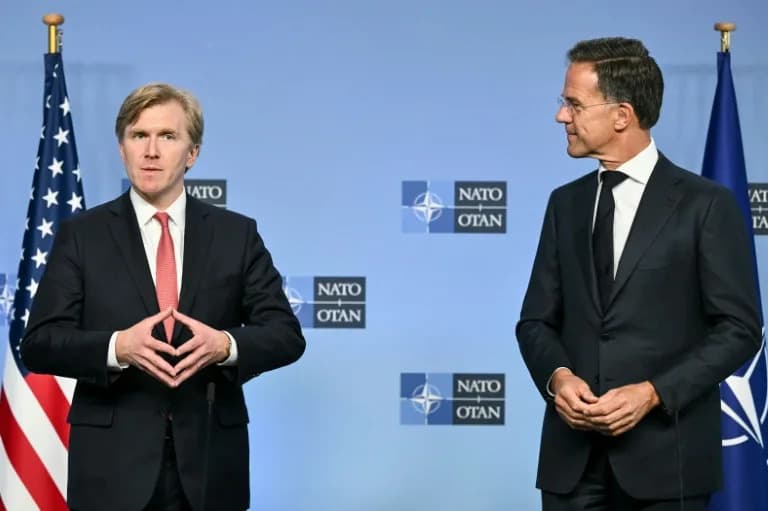
German Chancellor Friedrich Merz sought to defuse tensions after the U.S. announced plans to withdraw about 5,000 troops from Germany over the next year. Merz said the troop reductions were unrelated to his earlier criticism of President Trump’s Iran policy and reaffirmed the importance of the U.S. as Germany’s main NATO partner. The drawdown would reduce U.S. forces in Germany by roughly 14%, prompting calls for greater European responsibility for defence and ongoing consultations between NATO and the United States.
Merz Seeks to Calm Tensions After U.S. Announces 5,000-Troop Drawdown in Germany
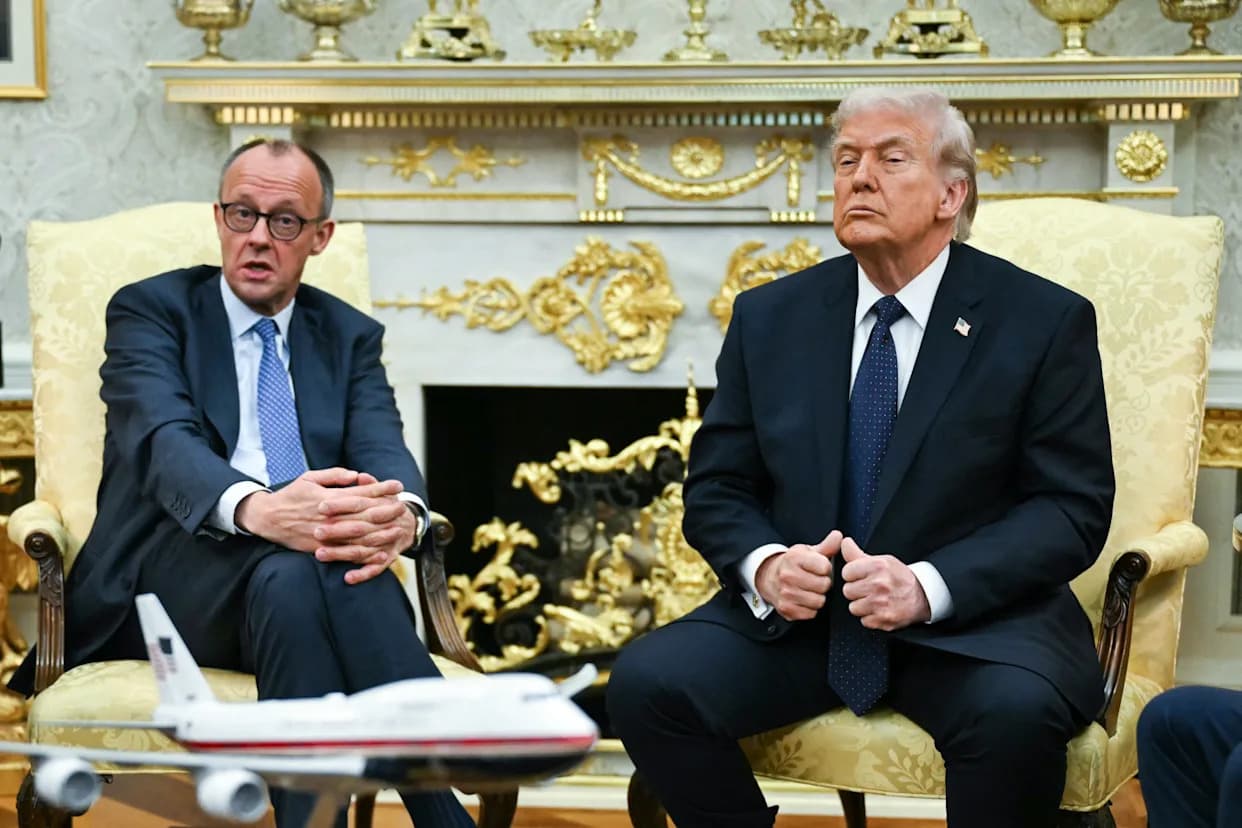
Donald Trump meets German Chancellor Friedrich Merz in the Oval Office on March 3, 2026 [AFP]
German Chancellor Friedrich Merz moved to soothe public perceptions of a diplomatic rift with the United States after Washington announced plans to withdraw roughly 5,000 U.S. service members from Germany over the next 12 months.
"I remain convinced that the Americans are the most important partner for us in the North Atlantic Alliance (NATO),"Merz told broadcaster ARD in remarks that are due to be aired in full later.
Merz insisted the decision to reduce forces was not connected to his earlier public criticism of President Donald Trump’s handling of tensions with Iran. Those comments ignited friction after Merz described Iran’s actions as "humiliating" the United States and warned that Washington lacked a clear exit strategy. Germany’s foreign minister later sought to soften that language, saying Merz was condemning Iran’s conduct in diplomacy rather than U.S. policy.
Washington publicly rebuked Merz, and the White House also announced trade measures this week, including higher tariffs on certain autos and trucks from the European Union — a move that would particularly affect Germany’s large automotive industry.
The U.S. Department of Defense said the drawdown of roughly 5,000 personnel will be implemented over the next year and is expected to reduce the American footprint in Germany by about 14 percent. Germany currently hosts the largest U.S. force presence in Europe, at roughly 36,000 troops; by comparison, Italy hosts about 12,000, the United Kingdom about 10,000 and Spain about 4,000.
German Defence Minister Boris Pistorius described the reduction as "foreseeable," telling the DPA news agency that while transatlantic ties remain crucial, "Europeans must assume more responsibility for our security." NATO officials said the alliance is engaging with the United States to clarify the details of the decision.
The episode highlights broader strains in transatlantic relations: disputes over burden-sharing in NATO, differing responses to the conflict with Iran, and trade frictions. Several European governments have accelerated defence spending and capability upgrades amid growing pressure from Washington to shoulder more of their own defence.
Observers say the episode is likely to prompt diplomatic consultations in Berlin and across Europe as allies seek to understand U.S. rationale for the drawdown and to calibrate their own security and economic responses.
Help us improve.