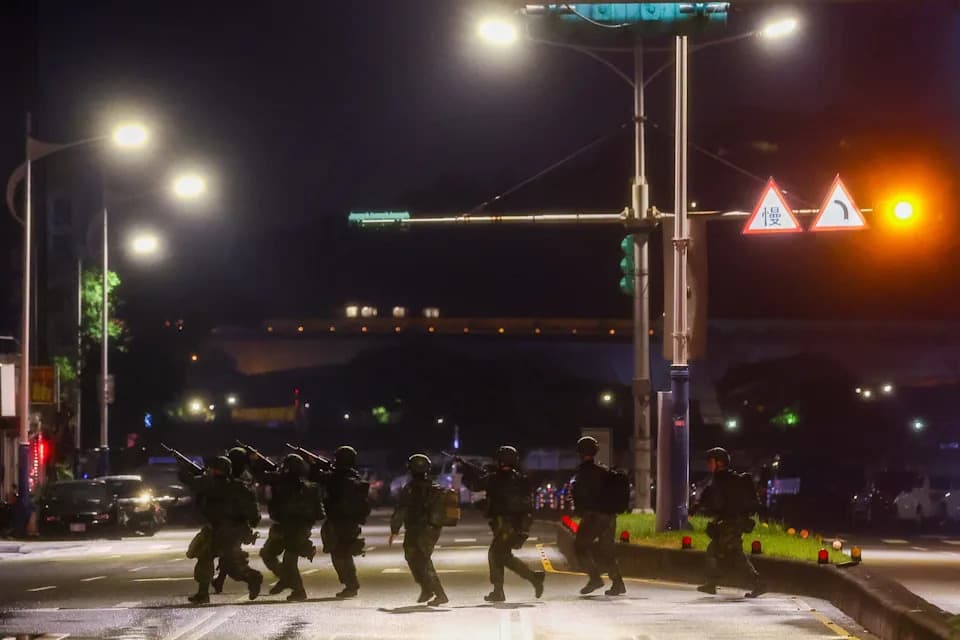
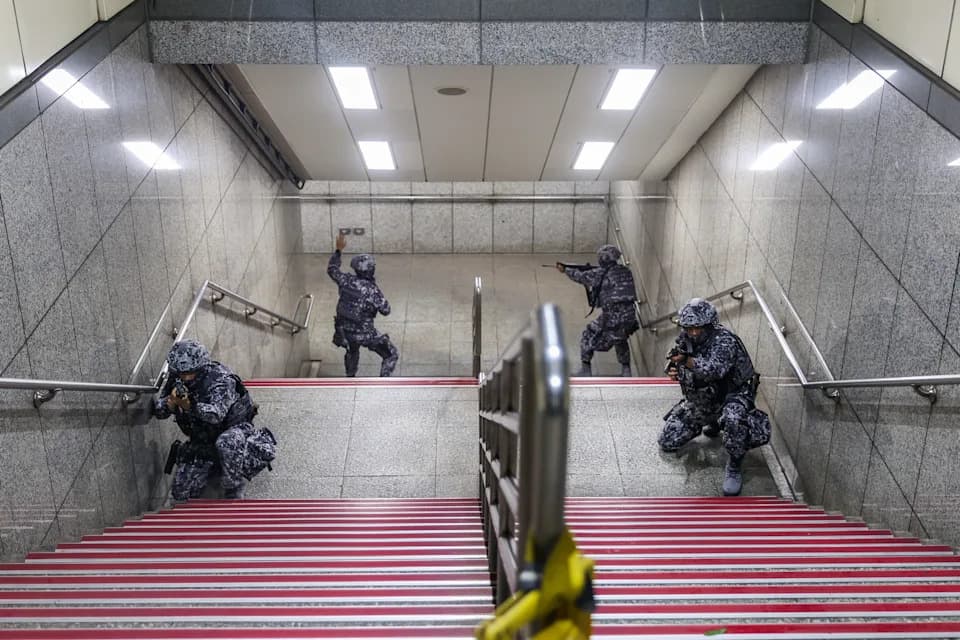
The Philippines and the United States airlifted the NMESIS coastal anti-ship missile system to Basco in Batanes during the Balikatan war games to rehearse rapid deployment near Taiwan. The system, capable of engaging surface vessels at about 185 km (115 miles), was brought in for rehearsal and simulation only and will not be used in live-fire drills. The exercises involve more than 17,000 troops and take place amid increased Chinese naval activity around Taiwan and in the South China Sea.
US and Philippines Airlift NMESIS Coastal Missile System to Batanes Near Taiwan During Balikatan Drills
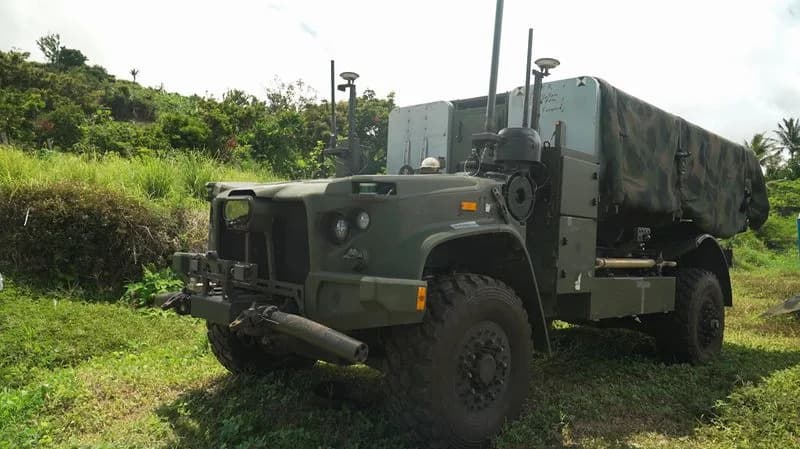
A vehicle used for the Navy-Marine Expeditionary Ship Interdiction System (NMESIS), stands during joint Philippine-U.S. military exercises in Basco, Batanes province, Philippines, May 2, 2026. REUTERS/Adrian Portugal
By Adrian Portugal — BATANES, Philippines, May 2 (Reuters)
Philippine and U.S. forces staged the NMESIS coastal anti-ship missile system in the northern province of Batanes on May 2 as part of the annual Balikatan joint exercises. The deployment, near Taiwan and along the strategically important Luzon Strait, comes amid rising tensions and increased Chinese naval activity in the region.
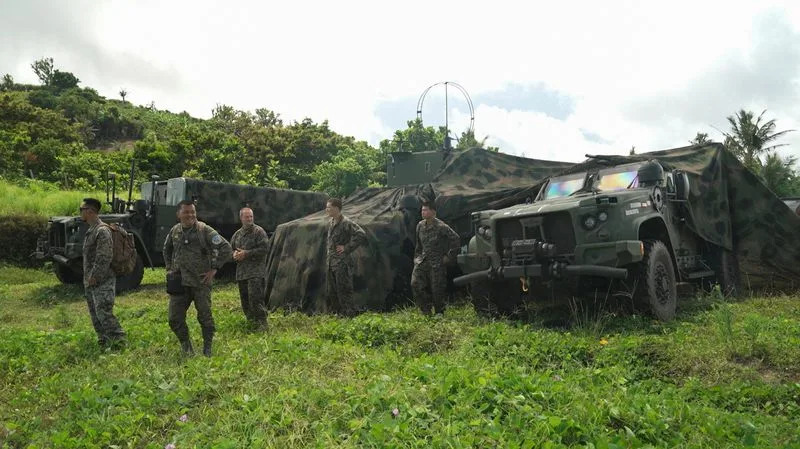
Philippine and U.S. military personnel stand beside vehicles and equipment used for the Navy-Marine Expeditionary Ship Interdiction System (NMESIS) anti-ship missile system during joint military exercises in Basco, Batanes province, Philippines, May 2, 2026. REUTERS/Adrian Portugal
Deployment And System Capabilities
The NMESIS is a highly mobile, land-based coastal missile system designed to engage surface vessels at ranges of about 185 km (115 miles). United States troops airlifted the system into Basco aboard a U.S. C-130 transport and positioned it at one of the island's small runways for rehearsal and simulation activities.
'Training out here in Batanes allows us a different environment than what we're normally allowed to operate in,' said U.S. Staff Sergeant Darren Gibbs. 'The purpose of this system is for it to be fully autonomous, for us not to require a driver or passenger inside the vehicle itself. We will tell it where to go and then we program what it needs to do.'
Exercise Purpose And Limitations
Philippine exercise director Francisco Lorenzo said the deployment is intended to test operational feasibility and rehearse rapid deployment to remote locations. Organisers emphasised the system will not be used for live-fire operations during the drills and is slated to be withdrawn after exercises conclude. The U.S. also deployed a Typhon missile system to the Philippines during training in 2024.
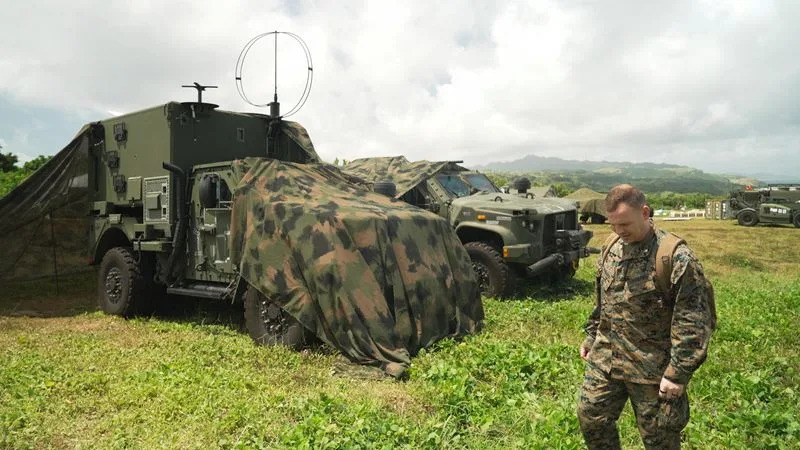
A member of the U.S. military walks near vehicles and equipment used for the Navy-Marine Expeditionary Ship Interdiction System (NMESIS) anti-ship missile system during joint military exercises in Basco, Batanes province, Philippines, May 2, 2026. REUTERS/Adrian Portugal
Regional Context
This year's Balikatan involves more than 17,000 troops, including roughly 10,000 from the United States. The drills occur against a backdrop of heightened Chinese activity in the South China Sea and around Taiwan, including increased naval patrols and the movement of an aircraft carrier through the Taiwan Strait. Satellite imagery reviewed by Reuters also indicated Beijing had placed a barrier near Scarborough Shoal earlier this month.
Strategic Implications
Security analyst Chester Cabalza, founder and president of Manila-based think tank International Development and Security Cooperation, warned that NMESIS' placement in Batanes could be perceived by Beijing as part of a U.S.-led encirclement. He noted the system's airliftability gives it flexibility to be moved to many Philippine coastlines within hours, adding to its strategic deterrent value.
Philippine officials have also reiterated contingency planning for Filipinos living and working in Taiwan. President Ferdinand Marcos Jr. has said that an outbreak of hostilities over Taiwan would likely force evacuations that could draw the Philippines into the conflict. Defence Secretary Gilberto Teodoro told Reuters on April 28 that Manila has plans to evacuate Filipinos in the event of hostilities, without offering operational details.
(Reporting by Adrian Portugal; Additional reporting by Nestor Corrales; Editing by Tom Hogue)
Help us improve.