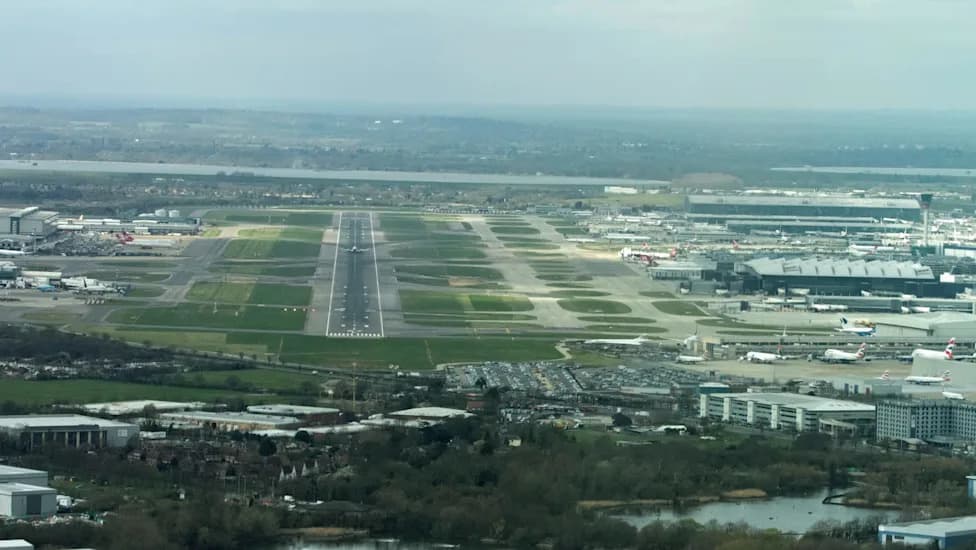
Charlotte Douglas International Airport is constructing a 10,000‑foot fourth parallel runway equipped with embedded sensors that create a live "digital twin" of pavement performance. The initiative is a partnership with UNC Charlotte’s Aviation and Innovation Research Institute and will serve as a living laboratory for students and researchers. Backed in part by a $2 million FAA grant, the $6.5 million project aims to improve safety, de‑icing decisions, maintenance planning and runway design nationwide. The new runway is scheduled to open in fall 2027.
Charlotte Douglas to Debut High‑Tech Fourth Runway With Embedded 'Digital Twin' Sensors
Bria Smith
Charlotte Douglas International Airport (CLT) is building a distinctive fourth parallel runway that goes beyond pavement and length: the project will embed advanced sensors into the runway to create a real‑time “digital twin” of pavement performance. The initiative is a collaboration with UNC Charlotte’s Aviation and Innovation Research Institute and will serve as a living laboratory for students and researchers.
What the Project Includes
The 10,000‑foot runway will feature upgraded electrical systems, improved drainage and a new fire station. Sensors placed directly in the pavement will feed continuous data into a digital platform to track how the runway responds to traffic, weather and maintenance activities over time.
Partnership and Research
UNC Charlotte faculty and students will work alongside CLT staff to install instrumentation, collect data and analyze results. "Our job as researchers is not just to sit in our offices and do the research alone; we engage students with us and they are active participants," said Dr. Tara Cavalline, Professor of Civil Engineering Technology & Construction Management.
Jack Christine, CLT Chief Infrastructure Officer: "This instrumentation and digital‑twin project grew out of a strong partnership with UNC Charlotte, where the airport serves as a living laboratory for students."
Why It Matters
The embedded sensors and digital twin will provide real‑time operational data that can improve safety (including de‑icing decisions), optimize maintenance schedules, and inform future runway design and construction standards. The FAA is supporting the effort so the insights can be used to update design software, guidelines and construction specifications for airports nationwide.
Cost And Timeline
The total project cost is approximately $6.5 million, including a $2 million FAA grant. Construction is underway with a planned opening in fall 2027.
Context: The project stems from CLT’s 2016 Master Plan as the airport adapts to rapid growth—CLT recorded more than 574,000 aircraft operations in 2025, ranking seventh worldwide by operations.
Researchers say the combination of an operational airport and hands‑on student participation makes this a nationally notable project that could shape the future of aviation infrastructure across the United States.
Help us improve.