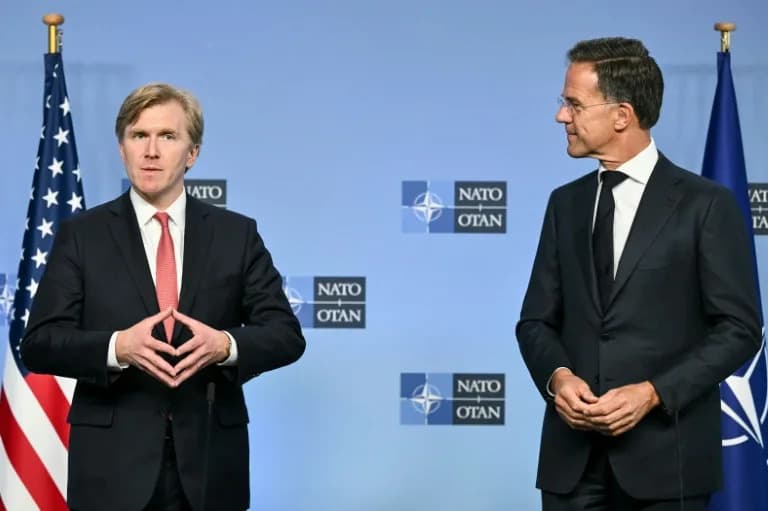
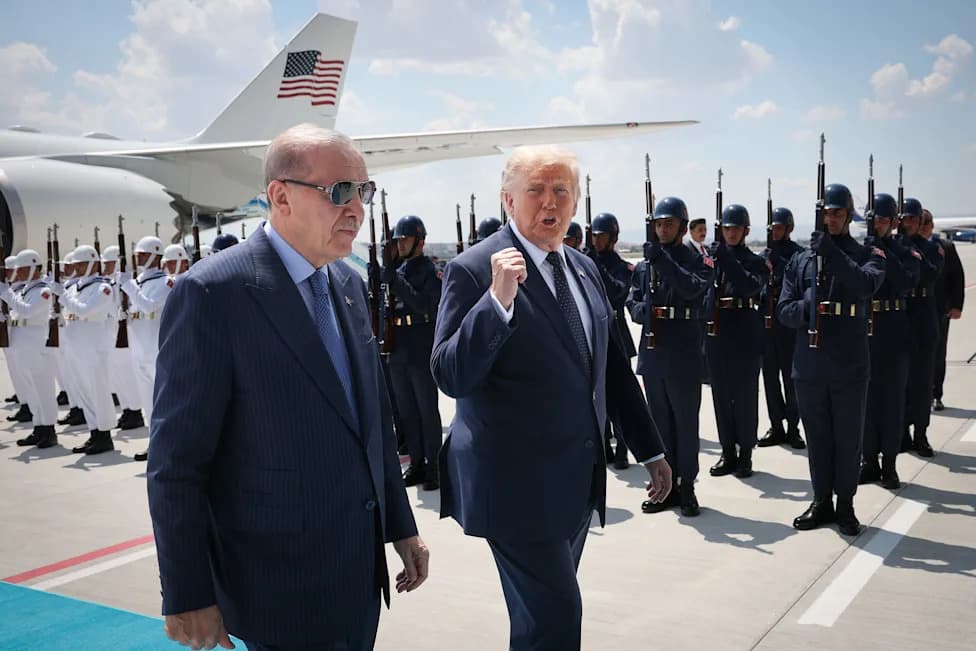
Summary: President Trump’s order to withdraw 5,000 U.S. troops from Germany has highlighted a widening transatlantic rift over NATO and European security. Europe plans to raise defence spending toward nearly $750 billion annually by 2030, but faces major obstacles: fragmented procurement, limited industrial scale, and acute shortages in missile-defence interceptors. Closing the capability gap will require deeper cooperation, co-production with the U.S., or a major European industrial consolidation.
U.S. Withdrawal of 5,000 Troops From Germany Exposes Deep NATO Rift and Europe’s Defense Shortfalls
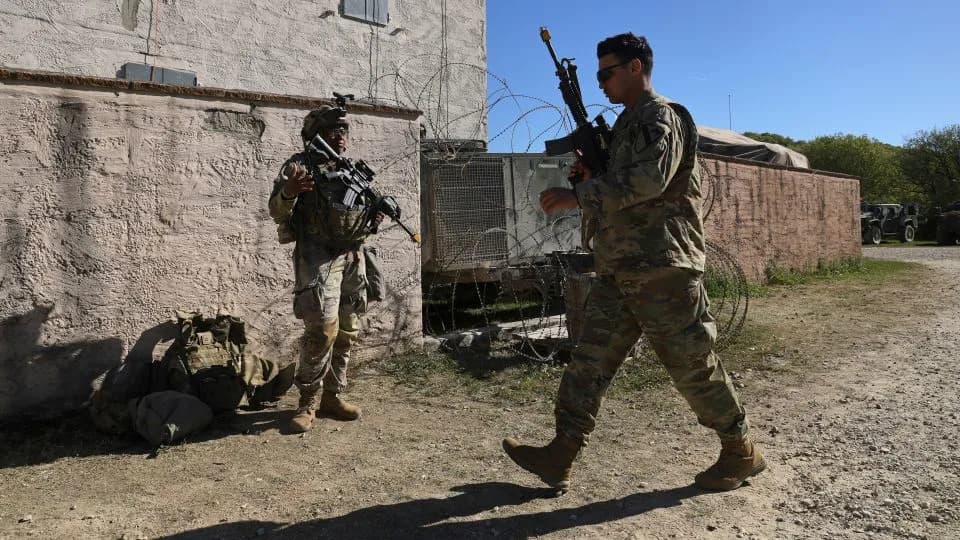
Members of the US military train in Germany - Trump says he's withdrawing 5,000 and more could follow. - Sean Gallup/Getty Images
President Donald Trump’s announcement that the U.S. will pull 5,000 — and potentially more — troops from Germany has refocused attention on a growing transatlantic rift over NATO and Europe’s ability to defend itself without consistent American backing.
The Decision and Immediate Reactions
Mr. Trump delivered the move after German Chancellor Friedrich Merz publicly criticized the U.S. handling of the Iran crisis, saying Tehran had humiliated Washington. Mr. Trump also criticized Spain and Italy for what he described as insufficient support in the campaign against Iran, saying, “Probably… look, why shouldn’t I? Italy has not been of any help to us and Spain has been horrible, absolutely horrible.” Spain has denied U.S. permission to use its bases or airspace for missions linked to the conflict.
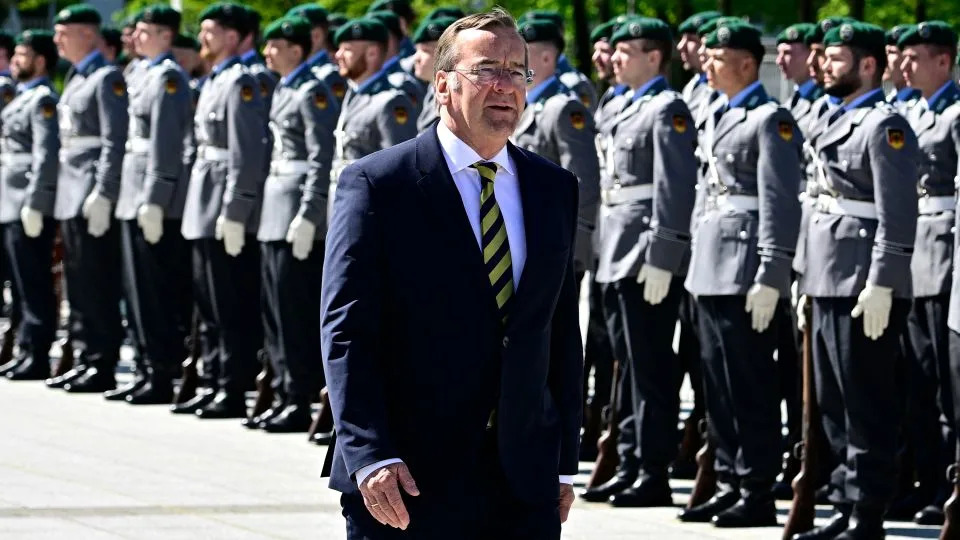
Germany's Defense Minister, Boris Pistorius, has tried to play down the spat with the US. - Tobias Schwarz/AFP/Getty Images
“If we are to remain transatlantic, we must strengthen the European pillar within NATO,” German Defence Minister Boris Pistorius said, calling the withdrawal "foreseeable." NATO spokesperson Allison Hart warned the move "underscores the need for Europe to invest more in defense."
Where Europe Stands
Thousands of U.S. personnel still serve in Germany: according to U.S. Defense Department figures cited in the report, 36,436 active-duty U.S. service members were stationed there as of December 2025 — far below Cold War peaks of roughly 250,000. But the reduction signals a shrinking U.S. security umbrella at a time when Moscow remains a strategic concern.
Strategic Priorities and U.S. Intentions
Senior Pentagon official Elbridge Colby described Washington’s shift as a focus on challenges "where only American power can play a decisive role"—notably in Asia and the Western Hemisphere—and urged European allies to assume primary responsibility for conventional defense of the continent. Many European leaders view the move as a symptom of waning transatlantic solidarity. Polish Prime Minister Donald Tusk called the alliance’s disintegration the biggest threat to the transatlantic community.
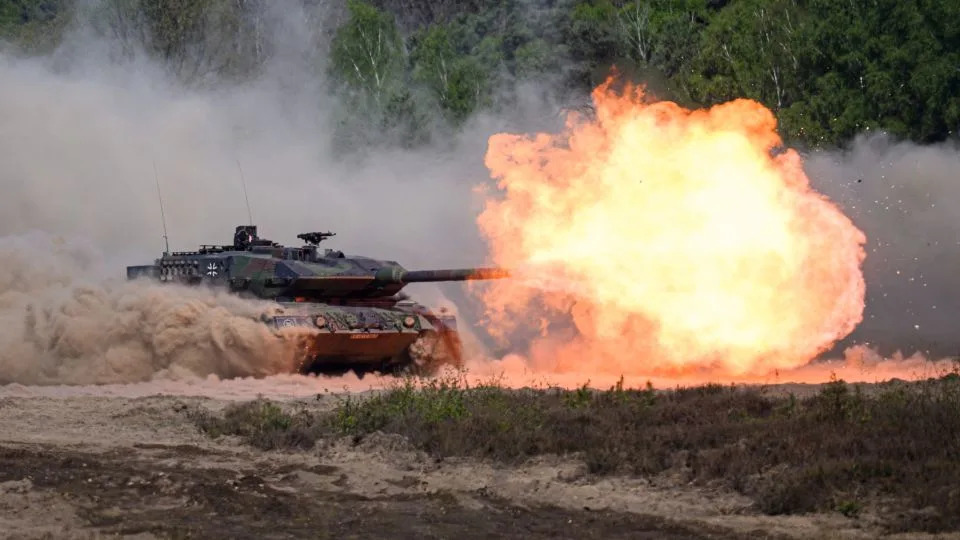
A Leopard 2A6 tank fires during a demonstration for the German Chancellor visiting the troops of the German Army (Bundeswehr) at the German armed forces' barracks in Munster, northern Germany, on April 30, 2026. - Daniel Reinhardt/AFP/Getty Images
Industrial and Procurement Challenges
European leaders — particularly Germany, the U.K. and France — have pledged to lift defense spending. Under current plans, Europe’s annual defense expenditures are projected to nearly double by 2030, approaching roughly $750 billion. But money alone will not solve long-standing structural problems: national preferences, fragmented procurement and small production runs make equipment far more expensive and less interoperable than U.S. equivalents.
Analysts note Europe produces many distinct platforms (dozens of tank and aircraft variants) rather than standardizing on a small number of types. The collapse of a joint Franco-German next-generation fighter program, amid disputes over leadership and requirements, exemplifies those deep divisions.
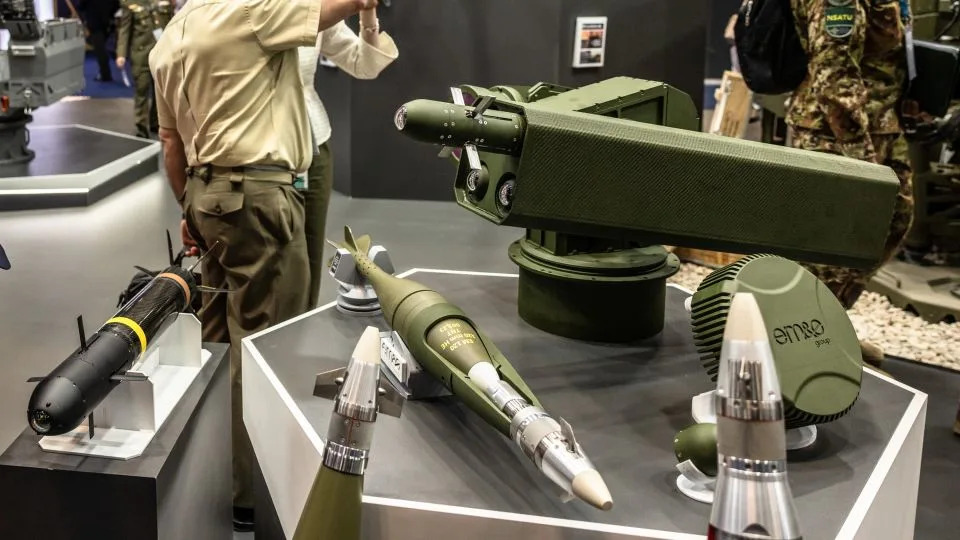
A guided rocket system at the EM&E Group stand during the FEINDEF defense exhibition in Madrid, Spain, on Monday, May 12, 2025. Prime Minister Pedro Sanchez promised last month that the country will meet NATO's goal of 2% of GDP. - Angel Garcia/Bloomberg/Getty Images
Missile-Defense Shortages And Industrial Capacity
The conflict in the Gulf has driven a surge in consumption of missile-defense interceptors (Patriot, THAAD), creating acute shortages. The Pentagon also said it would not proceed with a planned deployment of a Long-Range Fires battalion to Europe equipped with Tomahawk and hypersonic missiles. European manufacturers produce various interceptors, but not at the scale or capability to be a full substitute for key U.S. systems — a conclusion underscored by a recent Center for Strategic and International Studies (CSIS) study.
Greater co-production with the U.S. could ease supply bottlenecks, but that path depends on a degree of transatlantic trust and priority alignment that many analysts fear is eroding.
Paths Forward
Europe faces two broad options: accelerate capability development through close cooperation with the U.S. (the fast track), which requires sustained mutual trust; or build an autonomous industrial and defence base (the slower track), which demands higher spending, consolidation of the defence industry and tighter procurement coordination. The EU has set a target for at least half of member states’ defence spending to remain inside the single market by 2030 to help build those capacities.
There are promising signs: the U.K. remains deeply involved in European defence despite Brexit; defence firms such as Sweden’s Saab, Germany’s Rheinmetall and Britain’s BAE report record order books; and Sweden and Finland have rapidly integrated into NATO. Still, pooling sovereignty and harmonizing procurement across national lines remain politically and technically difficult.
Conclusion
The withdrawal of U.S. troops from Germany is more than a redeployment; it is a stark reminder that building credible, autonomous European defence capabilities will require money, industrial reform and far deeper cooperation among allies. Whether Europe chooses a rapid transatlantic co-production route or a longer path toward strategic autonomy, the next few years will be decisive.
Help us improve.